

Cervical Peanut Roller: How to Relieve Neck and Upper Back Tension
Quick answer: A cervical peanut roller’s double-lobe design straddles the spine to deliver targeted myofascial release to the paraspinal muscles, suboccipitals, upper trapezius, and levator scapulae — making it one of the most precise self-massage tools for chronic neck tension and upper back stiffness.
A cervical peanut — the double-lobed, figure-eight-shaped roller sized specifically for the neck — is one of the most targeted self-massage tools you can use for the cervical spine and upper back. Unlike a standard round ball or a full-length foam roller, its dual-lobe design straddles the vertebrae so pressure lands on the surrounding muscle tissue rather than directly on bone. This article focuses on how to use a cervical peanut effectively, which muscles benefit most, and how to build it into a consistent recovery routine.
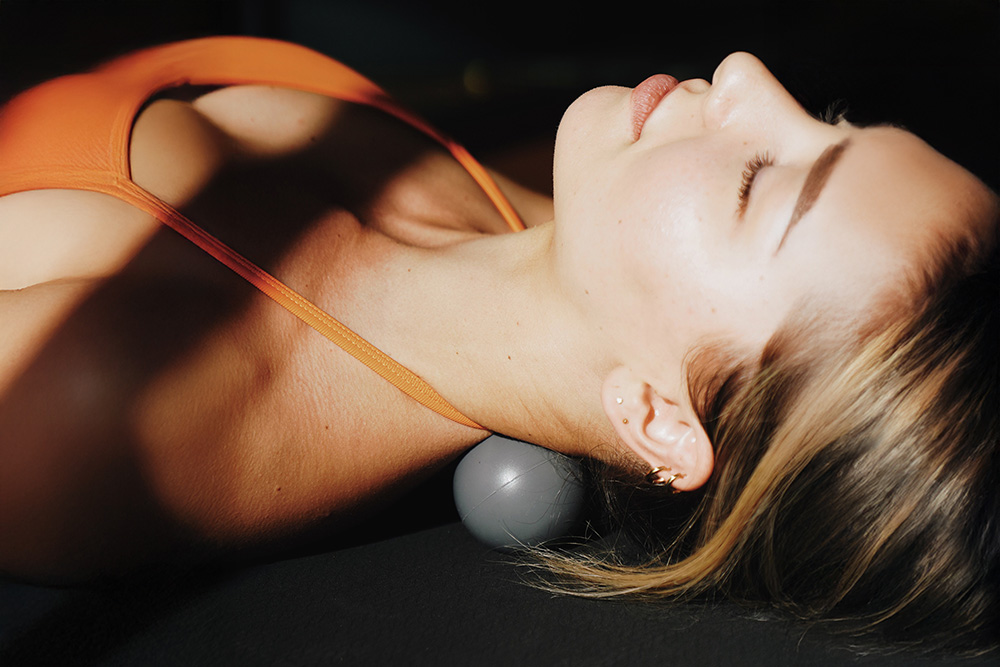
What a Cervical Peanut Actually Does
The shape of a cervical peanut is its defining feature. The two lobes sit on either side of the spine, applying bilateral pressure to the paraspinal muscles — the erector spinae, semispinalis, and multifidus — without compressing the spinous processes. This makes it particularly useful for:
- Breaking up myofascial adhesions in the cervical and upper thoracic region
- Improving segmental mobility between vertebrae
- Reducing referred tension headaches that originate from the suboccipital muscles
- Complementing chiropractic or physical therapy between sessions
Because the lobes are smaller than a standard foam roller, the pressure per square inch is higher, making it more effective for deep-tissue neck massage without requiring excessive body weight or force.
Muscles the Cervical Peanut Targets
A cervical peanut is not limited to one or two muscle groups. When positioned correctly along the neck and upper back, it reaches a broad range of tissues:
- Suboccipital muscles — four small muscles at the base of the skull, frequently tight in desk workers and screen users
- Semispinalis capitis and cervicis — run the full length of the back of the neck
- Upper trapezius — spans from the base of the skull to the shoulder
- Levator scapulae — connects the cervical vertebrae to the shoulder blade
- Rhomboids and mid-trapezius — when the roller is moved into the upper thoracic region


This range means one tool can relieve neck tension from the base of the skull to the mid-back, making it a versatile addition to any recovery kit. Learn about these muscles at head and neck pain and shoulder pain section.
Myofascial Release Cervical Spine: Why It Matters
The cervical spine is surrounded by dense layers of fascia — connective tissue that wraps every muscle, nerve, and blood vessel. When this fascia becomes restricted through poor posture, repetitive strain, or acute injury, it can create trigger points that refer pain into the head, shoulders, and arms. Research on myofascial trigger points consistently shows that sustained mechanical pressure — exactly what a peanut roller provides — can reduce trigger point sensitivity and improve local circulation.
Performing myofascial release cervical spine work with a peanut roller two to three times per week has been associated with improved range of motion and reduced perceived pain in individuals with chronic neck tension, according to a clinical review published in the Journal of Bodywork and Movement Therapies.
The key distinction from stretching alone is that the roller addresses the tissue quality of the fascia itself, not just muscle length. Both approaches complement each other well.
How to Use a Cervical Peanut for Neck Tension Relief
Step-by-step: Releasing the Suboccipital Region
- Lie on your back on a firm surface — a yoga mat on the floor works well.
- Place the peanut roller at the base of your skull, where the neck meets the head. The groove between the two lobes should align with the center of your spine.
- Allow your head to rest fully on the roller — do not hold tension in your neck.
- Hold this position for 60–90 seconds, breathing slowly. You may feel a dull ache as the tissue releases.
- Gently nod your chin toward your chest 5–8 times to add a gentle active release component.
- Shift the roller one vertebral segment lower and repeat.
- Continue down to the upper thoracic spine (between the shoulder blades), spending 60–90 seconds at each level.
- Finish with 30 seconds of gentle neck rotations — left and right — to restore circulation.
Keep sessions to 8–12 minutes total. More is not always better with cervical work — allow 24 hours between sessions on the same area.
Step-by-step: Targeting Upper Trapezius and Levator Scapulae
- Sit upright in a chair with good back support.
- Place the peanut roller against the back of your neck, just below the skull, and lean your head back gently into it.
- Tilt your head slightly to the right to shift pressure toward the left levator scapulae.
- Hold for 45–60 seconds, then slowly return to center.
- Repeat on the opposite side.
- Move the roller slightly lower and repeat the tilt sequence for the mid-cervical region.
The Tiger Ball® Peanut 2.4 Foam Roller for Cervical Work
If you are looking for a purpose-built tool for this kind of work, the Tiger Ball® Peanut 2.4 Foam Roller ($29.99) is well-suited to cervical peanut techniques. Its 2.4-inch lobe diameter is compact enough to fit the contours of the neck without applying pressure directly to the vertebrae, and the foam density delivers firm, consistent deep tissue neck massage without being so rigid that it becomes uncomfortable on sensitive cervical tissue.
The dual-lobe construction mirrors the classic peanut shape described throughout this article, so the steps above translate directly to this tool. It is also lightweight and portable, making it easy to use at a desk, on a travel mat, or on the floor at home.
For additional support during neck stretches after rolling, the PT Stretch Strap ($19.99) can help you hold lateral neck stretches with controlled, consistent tension — a useful complement once the tissue has been warmed up by the peanut roller.
Peanut Foam Roller Safety and Precautions
A peanut foam roller is generally safe for healthy adults, but a few precautions apply specifically to cervical use:
- Do not roll directly on a herniated or acutely injured disc — consult a physical therapist first.
- Avoid pressing hard into the sides of the neck where the carotid artery runs.
- If you experience tingling, numbness, or dizziness during use, stop immediately and seek professional guidance.
- Start with lighter pressure and shorter holds (30 seconds) before progressing to the full protocol above.
- Cervical rolling is not a replacement for medical treatment of diagnosed cervical conditions.
Frequently Asked Questions
What is a cervical peanut roller used for?
A cervical peanut roller applies bilateral pressure to the muscles on either side of the cervical spine without directly compressing the vertebrae. It is commonly used to relieve neck tension, reduce trigger points, and improve mobility in the upper spine.
How long should I use a cervical peanut on my neck?
Spend 60–90 seconds at each vertebral level and keep the total session time to 8–12 minutes. Allow at least 24 hours before rolling the same area again to give the tissue time to recover.
Is a peanut roller safe for the cervical spine?
For most healthy adults, yes. Avoid rolling directly over acutely injured discs or the sides of the neck near the carotid artery, and stop immediately if you feel tingling, numbness, or dizziness. Consult a physical therapist if you have a diagnosed cervical condition.
Can a cervical peanut help with tension headaches?
It can help address a common contributor—tightness in the suboccipital muscles at the base of the skull, which frequently refers pain into the head. Releasing these muscles with a cervical peanut may reduce headache frequency, though it is not a substitute for medical evaluation.
What size peanut roller works best for the neck?
A lobe diameter of around 2.4 inches — like the Tiger Ball® Peanut 2.4 Foam Roller — fits the cervical contours well. Larger lobes may not fit the neck anatomy as precisely, while smaller ones can concentrate pressure uncomfortably on a narrow area.
Medical disclaimer: This article is for general informational and educational purposes only and is not a substitute for professional medical, veterinary, or fitness advice, diagnosis, or treatment. Always consult a qualified professional before starting a new exercise, recovery, or treatment program, or if you have any concerns about a health condition.
Safety disclaimer: Always read and follow the manufacturer’s instructions, warnings, and usage guidelines for any product or equipment mentioned here. Use tools and techniques as directed and within your own ability; start gently, stop if you feel pain or discomfort, and seek professional guidance if you are unsure. Improper or excessive use can result in injury.