
Lacrosse Ball vs Tiger Tail Tiger Ball 2.6: Which Works Better for Muscle Knots and Myofascial Release?
Published on 3/19/2026
If you’ve ever leaned against a wall with a lacrosse ball digging into a knot in your back—only to have it shoot across the room—you’re not alone. Many people use lacrosse balls to work out stubborn muscle knots in the back, calves, legs, or even feet. But just because something is hard and round doesn’t mean it’s ideal for myofascial release.
In this article, we’ll compare a standard lacrosse ball with the Tiger Tail USA Tiger Ball 2.6 Massage-on-a-Rope to help you decide which tool actually works better for relieving muscle knots safely and effectively.
What’s the difference between a Lacrosse Ball and the Tiger Tail USA Tiger Ball 2.6?
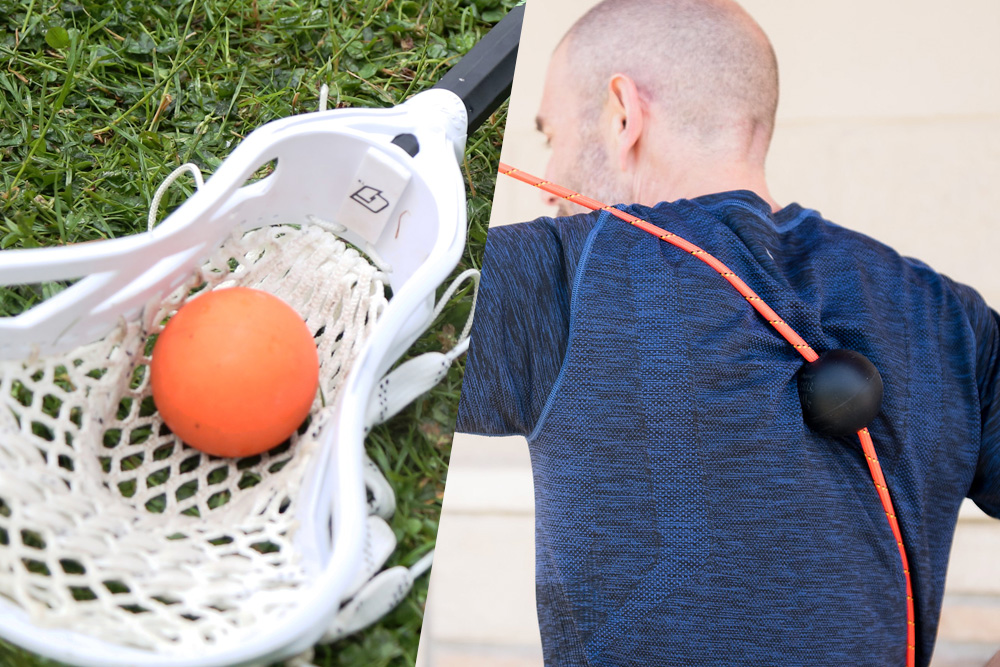
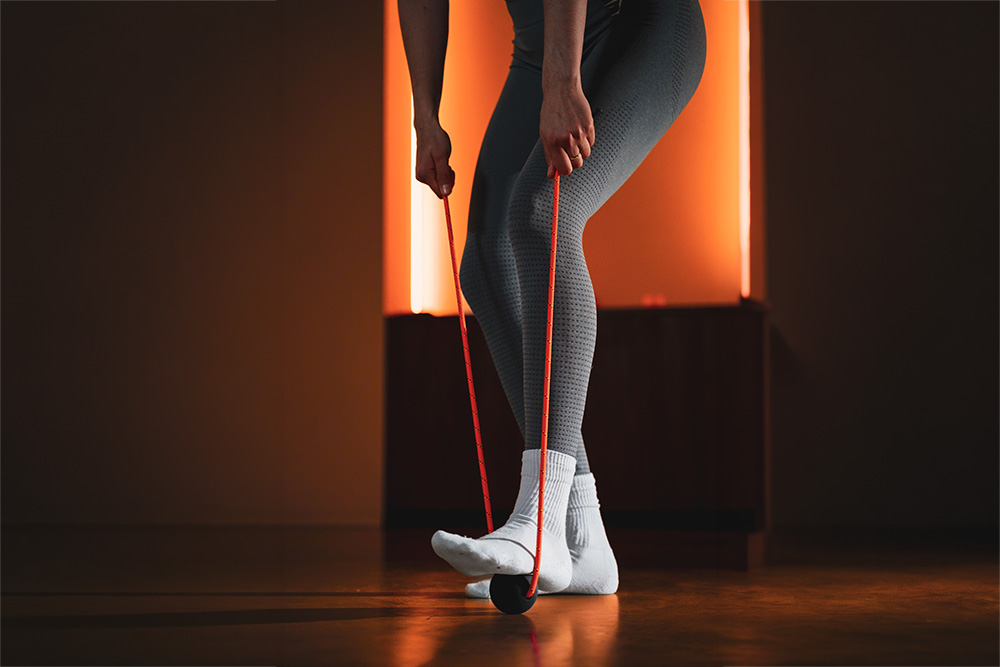
A standard lacrosse ball is a solid sphere of dense vulcanized rubber, about 2.5 inches in diameter, smooth, heavy, and built to be thrown and caught at high speed in sport—not for comfort on soft tissue. The Tiger Tail USA Tiger Ball 2.6 Massage-on-a-Rope is a 2.6-inch massage ball made from muscle-friendly materials and mounted on a rope so you can position and hold it on a spot without it shooting across the room. The Tiger Ball’s rope lets you pin the ball exactly where you want it – no ball chasing involved, and the ball’s grippy surface is specifically engineered to stay on trigger points. Research shows that sustained, controlled pressure works better than tools that are unstable or painfully rigid. In other words, if you can’t keep the pressure where you want it, the knot probably won’t let go (Cheatham et al., 2015).
| Feature | Lacrosse Ball | Tiger Tail Tiger Ball 2.6 Massage-on-a-Rope |
| Primary purpose | Sport (lacrosse) | Myofascial release |
| Diameter | ~2.5 inches | 2.6 inches |
| Hardness | Very hard | Muscle-friendly firmness |
| Control | Low (rolls easily) | High (rope anchors ball) |
| Best for beginners | ❌ | ✅ |
| Back & shoulder access | Difficult alone | Designed for solo use |
| Price | Very low | Higher (specialty tool) |
How are these tools used for knots in back, calf, leg, and even knots in feet?
For a lacrosse ball, you typically place it between your body and the floor or wall, then slowly roll over tight areas to apply pressure to the fascia and muscle. It can work for knots in back, a knot in calf muscle, a knot in leg, or plantar fascia if you roll your foot over it, but its hardness can be intense and hard to control, especially near bony areas (Beardsley & Škarabot, 2015). The Tiger Ball 2.6 Massage-on-a-Rope lets you stand at a wall or lie down, then use the rope to pull and anchor the ball directly into a knot in your back, hip, calf, or even along the arch when you’re asking “can you get knots in your feet?”—yes, you can, and they’re often fascial trigger points (Ajimsha et al., 2015). Because the Tiger Ball 2.6 is a Tiger Tail USA tool designed for trigger point therapy, it provides deep, sustained compression (about 30–60 seconds) over a knot, which is consistent with clinical myofascial release guidelines (Cheatham et al., 2015; Schroeder & Best, 2015).

What are the pros and cons of a Lacrosse Ball for massage?
Pros (for massage use):
- Very firm, so it can reach deep trigger points and stubborn knots in back, glutes, and calves (Beardsley & Škarabot, 2015).
- Cheap, durable, and widely available in sporting goods stores.
- Small and portable, so you can travel with it and use it for basic self-myofascial release.
Cons:
- Often too hard for many people, especially beginners or those with high pain sensitivity or acute pain.
- Slippery and uncontrolled; it easily slides out from under you or shoots away when you’re trying to stay on one knot in calf or knot in leg.
- Not shaped or mounted for back access, so getting to mid-back knots alone requires awkward positions and spinal contortions.
Bottom Line: Very hard tools can feel effective at first, but intensity alone doesn’t guarantee results. If the pressure is so sharp that you’re holding your breath or tensing up, the tissue usually doesn’t release—it just braces. If it doesn’t stay in place (on the knot), you’re ejected from the muscle game.
What are the pros and cons of the Tiger Tail Tiger Ball 2.6 Massage-on-a-Rope for myofascial release?
Pros:
- Specifically designed as a Tiger Tail USA trigger point tool, with “muscle-friendly” materials that balance firmness and comfort for myofascial release.
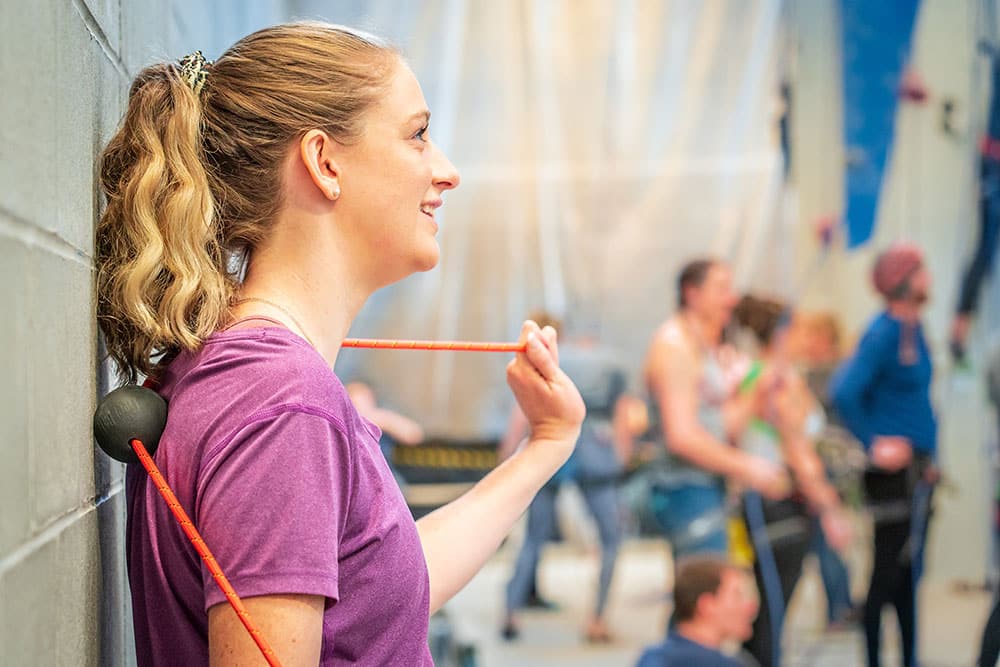
- Rope allows precise placement and sustained pressure on knots in back and shoulders without needing a partner or extreme body positions.
- Excellent for common hotspots: knots in back (paraspinals, rhomboids), knots in shoulders, knots in calf muscle, knot in leg (hamstrings, IT band attachments), and knots in feet and hips.
- Well suited to the kind of controlled, slow self-myofascial release that research suggests can improve range of motion and perceived muscle tightness (Beardsley & Škarabot, 2015).
Cons:
- More expensive than a basic lacrosse ball.
- Slightly more specialized; you buy it specifically as a recovery tool, not a multi-use sport item.
Bottom Line: Like my Dad used to say, “You can use a screwdriver to pound in a nail, but a hammer works better!” Having the right tool for the job (knot) makes all the difference.
Why is a Lacrosse Ball ideal for Lacrosse—but not perfect for muscle massage?
A lacrosse ball’s core design goal is to be uniformly hard, resilient, and bouncy so it flies, rebounds, and withstands impacts in Lacrosse games. That density and rebound are great on the field but translate into very high point pressure on joints and bony landmarks during self-massage, which can irritate tissues instead of just loading the fascia. Because it has no rope or handle, you have to use awkward body leverage to chase a small, slippery sphere around when addressing knots in back or between the shoulder blades. In contrast, research on myofascial release shows that tolerable, sustained pressure and control of the contact point are key; tools that are too hard or unstable make it harder to meet those parameters consistently (Ajimsha et al., 2015; Schroeder & Best, 2015).
How is the Tiger Ball 2.6 designed perfectly for muscle massage?
The Tiger Tail Tiger Ball 2.6 was engineered from the ground up as a Tiger Ball myofascial release device: its diameter, grip, and rope length are tuned for accessing the spine, shoulders, hips, calves, and feet without straining your hands or low back. The rope positions and holds the ball on a single trigger point so you can relax into the pressure instead of fighting to keep the ball in place—crucial for allowing the fascia and the nervous system’s natural protective response to adapt and let the knot release (Beardsley & Škarabot, 2015). Clinicians and athletic trainers recommend self-myofascial release tools like this because they reliably deliver deep, controlled compression to knots in back, knot in calf, knot in leg, and even plantar fascia, aligning well with evidence-based self-myofascial release strategies (Ajimsha et al., 2015; Schroeder & Best, 2015).
Conclusion
If you already own a lacrosse ball, it can work in a pinch—But if you’re consistently dealing with knots in your back, shoulders, calves, or feet and want a tool that stays where you put it, the Tiger Ball 2.6 is purpose-built for that job. For people who value control, comfort, and evidence-based self-myofascial release, it’s a smarter long-term solution than repurposing sports equipment.
References
- Ajimsha, M. S., Al-Mudahka, N. R., & Al-Madzhar, J. A. (2015). Effectiveness of myofascial release: Systematic review of randomized controlled trials. Journal of Bodywork and Movement Therapies, 19(1), 102–112. https://pubmed.ncbi.nlm.nih.gov/25603749/
- Beardsley, C., & Škarabot, J. (2015). Effects of self-myofascial release: A systematic review. Journal of Bodywork and Movement Therapies, 19(4), 747–758. https://pubmed.ncbi.nlm.nih.gov/26592233/
- Cheatham, S. W., Kolber, M. J., Cain, M., & Lee, M. (2015). The effects of self-myofascial release using a foam roll or roller massager on joint range of motion, muscle recovery, and performance: A systematic review. International Journal of Sports Physical Therapy, 10(6), 827–838. https://pubmed.ncbi.nlm.nih.gov/26618062/
- Schroeder, A. N., & Best, T. M. (2015). Is self myofascial release an effective preexercise and recovery strategy? A literature review. Current Sports Medicine Reports, 14(3), 200–208. https://pubmed.ncbi.nlm.nih.gov/25968853/

Spring Faussett is an American entrepreneur and inventor who founded Tiger Tail USA in 2006 with just $250, building the first 20,000 iconic orange and black massage sticks in her garage. A former Division I soccer player at Washington State University, her personal recovery journey inspired a passion for solving pain problems, resulting in over 15 patents in muscle recovery innovation. Faussett is an award-winning author of Happy Muscles®—Fast: a Self-Help Guide to Un-Knot Your Pain and holds a B.A. in Business and Communications from Washington State University, plus business certificates from Harvard and the University of Washington.