

How Tiger Tail Supports Corporate Wellness Programs and Injury Prevention
Published on 5/28/2026
Corporate wellness only works when employees can actually use it in real life. That is why Tiger Tail stands out: instead of asking workers to commit to complicated routines, it gives them simple, portable recovery tools that fit into a five- to ten-minute break, a pre-shift warmup, or a quick reset between tasks. For teams dealing with repetitive motion, heavy lifting, awkward posture, or long hours at a desk, that kind of low-friction support can make wellness feel less like a policy and more like a daily advantage. As more companies look for practical ways to reduce fatigue, improve movement, and cut downtime, Tiger Tail has become a compelling option for bringing the best foam rolling and myofascial release tools for self-care into the workday. Happy Muscles 365 For Corporation
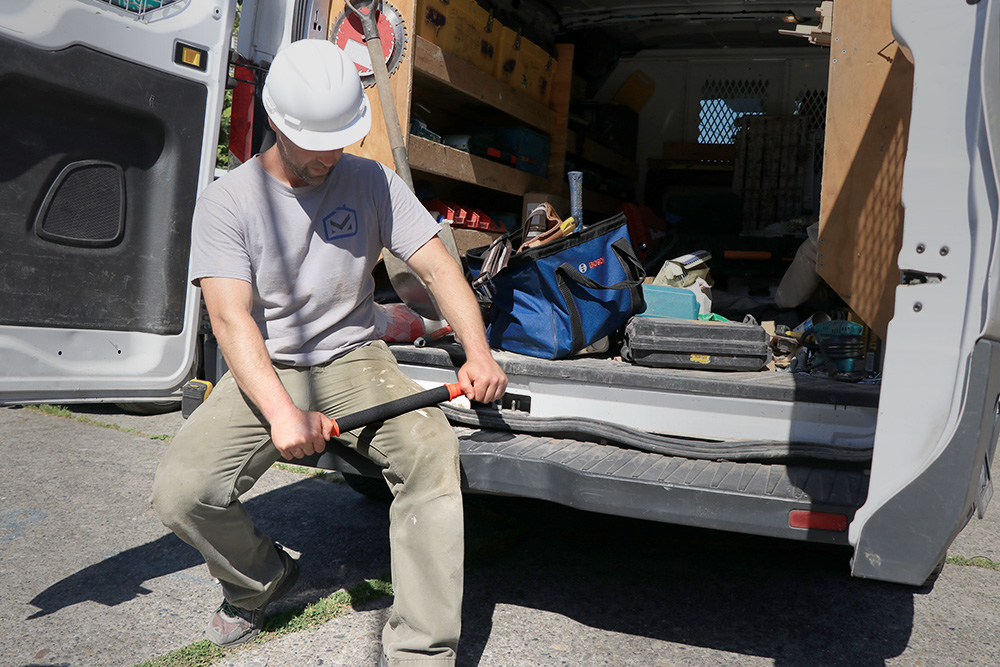
Why Corporate Wellness Programs Choose Tiger Tail
Companies choose Tiger Tail because the tools are straightforward, portable, and easy to teach across different job types. Tiger Tail’s corporate approach combines handheld rollers, ball-based muscle care, stretching methods, and short guided routines that can be used in office settings, warehouses, and field environments. That matters because a wellness tool is only valuable when employees are willing to use it consistently, and shorter, repeatable recovery habits tend to be more realistic in busy workplaces. (Cheatham et al., 2015)
Why This Is A Growing Workplace Trend
Corporate wellness has shifted away from one-size-fits-all initiatives and toward practical systems employees can use during the workday itself. Employers are paying closer attention to musculoskeletal strain, productivity loss, and preventable discomfort, which makes recovery tools and movement-based routines more relevant than ever. Tiger Tail fits this trend because it supports active recovery without requiring a full gym, long training window, or major facility overhaul. With the use of the best foam rolling techniques and myofascial release tools to tackle the muscle knots, Tiger Tail has you covered.
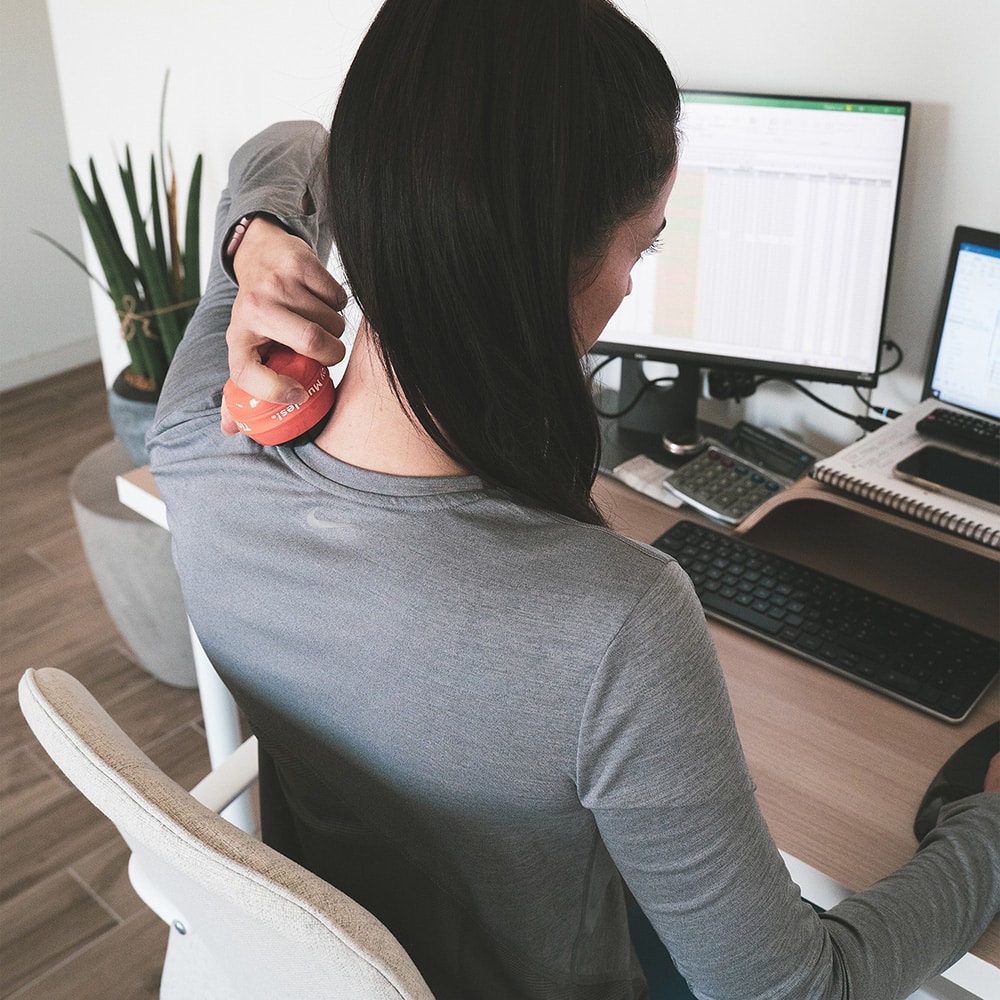
What Are the Benefits of a Corporate Wellness Program?
A strong corporate wellness program gives businesses a clear framework for movement, recovery, and injury prevention, whether they operate at a large scale or as a smaller team. Most programs are expected to include some level of employee education, management support, and practical tools employees can use consistently. In many workplaces, that means a modest corporate investment in training, access to muscle recovery tools such as rollers, balls, and cane-style devices, and a daily or weekly schedule that sets aside five to ten minutes for stretching or rolling. When recovery is built into the work routine instead of treated as an extra task, participation becomes easier and results are more sustainable.
What Types of Jobs and Activities Benefit the Most from a Program?
Jobs that involve repetitive motion, heavy labor, or awkward posture often benefit the most from structured wellness support. Manufacturing staff, warehouse teams, delivery drivers, healthcare workers, and office employees all face physical demands that can create tension in the neck, shoulders, back, hips, and legs over time. A simple recovery routine can help workers address stiffness, muscle knots and muscle overload before it affects how they move, feel, or perform during the day.
High-benefit job categories
- Repetitive work, such as assembly, scanning, keyboarding, or order picking, can overload the same muscle groups shift after shift.
- Heavy labor, such as lifting, carrying, bending, and climbing, increases demand on the back, hips, calves, and shoulders.
- Awkward posture, such as prolonged sitting, overhead work, driving, or forward head posture, can create persistent tightness that builds gradually.
What Are the Best Foam Rolling Techniques to Help Muscles?
The best foam rolling techniques for the workplace are simple enough to repeat and gentle enough that employees will actually use them regularly. Tiger Tail handheld foam rollers are effective for long, controlled passes over the quads, hamstrings, calves, forearms, and upper back, especially when the user maintains steady pressure and relaxed breathing. Research suggests self-myofascial release with foam rollers or roller massagers can improve range of motion and support short-term recovery, which helps explain why these tools work well in preventive wellness settings. (Wilke et al., 2020)
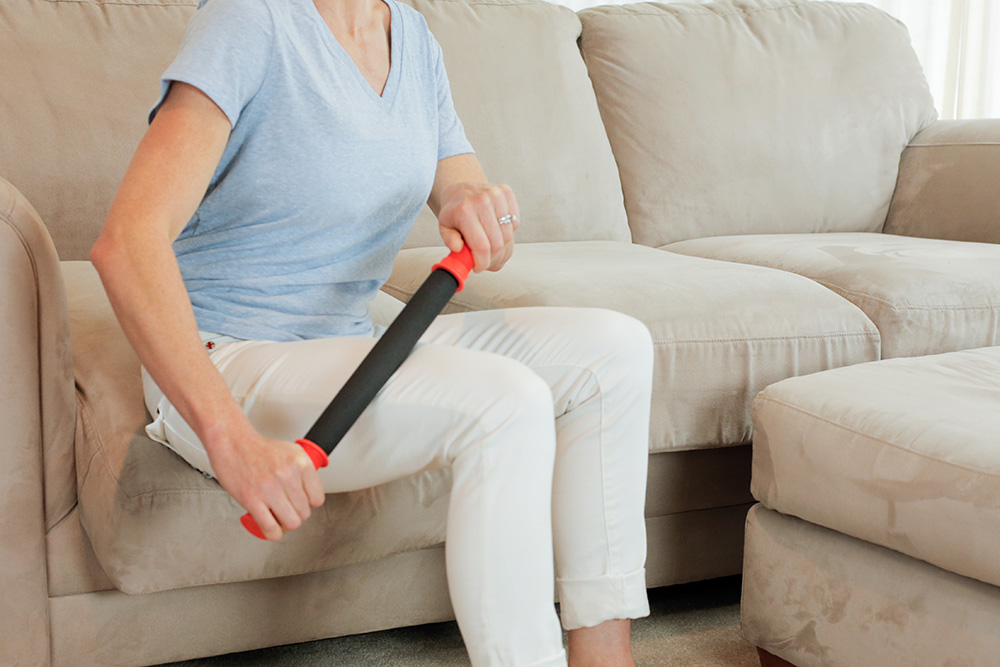
Tiger Tail handheld roller for stretching and muscle knots
A handheld roller works well when employees need fast, targeted pressure without having to get on the floor. Users can glide the roller slowly over tight areas, pause briefly on muscle knots, and then continue with smooth strokes instead of aggressive pressure. This makes the tool especially practical for pre-shift warmups, breakroom recovery, and end-of-day decompression. (Cheatham et al., 2015)
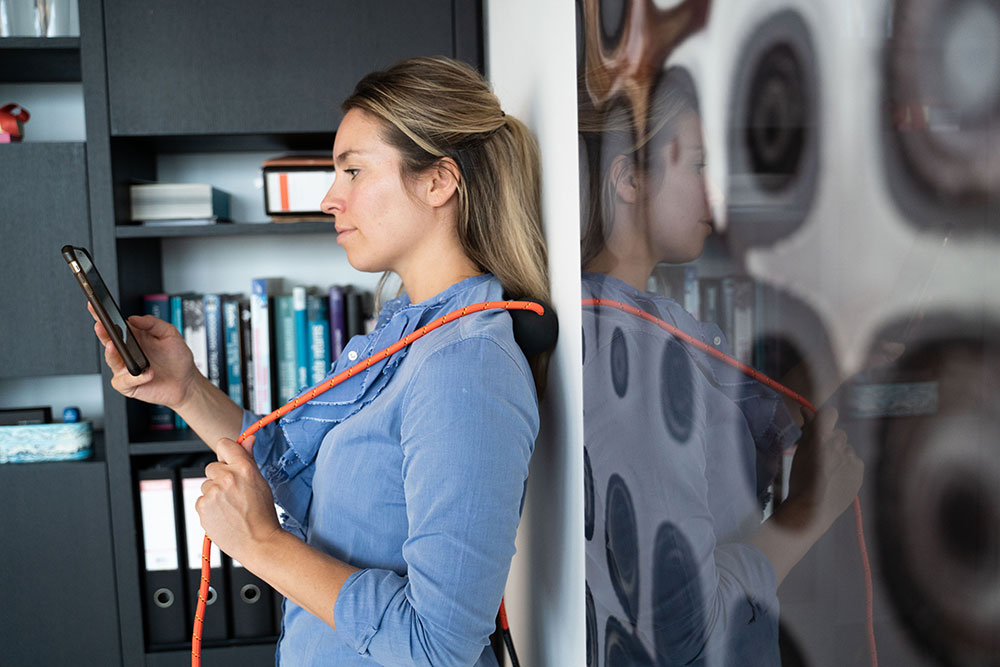
Tiger Tail massage ball for stretching and myofascial release
Tiger Tail massage balls are useful for smaller or harder-to-reach areas such as the feet, hips, shoulders, and shoulder blade region. When used against a wall or floor, they allow focused self-myofascial release with more precise pressure control than a larger roller. This makes them a strong option for employees who need targeted relief after repetitive tasks or long periods in one position. (Wiewelhove et al., 2019)
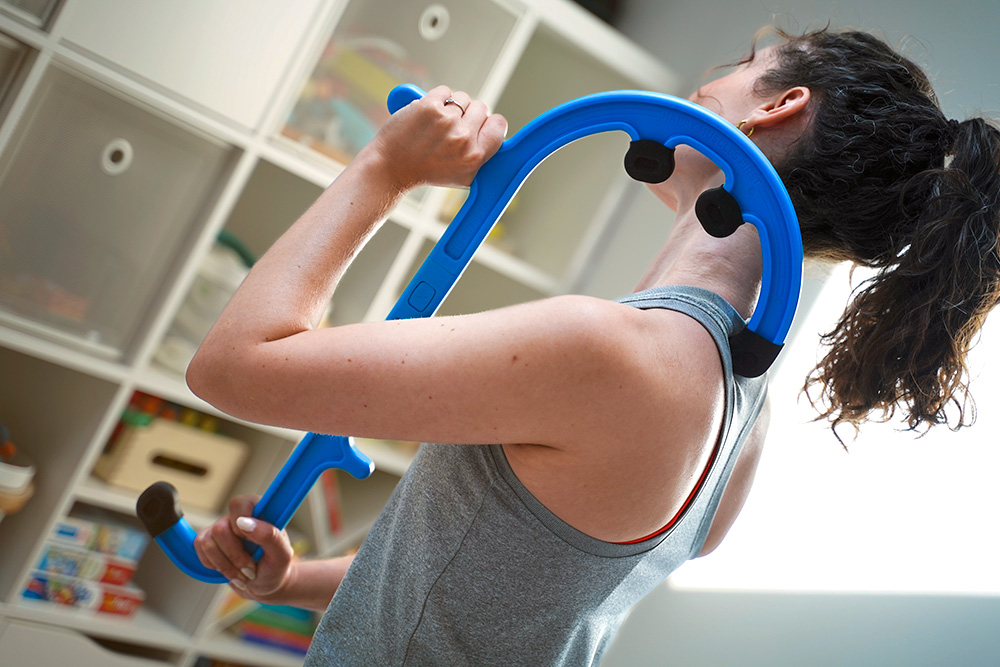
Massage Devices for Back and Muscle Knot Relief
Different massage devices serve different purposes, so it helps to match the tool type to the body area and the work environment. Handheld massage tools are often best for quick, user-controlled sessions on the shoulders, calves, forearms, and upper back. Roller-based devices work well for broader pressure across the back, hips, and legs, especially in a wellness room or pre-shift area where employees have more space. Percussion-style devices may be appropriate for larger muscle groups when used conservatively and with clear guidance on time and pressure.
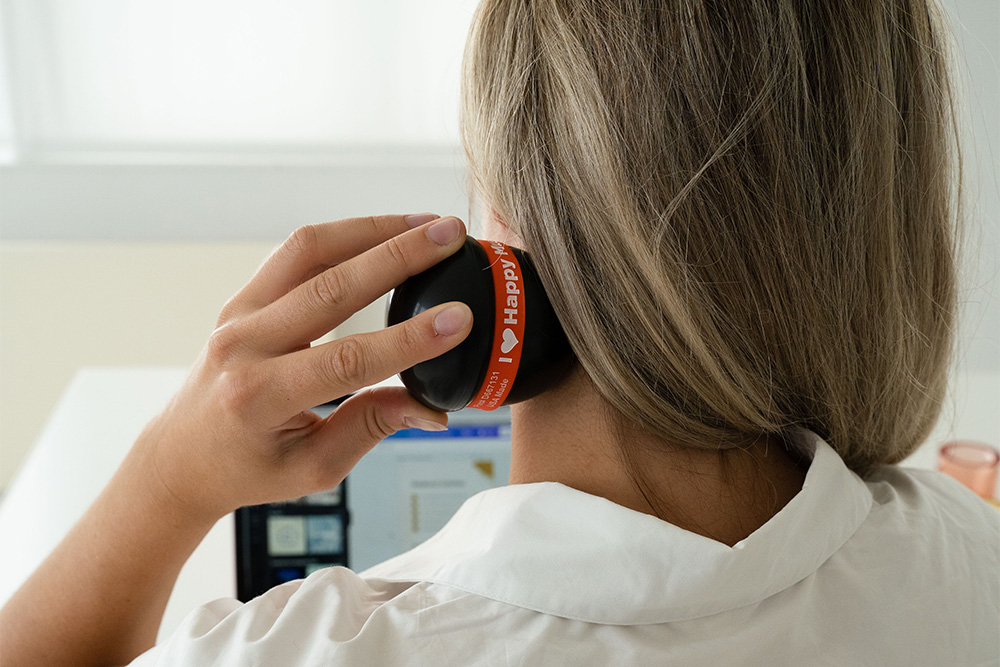
Massage Tools for Neck and Shoulder Recovery
Neck and shoulder tension is common in both industrial and desk-based roles because those areas absorb stress from repetition, posture, and fatigue. Self-myofascial release can help employees apply light, targeted pressure to muscle knot on the upper traps, shoulder blades, and surrounding soft tissue using massage balls or gentle handheld tools. Pairing that with basic stretching often makes the work feel more effective and easier to repeat throughout the week. (Wiewelhove et al., 2019)
Choosing the right device
Pressure control is one of the most important factors regardless of tool type. The goal is to apply enough pressure to feel productive myofascial release without turning the session into a painful experience that employees will avoid repeating. In a corporate wellness setting, these devices should support recovery habits and comfort without crossing into exaggerated medical claims. (Wiewelhove et al., 2019)
Best Practices for Daily Use
- Use self-myofascial release with controlled, moderate pressure rather than pushing into pain. (Cheatham et al., 2015)
- Add gentle stretching after rolling to reinforce easier movement patterns.
- Use heat briefly before movement when relaxation is the goal, or cold after activity when calming a worked area makes more sense.
- Focus on consistency over intensity, because short sessions repeated several times a week are usually more realistic than occasional long sessions.
What Tiger Tail Programs Work Best for Injury Prevention?
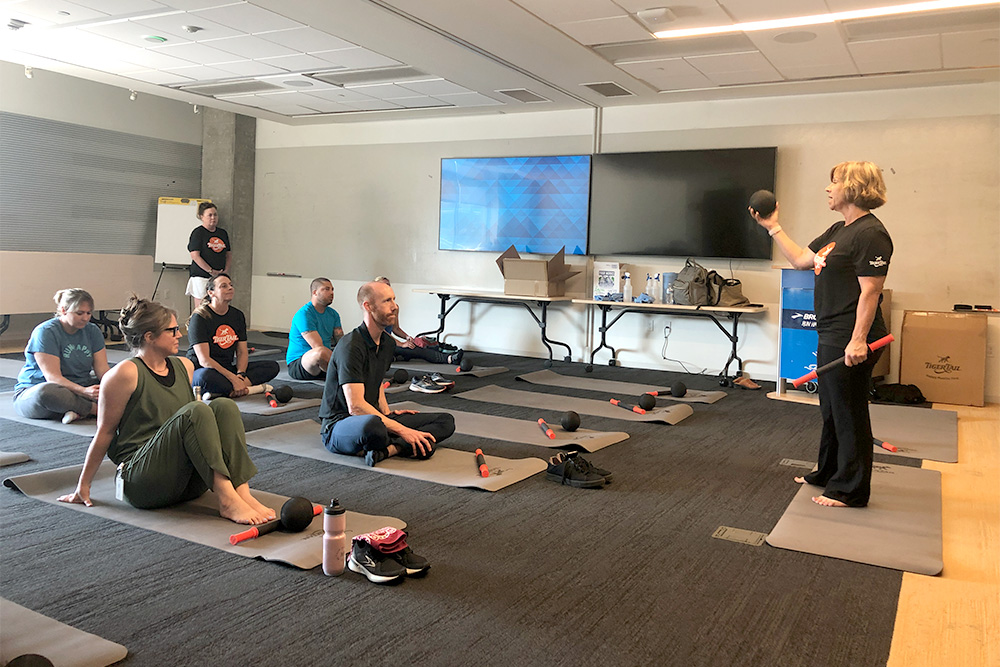
Tiger Tail’s workplace offerings are designed around real implementation rather than theory alone. The Happy Muscles 365 corporate program emphasizes short daily recovery habits, while the Stretch & Flex Method centers on structured stretching and flexibility work that can be added to safety meetings or pre-shift routines. Tiger Tail also highlights a Corporate Recess approach that encourages five- to ten-minute rolling breaks for sedentary or fatigued muscles during the workday.
Reported injury and savings data
In one Tiger Tail case study, MacDonald-Miller reported that recordable injuries dropped 67 percent after adding Tiger Tail rollers to its pre-shift Stretch and Flex program. The same case study says injuries fell from four per year to one injury across four years total, with reported savings of $77,900 and an estimated average of $5,000 saved per injury. While company-specific outcomes depend on adoption, job demands, and program consistency, these figures show why employers see value in simple recovery systems that may help reduce downtime and improve employee readiness. (MacDonald-Miller Case Study)
Conclusion
The most engaging wellness programs are the ones employees can use without overthinking them. Tiger Tail makes that possible by turning recovery into a practical, repeatable part of the workday through handheld rollers, massage balls, and short movement routines that fit real schedules. For companies that want a more useful approach to injury prevention, fewer recordable events, and better day-to-day readiness, Tiger Tail offers a credible path to bring the best foam rolling and self-care into corporate wellness in a way employees are more likely to embrace. (Wilke et al., 2020)
References
- Cheatham, S. W., Kolber, M. J., Cain, M., & Lee, M. (2015). The effects of self-myofascial release using a foam roll or roller massager on joint range of motion, muscle recovery, and performance: A systematic review. International Journal of Sports Physical Therapy, 10(6), 827-838.
- Wilke, J., Müller, A.-L., Giesche, F., Power, G., Ahmedi, H., & Behm, D. G. (2020). Acute effects of foam rolling on range of motion in healthy adults: A systematic review with multilevel meta-analysis. Sports Medicine, 50(2), 387-402.
- Wiewelhove, T., Döweling, A., Schneider, C., Hottenrott, L., Meyer, T., Kellmann, M., Pfeiffer, M., & Ferrauti, A. (2019). A Meta-Analysis of the Effects of Foam Rolling on Performance and Recovery. Frontiers in physiology, 10, 376. https://doi.org/10.3389/fphys.2019.00376

Spring Faussett is an American entrepreneur and inventor who founded Tiger Tail USA in 2006 with just $250, building the first 20,000 iconic orange and black massage sticks in her garage. A former Division I soccer player at Washington State University, her personal recovery journey inspired a passion for solving pain problems, resulting in over 15 patents in muscle recovery innovation. Faussett is an award-winning author of Happy Muscles®—Fast: a Self-Help Guide to Un-Knot Your Pain and holds a B.A. in Business and Communications from Washington State University, plus business certificates from Harvard and the University of Washington.