Hand, Finger, and Thumb Pain

Causes
Pinky Finger Pain
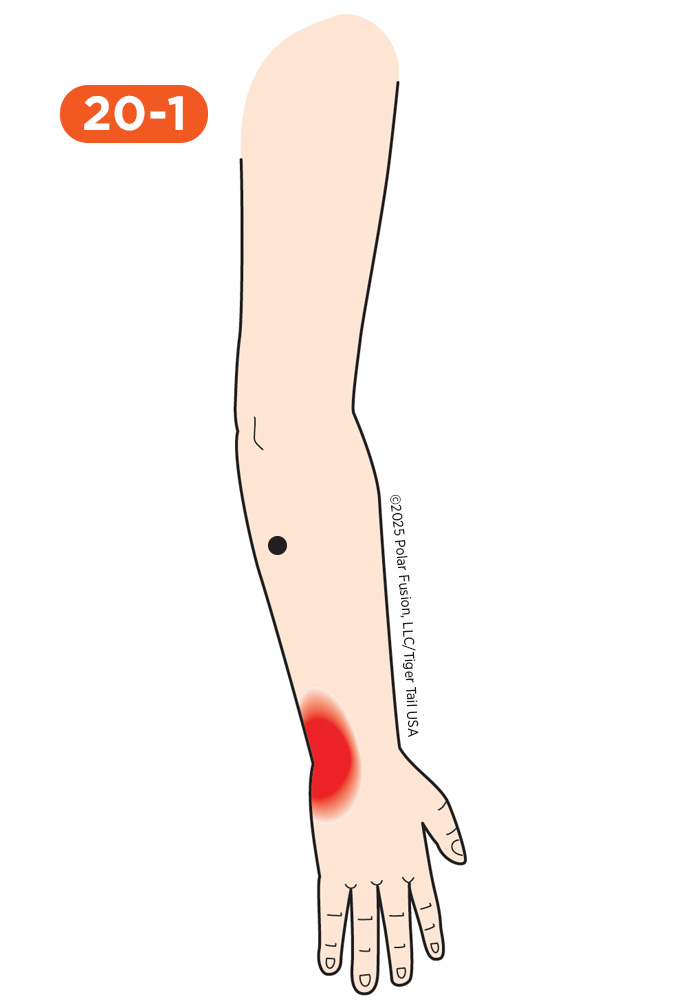
That annoying pinky finger pain or a strange tingle in your little finger is often caused by tight muscle knots in the muscle on the outside edge of your forearm, the extensor carpi ulnaris. It’s like a tiny, tight rubber band snapping all the way from your elbow down to your hand. You’ll feel discomfort usually focused along the outer edge of the wrist and can run up the forearm, presenting as a sharp, pinching ache that travels down to the little finger. You’ll find the pain gets significantly worse when you’re doing activities that require ulnar deviation or gripping, like wringing out a cloth, hammering a nail, or turning a heavy key. The resulting restriction leaves your wrist feeling restricted and unstable mimic deeper problems like ulnar nerve irritation or wrist cartilage tear, limiting rotation and grip strength. The tendon and muscle along the outer back of the forearm are often prone to pressure right near the wrist bone.
Back of Thumb and Index Finger Pain
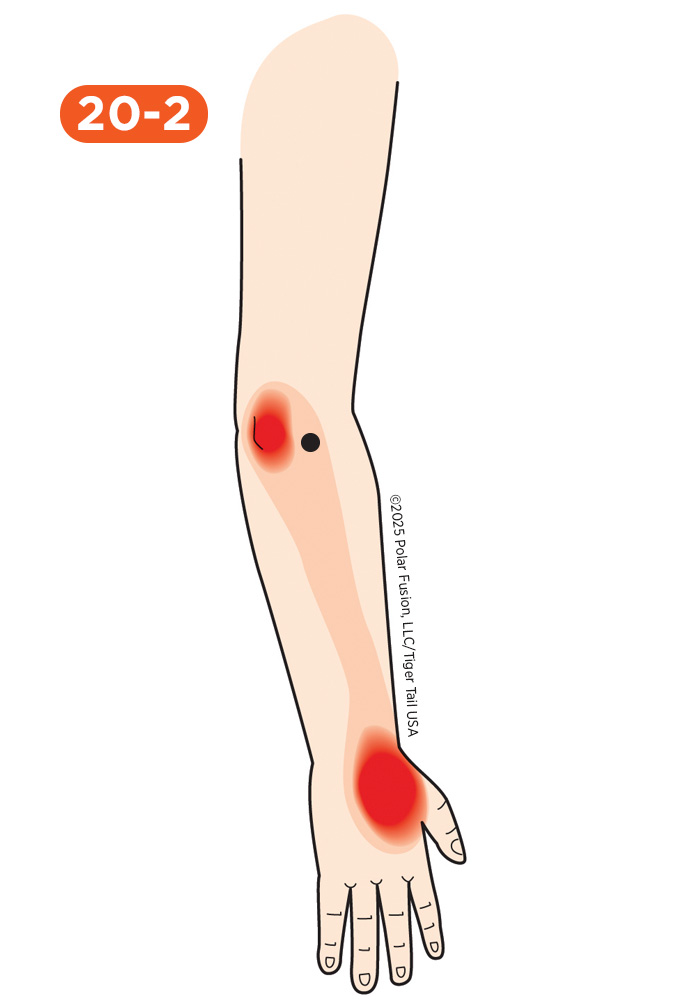
That persistent ache or pain felt on the back of your thumb and index finger is often caused by tight muscle knots in the muscle on the top side of your forearm, the extensor carpi radialis longus. You might notice a dull electrical sensation running from your arm into the base of these two fingers. The discomfort usually concentrates along the outer forearm, extending down the back of the hand, presenting as a deep, burning ache that spreads across the base of those fingers mimicing deeper problems like De Quervain’s Tenosynovitis or radial nerve irritation. The pain tends to worsen during activities that involve constant wrist extension or heavy lifting, such as carrying heavy objects with the wrist bent, using a computer mouse extensively, or lifting something heavy with the palm down. This restriction makes your wrist feel guarded and limited, affecting your ability to grip forcefully. The muscle tissue high up on the outer forearm is often tender to pressure and feels like a taut, tender band.
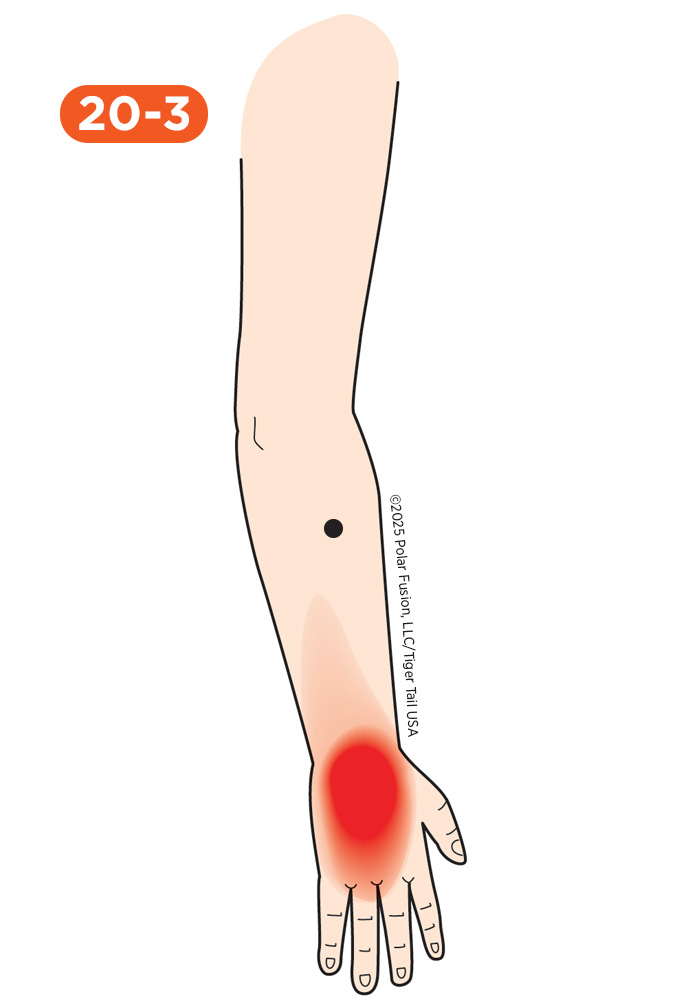
Back of Hand Pain
Let’s discuss the pain on the back of your hand and knuckles, which is often caused by tight muscle knots deep in the outward part of your forearm, specifically in the extensor carpi radialis brevis. You’ll typically feel discomfort along the outer forearm extending to the top of your hand, presenting as a deep, persistent ache that makes gripping difficult and can mimic deeper problems like tennis elbow or posterior interosseous nerve (PIN) entrapment.. The pain usually worsens during activities that require constant wrist extension, such as using a mouse for hours, shaking hands firmly, or lifting objects with your palm facing down. This restriction causes your wrist to feel guarded and unstable, limiting your grip’s strength and power. The tissue high on the back of the forearm is especially sensitive to pressure near the elbow bone.
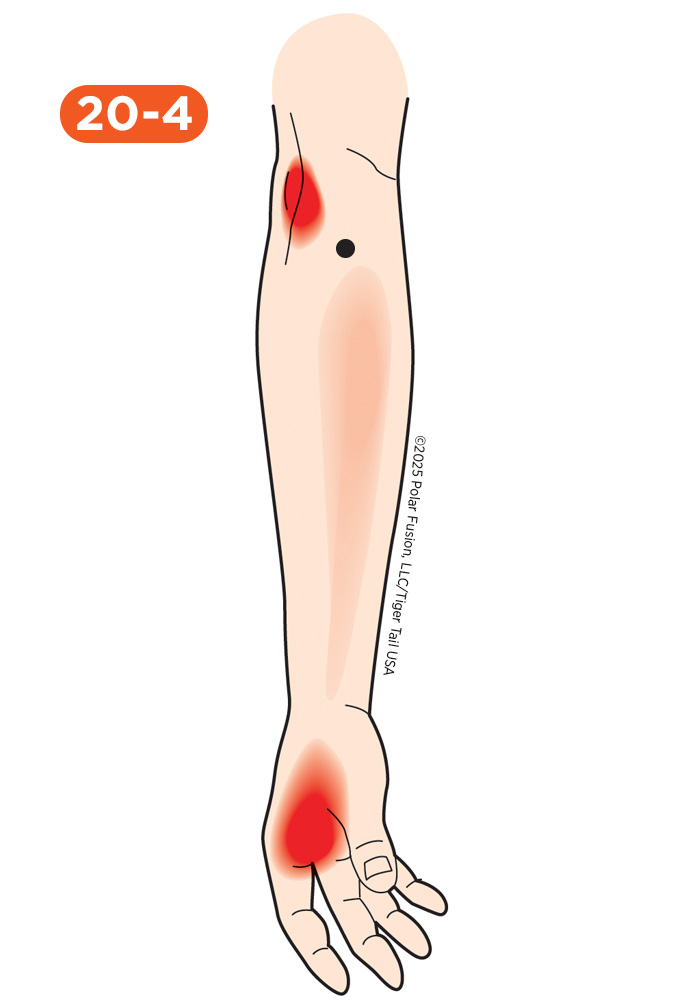
Pain in Thumb
That confusing pain in your thumb that resists localized treatment is often caused by tight muscle knots in the large muscle running along the top of your forearm, the brachioradialis. It feels like a deep, heavy tension in your arm is squeezing the nerve that controls your thumb. The discomfort usually concentrates along the thumb joint and web space but can also extend down the outside of your forearm toward the elbow, presenting as a deep, dull ache or sometimes a tingling sensation. You’ll notice the pain worsens significantly during activities that require strong rotation or gripping, such as turning a screwdriver, hammering a nail, or carrying a heavy suitcase. The resulting restriction makes your thumb feel weak and unstable, reducing your ability to pinch or grasp firmly and mimic deeper problems like De Quervain’s tenosynovitis or radial nerve compression.. The muscle belly high on the outer forearm is often sensitive to pressure and feels like a tender, taut band.
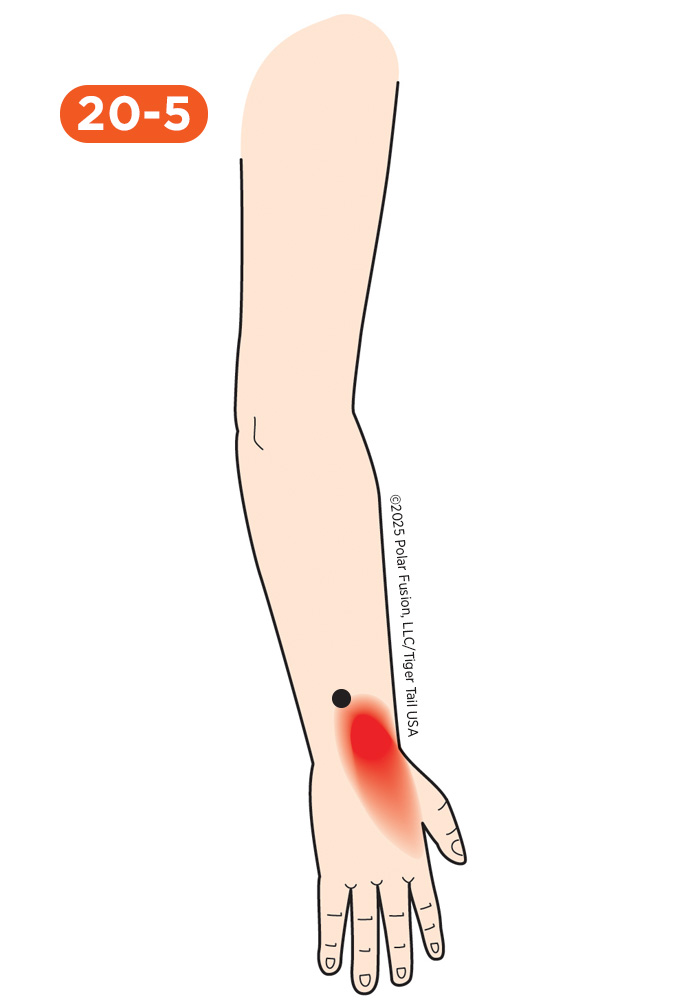
Pointing Finger Pain
If you’re feeling pain or discomfort in your pointer finger—especially on the back side—the real cause might be muscle knots in the extensor indicis. This small but important muscle runs along the back of your forearm and helps lift your index finger and stabilize your wrist during fine motor tasks. You might notice a dull ache, burning, or tightness that travels from the outer forearm into the back of your hand and index finger, sometimes mimicking carpal tunnel syndrome or arthritis. This usually gets worse with repetitive finger movements, like typing, texting, or playing instruments, and can also flare up with poor posture or shallow breathing while working at a desk. The discomfort can feel like a pinched nerve or joint pain and might cause weakness or awkwardness when trying to extend your finger or grip small objects mimicking deeper problems like Wartenberg’s syndrome or extensor tendonitis. This referred pain pattern can be confusing because it makes it seem like the problem is in the finger or wrist, when actually, it’s coming from higher up in the forearm.
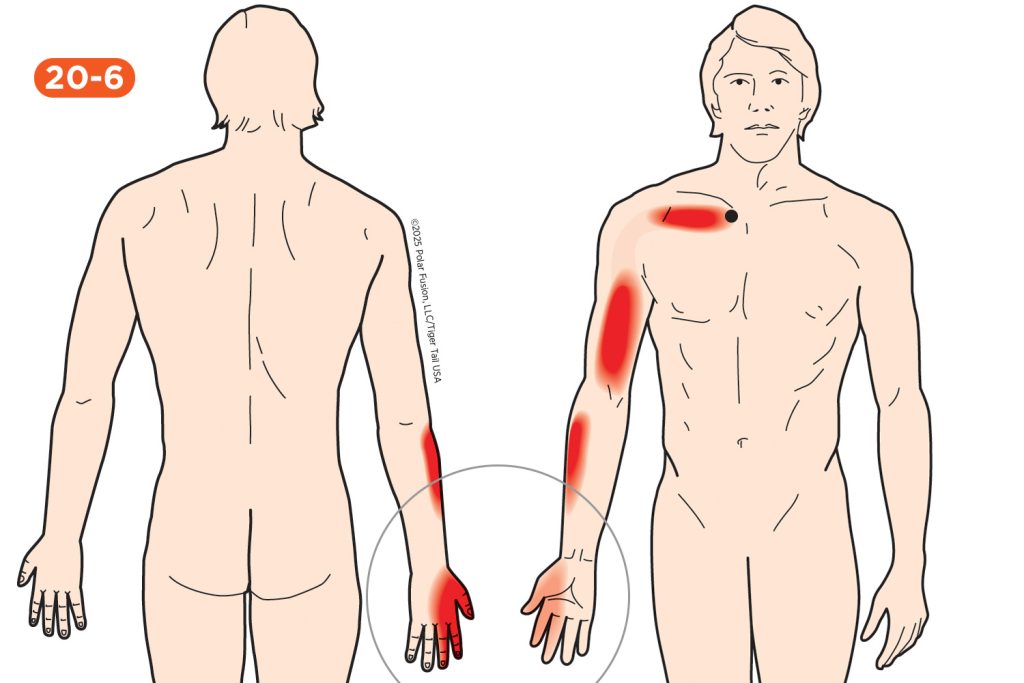
Hand Pain, Thumb and Finger Pain
That confusing pain that hits your hand, thumb, and fingers is often caused by tight muscle knots in the tiny muscle deep under your collarbone, the subclavius. The discomfort usually focuses along the inner arm and radiates into the thumb and first three fingers, presenting as a deep, pulsing ache that quickly turns into a burning tingle. This pattern can mimic deeper problems like thoracic outlet syndrome or cervical disc herniation.You’ll find the tingling and pain get significantly worse when you’re doing activities that press down on your shoulder, like carrying a heavy backpack, reaching forward to push open a heavy door, or sleeping on your stomach with your arm stretched out. The resulting restriction leaves your shoulder feeling guarded and unstable, limiting your ability to lift your arm overhead. The tissue deep under the collarbone is often susceptible to pressure and feels like a small, sensitive knot.
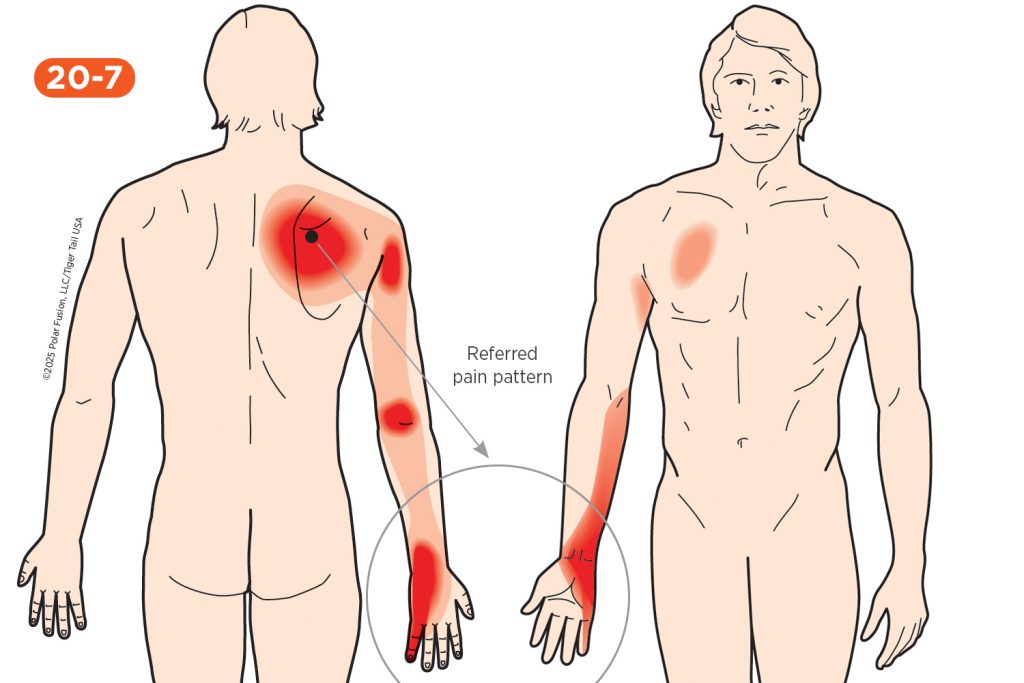
Pinky Finger Pain
Suppose you’re feeling a strange ache or sharp discomfort in your pinky finger. In that case, the real problem might be coming from high up in your back—specifically from muscle knots in a deep, thin muscle under your upper shoulder blade, the serratus posterior superior. This muscle helps lift your ribs for breathing and stabilizes your upper back. When it develops tight knots, the pain usually focuses along the inner arm and forearm, presenting as a sharp, pinching tingle that travels down to the little finger and can mimic deeper problems, such as ulnar nerve irritation or cubital tunnel syndrome. You’ll find the pain gets significantly worse when you’re doing activities that stress the rib cage and arm, like taking a deep, forced breath, coughing or sneezing, or reaching forward to lift a heavy box. The resulting restriction leaves your hand feeling heavy and restricted, preventing fine motor control. The muscle right under the upper shoulder blade is often susceptible to pressure and feels like a sensitive, taut band.
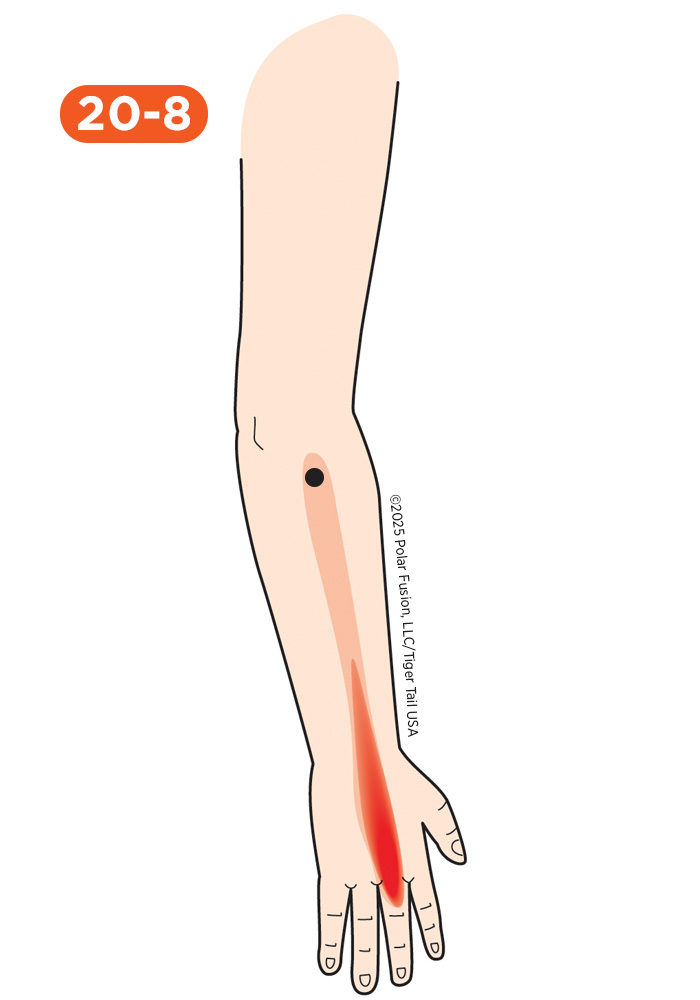
Middle Finger Pain
When the muscle responsible for extending or lifting your middle finger, often called the middle finger extensor, is causing trouble, the pain you feel often extends right into the hand. You’ll typically feel a deep, burning ache right in the middle of your forearm, near the top, and this discomfort frequently shoots down the tendons to the back of your hand and middle finger. This presentation can mimic deeper problems like posterior interosseous nerve entrapment or extensor tendonitis.This muscle gets overworked from repetitive, isolated finger use, such as intense typing, clicking a mouse constantly, or using small hand tools. It can be super tender if you press on the muscle belly in the forearm, and the pain often gets worse when you try to forcefully straighten or lift your middle finger. Issues here are a common contributor to repetitive strain injuries, leaving that specific finger feeling weak and painful during fine tasks.
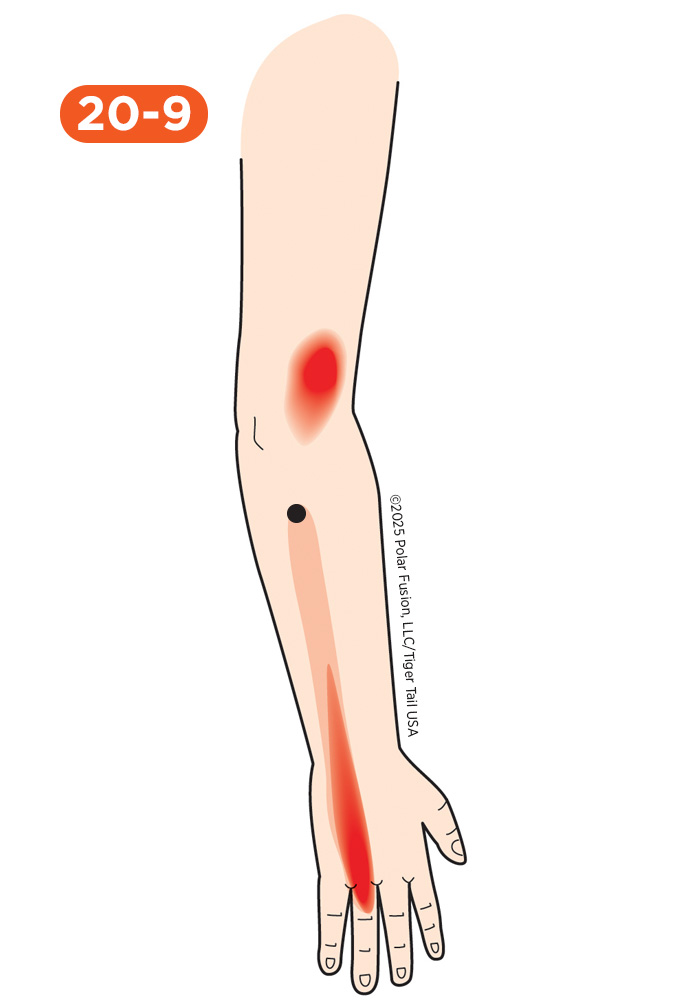
Ring Finger Pain
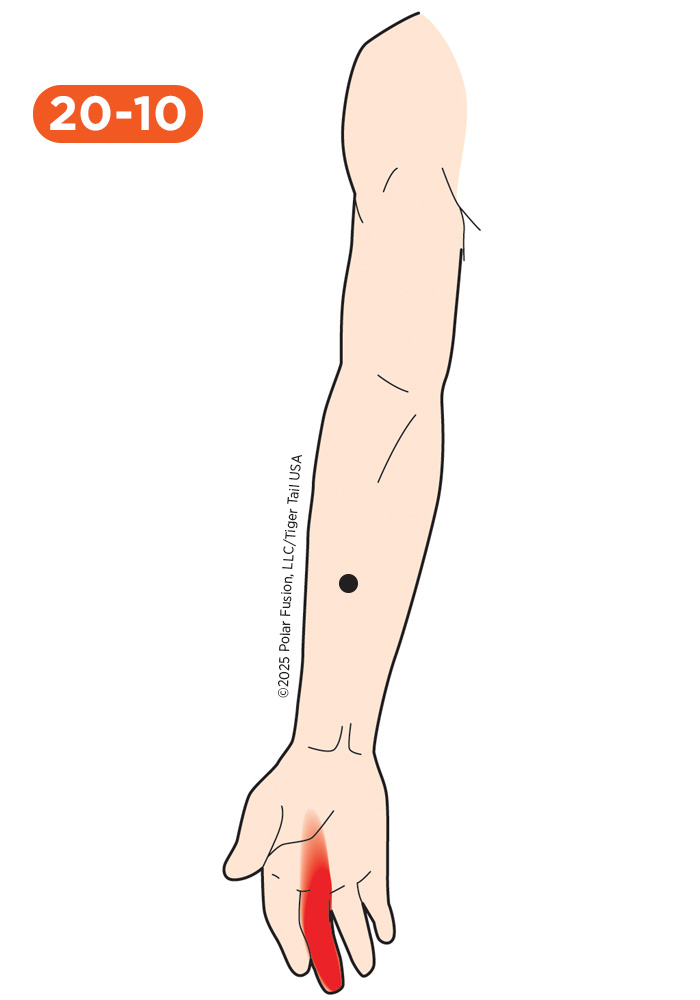
Middle Finger Pain
That nagging pain you feel in your middle finger is often caused by tight muscle knots in the part of your forearm muscle that controls finger curling, the flexor digitorum radial head. It’s like the tendon is being pulled too tight, causing the ache to land right in your finger joint. The discomfort usually focuses along the palm side of the middle finger and the forearm near the thumb side, presenting as a deep, constant ache that makes curling difficult mimic deeper problems like trigger finger or tendon strain. You’ll find the pain gets worse when you’re doing repetitive gripping, like carrying a bag by the handle, typing aggressively, or forcefully squeezing a tool. The resulting restriction leaves your finger feeling stiff and restricted, limiting its ability to curl completely. The tissue high up in the middle of the forearm is often susceptible to pressure and feels like a tender, taut band.
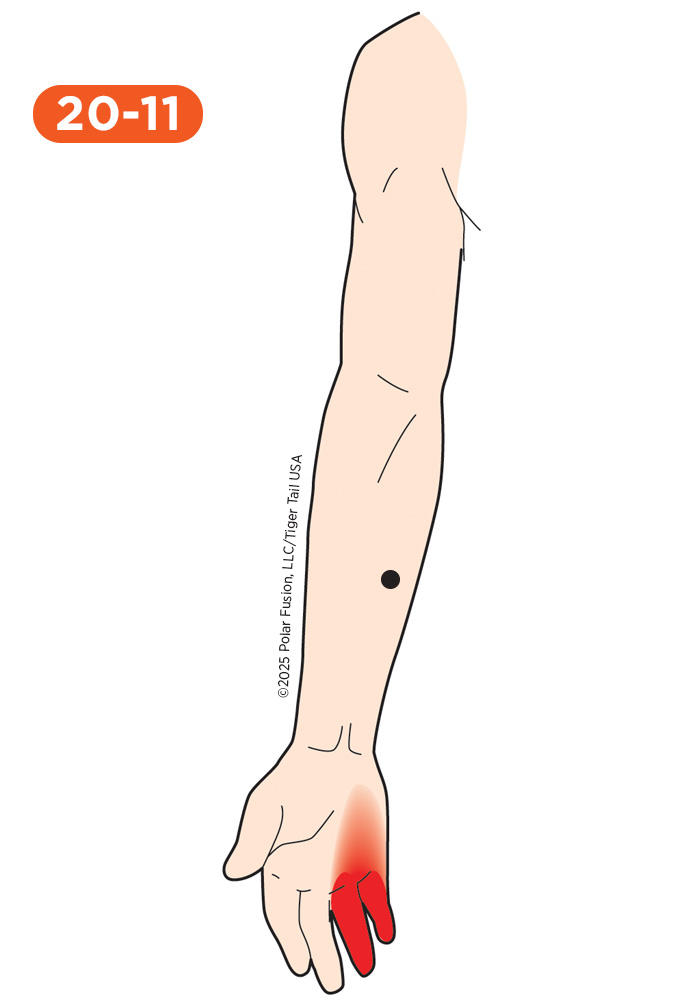
Ring Finger and Pinky Pain
That strange, persistent ache in your ring and pinky fingers is often caused by tight muscle knots in the flexor digitorum humeral head, the muscle that curls those two fingers. It feels like a dull, electrical current running from your inner elbow into your little finger. Usually, the discomfort is felt along the palm side of the ring and pinky fingers, as well as the inner forearm, presenting as a deep, throbbing ache that worsens with gripping. You’ll notice the pain becomes significantly worse during activities that involve strong, repetitive curling, such as squeezing garden shears, wringing out a cloth, or carrying a heavy suitcase. This restriction makes those two fingers feel weak and limited, affecting your ability to make a tight fist and can mimic deeper problems like cubital tunnel syndrome or ulnar nerve irritation.The muscle high up on the inner forearm near the elbow is often sensitive to pressure and feels like a knot.
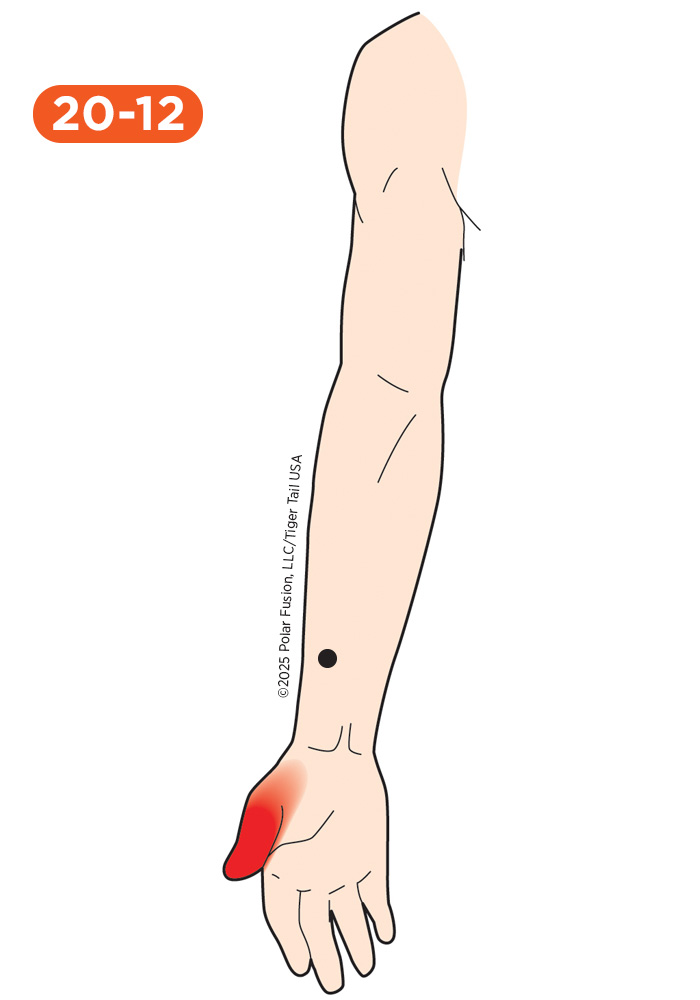
Thumb Pain
It’s like your thumb is trying to bend but hits a wall halfway—almost like a stuck hinge—due to muscle knots in the deep forearm muscle called the flexor pollicis longus. The pain typically concentrates along the inner forearm and radiates down into the thumb, often feeling like a deep, burning ache or a sharp tug when you try to flex and ca mimic deeper problems like trigger thumb or De Quervain’s Tenosynovitis. It becomes much worse when you’re doing activities like pinching a zipper, holding a pen tightly while writing, or pressing your thumb against your phone screen to scroll. This kind of discomfort makes your thumb feel stiff and unreliable, and you may notice you’re avoiding complete flexion or gripping tasks. The area is especially sensitive to pressure, particularly along the front of the forearm just below the elbow and into the wrist.
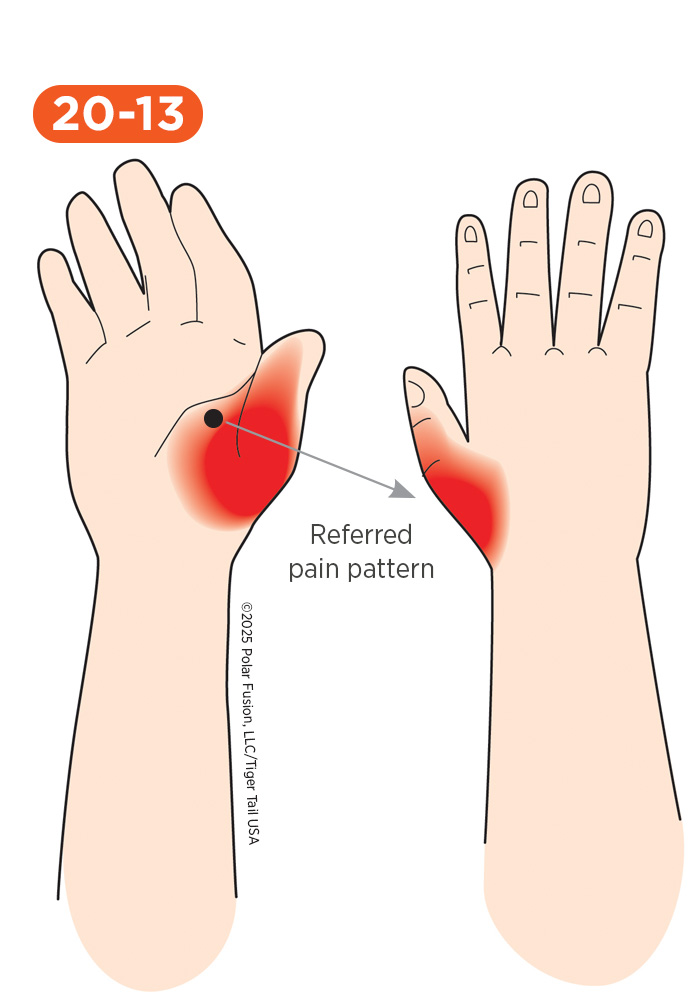
Thumb-Web Muscle Pain
That intense, deep pain in the web of muscle between your thumb and index finger is often caused by tight muscle knots in the powerful muscle that pulls your thumb in, the adductor pollicis. It’s like a deep, persistent cramp that won’t let your hand relax. The discomfort usually focuses deep in the web space and the base of the thumb, presenting as a sharp, aching pinch that intensifies with use and mimic deeper problems like carpometacarpal joint arthritis or De Quervain’s Tenosynovitis. You’ll find the pain gets significantly worse when you’re doing activities that require pinching or grasping, like opening a bottle, using scissors, or gripping a golf club tightly. The resulting restriction leaves your hand feeling weak and restricted, severely compromising your ability to maintain a strong grip or pinch. The tissue in the web of the hand is often susceptible to pressure and feels like a dense, incredibly tender lump.
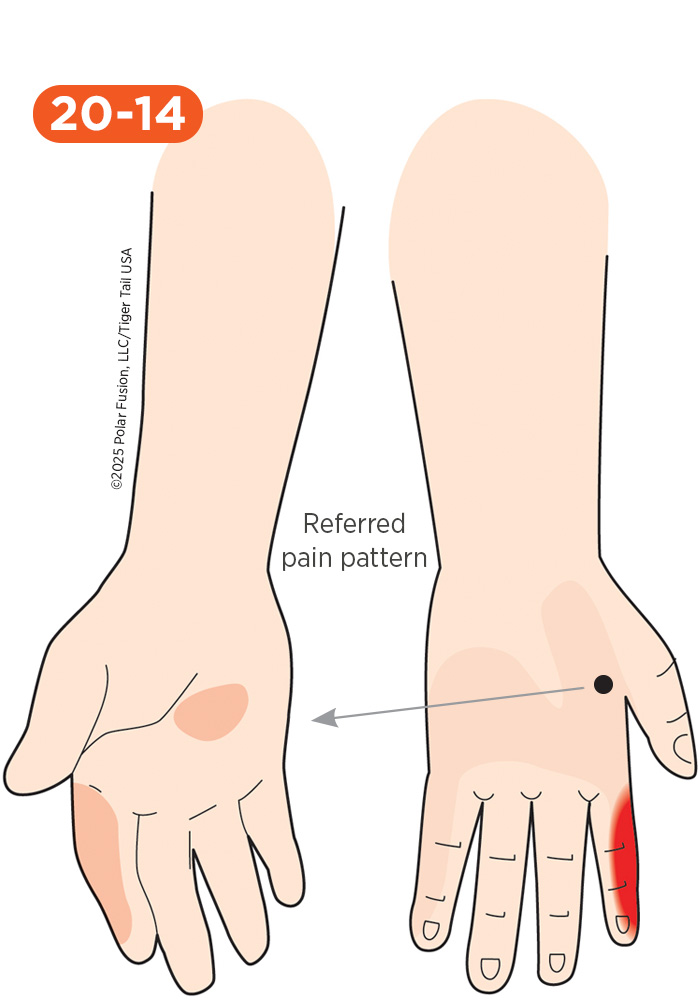
Prickling Pain in the Palm of the Hand
That strange prickling pain in the palm of your hand is often caused by tight muscle knots in the small muscle between your thumb and index finger, the first dorsal interosseous. You’ll feel a dull electrical current running through the meat of your hand. The discomfort typically focuses on the palm and the base of the index finger, presenting as a sharp, specific ache that sometimes includes a burning sensation and can mimic deeper problems like carpal tunnel dyndrome or ulnar nerve irritation.. You’ll find that the pain gets significantly worse when you’re doing activities that require pinching or grasping, such as holding a pencil tightly, using scissors, or gripping a steering wheel. The resulting restriction leaves your hand feeling weak and guarded, severely compromising your ability to pinch or grasp strongly. The tissue deep in the web space between your first two fingers is often susceptible to pressure and feels like a dense, incredibly tender lump.
Finger Stiffness
If the tiny muscles between your hand bones get tight, you can experience frustrating finger stiffness! When a knot forms in the muscle in the web of skin between your thumb and index finger, the first dorsal interosseus. You’ll find the pain tends to be specific but often feels like an achy or dull sensation on the back of your index finger and along the thumb side of the hand and can mimic deeper problems like arthritis or extensor tendonitis. The main complaint is often stiffness and difficulty with dexterity—you may struggle with fine motor tasks like writing, typing, or gripping small objects firmly. Trying to spread your fingers apart or use a “pinch” grip can make that area feel tight and weak. Since the knot is right there on the back of your hand, you can usually press on that tender, fleshy web space to temporarily reproduce the discomfort and stiffness.
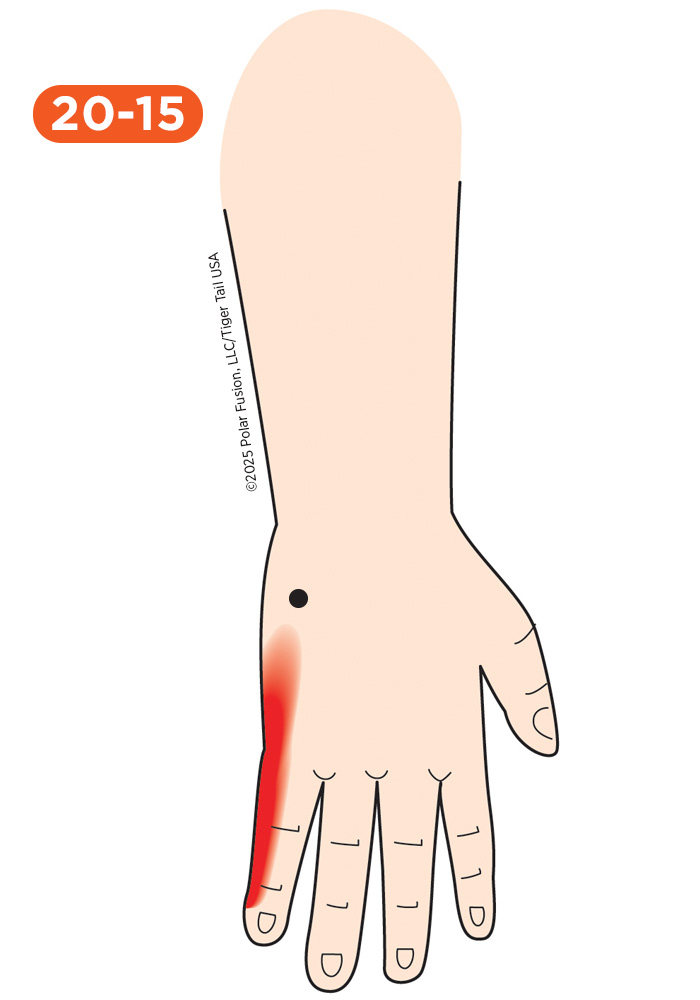
Finger Stiffness
Pinky Finger Pain
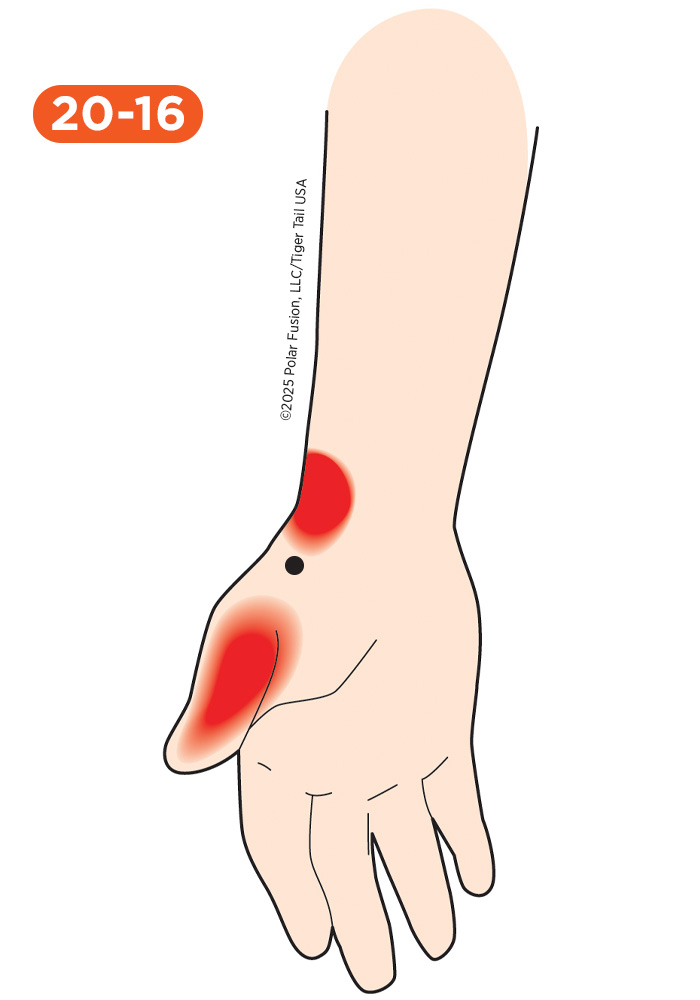
Pain at the Base of Thumb
That aching pain at the base of your thumb is often caused by tight muscle knots in the small muscle that helps your thumb move across your palm, the opponens pollicis, making the base of your thumb feel like it is stuck in a vise. The discomfort typically centers on the fleshy mound below the thumb, presenting as a deep, sore ache or a sharp pinch when trying to grip or twist and can mimic deeper problems like carpometacarpal joint arthritis or De Quervain’s Tenosynovitis. It gets significantly worse when you’re doing things like opening jars, holding a book open with one hand, or using your thumb to press buttons. This kind of pain makes your thumb feel weak and hesitant, limiting your ability to oppose or press firmly. The tender spot is usually found in the web of the thumb and feels sore and tight to the touch.
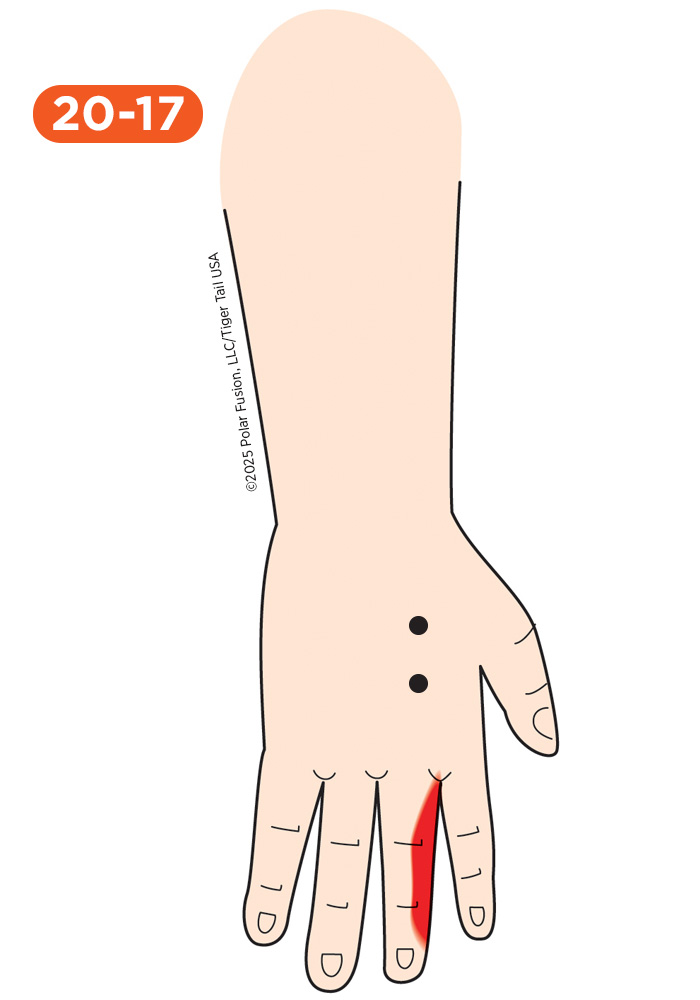
Prickling Pain in the Palm of the Hand
That strange prickling pain in the palm of your hand is often caused by tight muscle knots in the small muscle between your index and middle finger, the second dorsal interosseous. It feels like a dull electrical current running through the tissue of your hand. The discomfort usually concentrates across the palm and the base of the index and middle fingers, presenting as a sharp, specific ache that can mimic deeper issues like carpal tunnel syndrome or Morton’s neuroma. You’ll find the pain worsens significantly when you’re doing activities that involve pinching or grasping, such as holding a pencil tightly, using scissors, or gripping a steering wheel. This restriction can leave your hand feeling weak and guarded, severely impairing your ability to pinch or grasp firmly. The tissue deep in the web space between your index and middle fingers often becomes susceptible to pressure and feels like a dense, highly tender lump.
Finger Stiffness
That confusing feeling of finger stiffness, especially in your index and middle fingers, is often caused by tight muscle knots in the small muscle that moves these fingers, the second dorsal interosseous. You’ll feel like your fingers are tied together and won’t move independently. The discomfort usually focuses at the base of the index and middle fingers and across the top of the hand, presenting as a sharp, pinching ache that restricts movement and can mimic deeper problems like arthritis or capsulitis. You’ll find the stiffness gets significantly worse when you’re doing activities that require fine motor control, like typing quickly, playing a musical instrument, or holding small objects delicately. The resulting restriction leaves your fingers feeling stiff and restricted, limiting their ability to move freely away from each other. The tissue deep in the web space between your index and middle fingers is often susceptible to pressure and feels like a dense, inflexible lump.
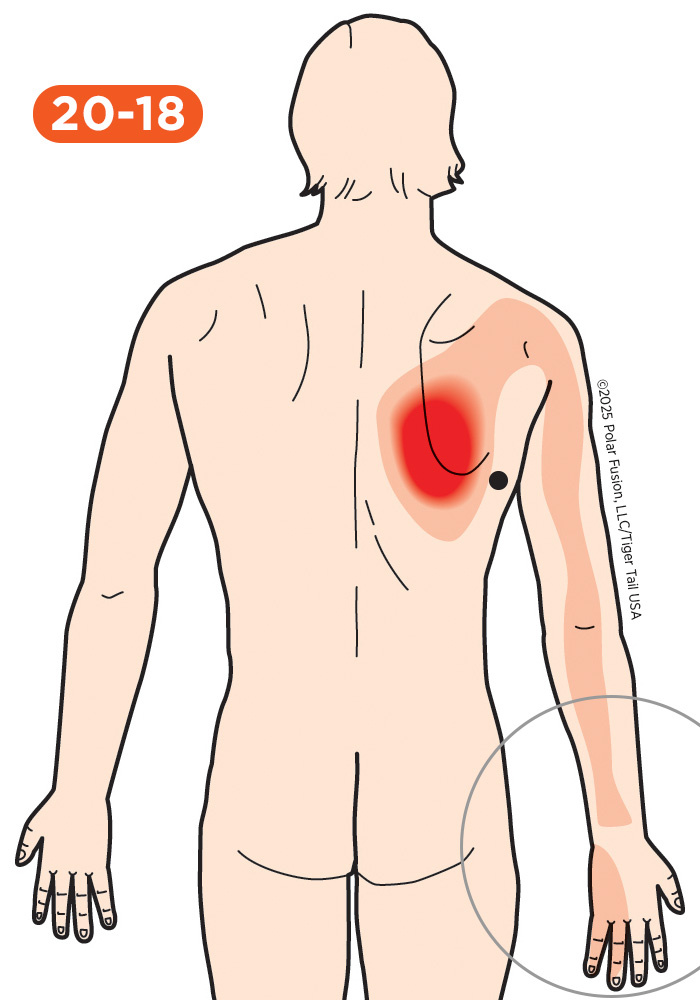
Hand Numbness
That strange tingling and hand numbness you feel is often caused by tight muscle knots in the large muscle on your back, the latissimus dorsi. The discomfort typically focuses along the inner arm and radiates down into the fingers, presenting as a deep, heavy ache that quickly turns into a pins-and-needles sensation. This can mimic more serious issues like thoracic outlet syndrome or ulnar nerve entrapment. You’ll notice the tingling and numbness worsen significantly when you do activities that stretch or compress the area, such as carrying a heavy suitcase, pulling open a heavy door, or sleeping with your arm raised overhead. The restriction resulting from this leaves your arm feeling heavy and weak, limiting your ability to lift it fully, especially when tender or taut.
Hand, Finger and Thumb Pain
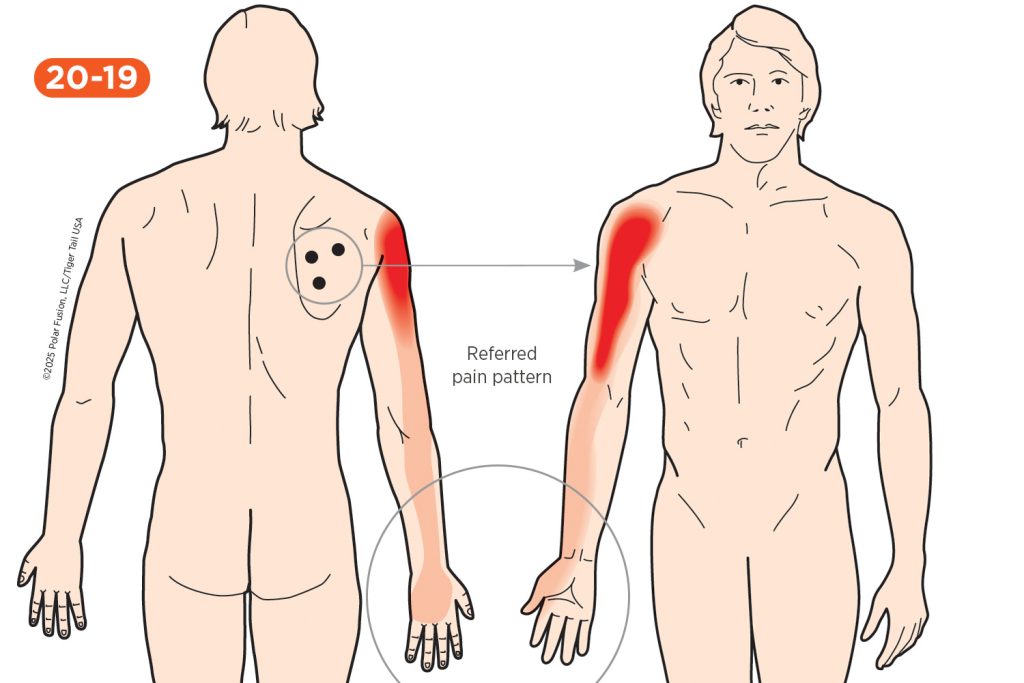
That persistent, achy hand pain that seems resistant to wrist treatment stems from muscle knots in the large muscle on the back of your shoulder blade, called the infraspinatus. You’ll feel a deep, throbbing ache that runs down the back of your arm and settles into your hand. The discomfort usually focuses deep inside the shoulder joint but is felt as a dull, deep ache that can extend along the outside of the arm and into the hand. This can mimic more serious problems, such as nerve irritation in the neck or carpal tunnel syndrome. You’ll notice the pain worsens when engaging in activities that require rotation or sustained tension, like driving for long periods, reaching across your body, or sleeping on the affected side. The resulting restriction causes your shoulder to feel guarded, which makes your hand feel weak and clumsy. The muscle tissue just beneath the back of the shoulder blade is often sensitive to pressure and can feel like a dense, tender lump.
Thumb and Finger Pain
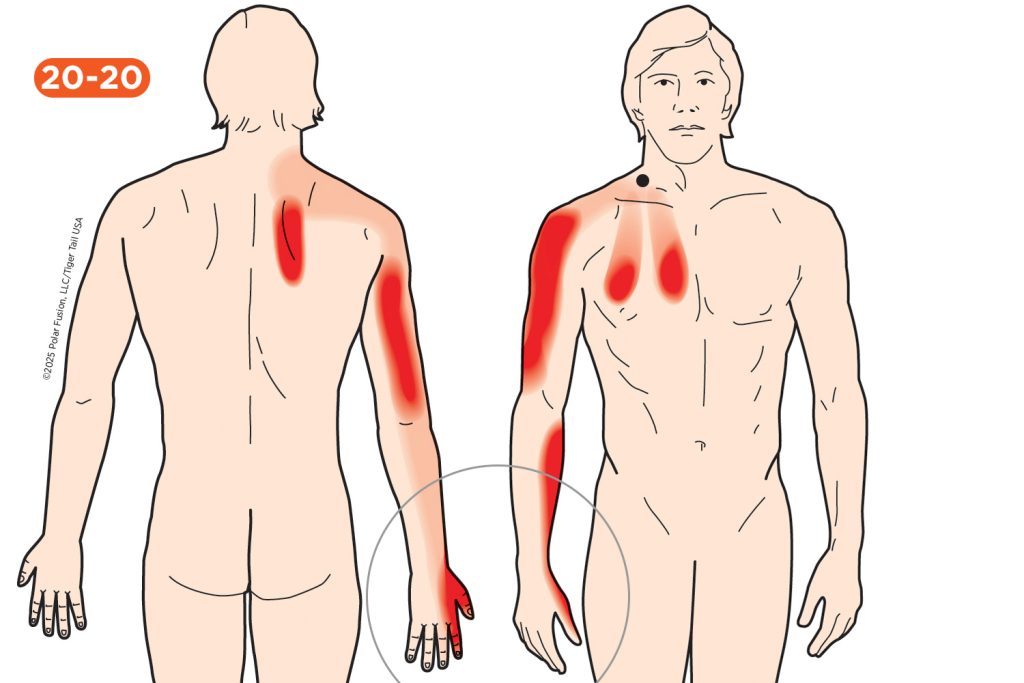
When those deep muscles on the side of your neck, the scalenes, are causing trouble, the pain you feel is often confusing because it travels far down your limb. You’ll typically feel a deep ache concentrated in your shoulder and upper arm, but the most frustrating part is the tingling, numbness, or pain that radiates into your hand and fingers, often affecting the thumb and index finger. This happens because the scalenes are positioned right around the bundle of nerves (the brachial plexus) that runs from your spine to your hand. When the muscles tighten or spasm due to stress, poor posture, or shallow breathing, they can squeeze those nerves and mimic carpal tunnel syndrome or cervical disc herniation. You’ll notice the discomfort gets worse when you turn your head sharply or lift your arm for prolonged periods, making this neck issue the sneaky cause of your hand discomfort.
Middle of Palm Pain
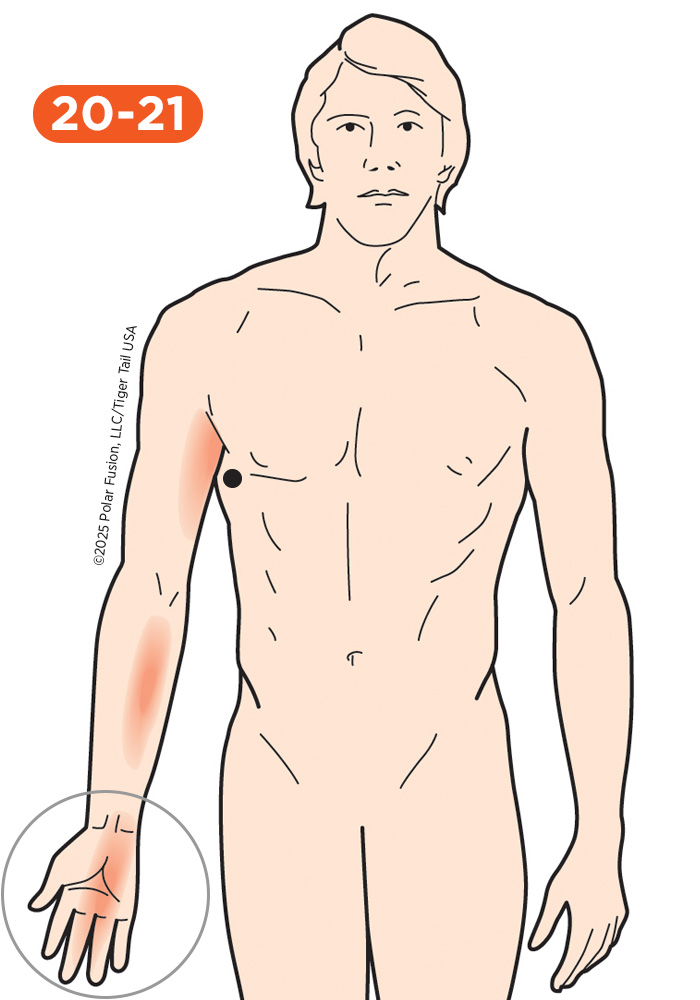
That strange tingling and hand numbness you feel can often be caused by tight muscle knots in the huge muscle on your back, the latissimus dorsi. The discomfort usually focuses along the inner arm. It radiates down into the middle of the palm and feels like a deep, heavy ache that quickly turns into a pins-and-needles tingle. This can mimic deeper problems, such as thoracic outlet syndrome or ulnar nerve entrapment. You’ll find the tingling and numbness get worse when you’re doing activities that stretch or compress the area, like carrying a heavy suitcase, pulling open a heavy door, or sleeping with your arm held overhead. The resulting restriction leaves your arm feeling heavy and weak, limiting your ability to lift it fully.
Middle Finger and Top of Hand Pain
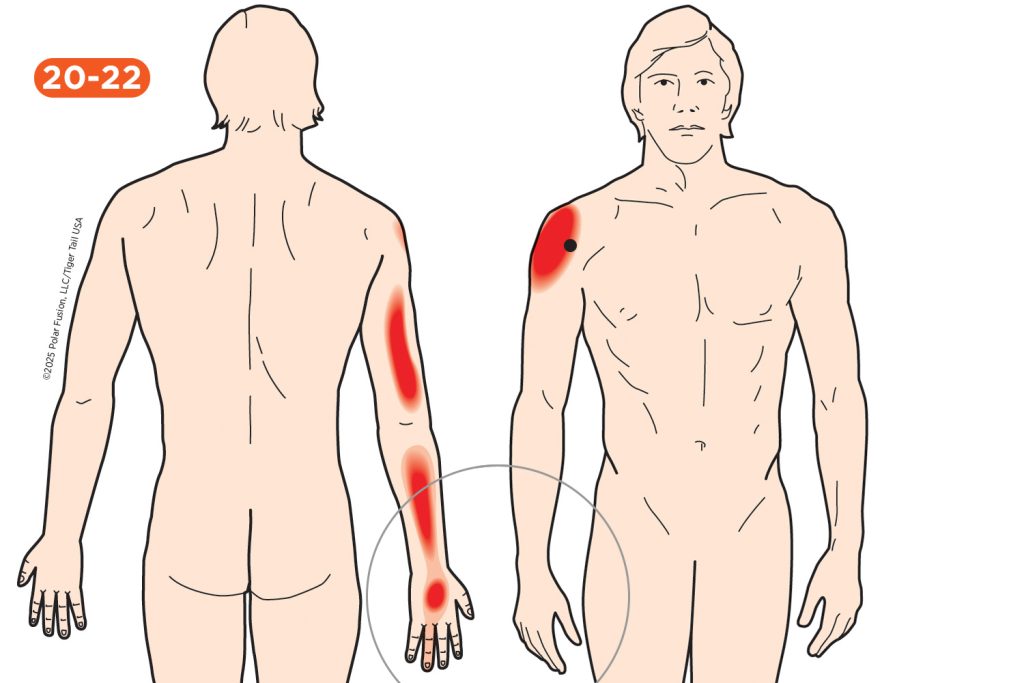
That confusing sensation of middle finger numbness and pain on the top of your hand is often caused by tight muscle knots in the small muscle in the upper arm, the coracobrachialis. It feels like a deep, aching blockage in your upper arm is cutting off circulation to your hand. The discomfort usually concentrates along the inside of the upper arm and down to the back of the hand, presenting as a deep, dull ache that may include tingling in the top of the hand and the ring finger. This can mimic more serious problems like cervical nerve irritation or thoracic outlet syndrome. You’ll notice that the tingling and pain become significantly worse when you perform activities that shorten the muscle, such as holding a phone to your ear, reaching across your body, or sitting with your elbows forward. The resulting restriction leaves your arm feeling guarded and limited, making it hard to fully straighten your elbow. The coracobrachialis muscle is often susceptible to pressure and feels like a tender, taut knot.
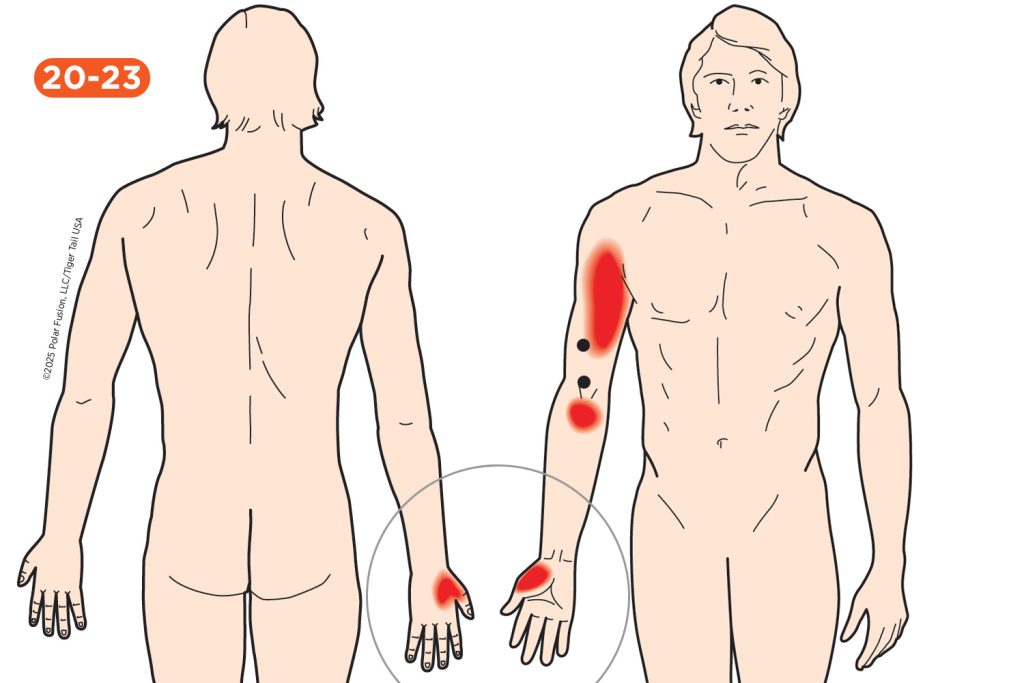
Base of Hand and Thumb Pain
That mysterious, achy pain at the base of your hand and thumb is often caused by pain originating from tight muscle knots in the deep muscle beneath your biceps, the brachialis. It’s like a deep, heavy tension in your upper arm confuses the nerves in your hand. The discomfort typically concentrates deep in the wrist and thumb joint, presenting as a constant, deep throbbing sensation that feels heavy and can mimic more serious problems, such as carpal tunnel syndrome or De Quervain’s Tenosynovitis. You’ll notice the pain worsens significantly during activities that require sustained strength, such as carrying heavy bags of groceries, pulling open a heavy door, or lifting objects with your palm up. The resulting restriction leaves your elbow feeling guarded, which limits your ability to generate a strong grip. The muscle deep in the front of your upper arm is often sensitive to pressure and feels like a tender, dense cord.
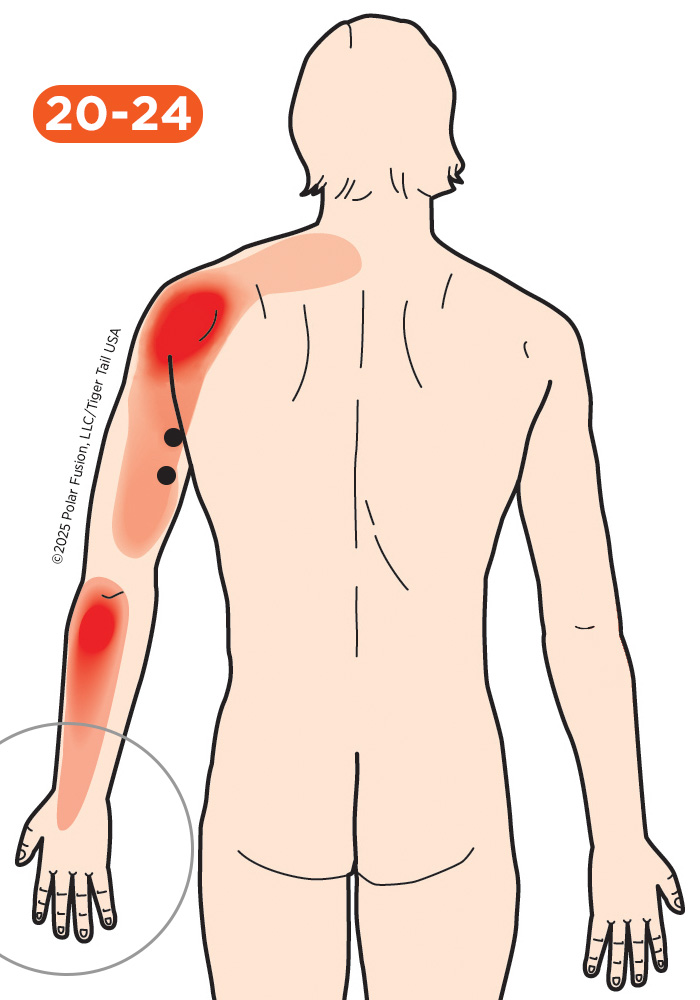
Pain in Your Hand
When the large muscle running along the back of your upper arm, the triceps brachii muscle, is causing trouble, the pain can be strangely misleading and confusing. You’ll typically feel a deep ache right at the back of your shoulder and elbow, but this discomfort can travel all the way down the back of your arm, settling right into the hand and little finger. It often causes a perplexing tingling or numbness that feels exactly like a nerve issue. This muscle’s job is to straighten your elbow, so it gets strained by things like forceful pushing or heavy pressing motions. When it’s tight, it can influence nerve pathways that lead to your hand, leaving your entire arm feeling heavy, weak, and causing that strange, persistent pain in your pinky side.
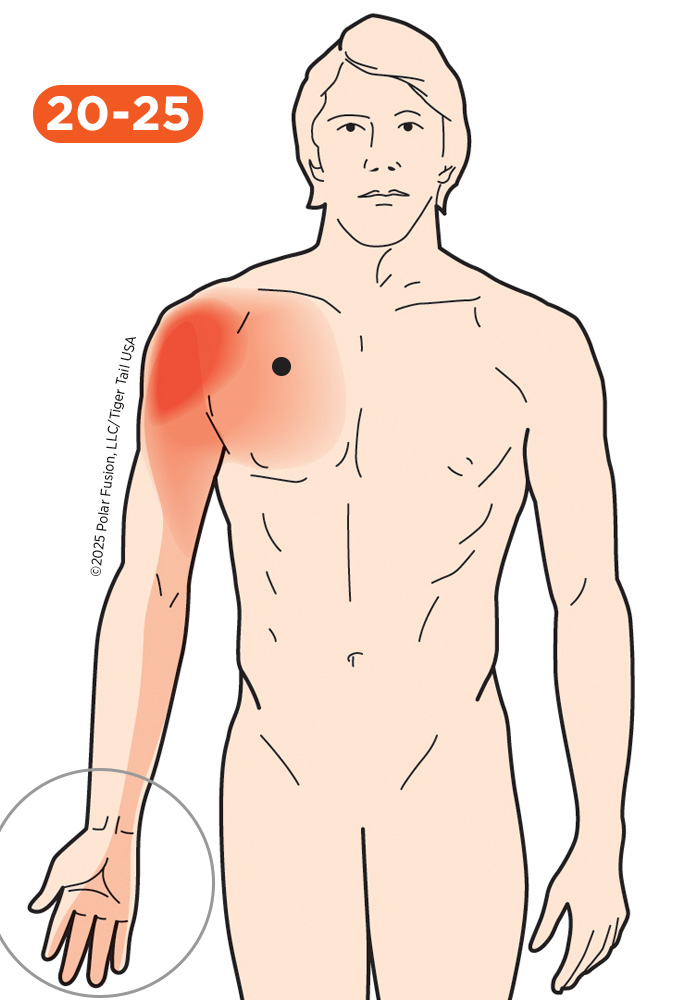
Hand Pain
If you’re experiencing a persistent, deep ache in your hand—especially one that pulses or extends down your inner arm—it could be caused by a muscle knot deep in the chest, the pectoralis minor. Muscle knots can irritate nearby nerves, sending pain signals down your arm and into your hand. This type of pain may resemble nerve irritation or even mimic conditions like thoracic outlet syndrome. You might notice that the pain worsens when your shoulders are hunched forward—for example, when you’re driving, carrying a heavy bag across your chest, or sleeping on your side with your arm pulled forward. If you press just below your collarbone and feel a tender, sore spot, that’s often where the tension is located.
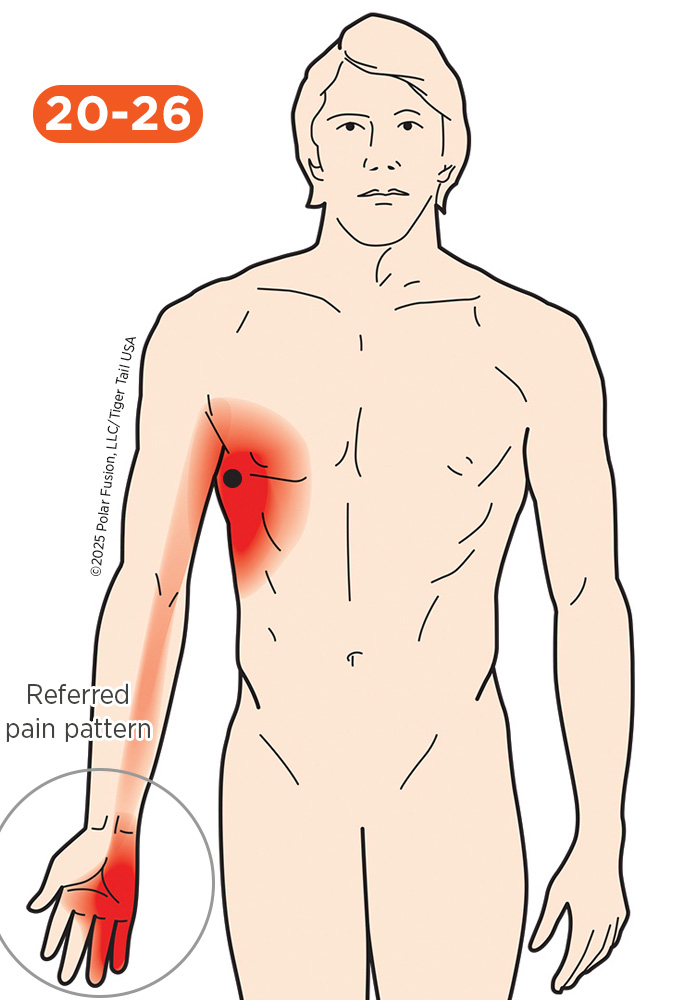
Hand and Finger Pain
That confusing feeling of hand and finger pain is often referred pain originating from deep muscle knots in the serratus anterior, the muscle that wraps around your ribs. It can feel like a ‘stitch’ in your side sending electrical signals down your arm. The discomfort typically focuses along the inside of the arm and radiates into the fourth and fifth fingers, presenting as a deep, dull ache that may include tingling. This presentation can mimic more serious issues, such as ulnar nerve entrapment or cervical disc irritation. You might notice the pain worsens during activities that put stress on the chest and ribs, like taking a deep, forced breath, pushing a heavy object, or repeating arm swings (such as during running). The resulting restriction can make your arm feel heavy and limited, especially affecting your ability to comfortably reach overhead.
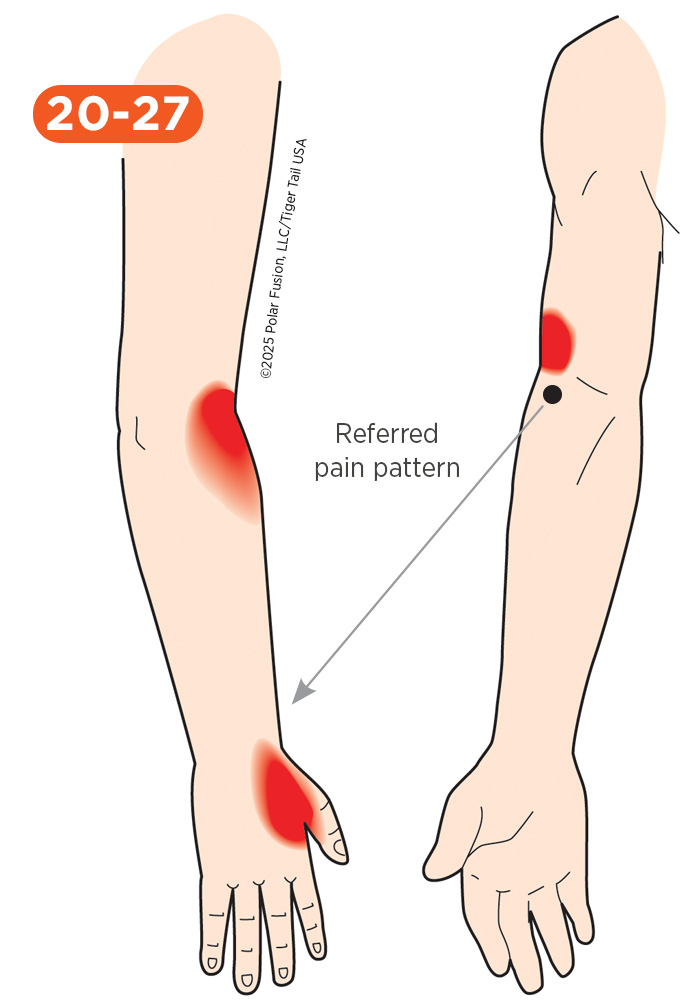
Base of Thumb Pain
If you’re feeling a deep ache or tension near the base of your thumb—especially when gripping, twisting, or turning your forearm—it might be caused by a muscle higher up in your arm: the supinator. When this muscle becomes tight or irritated, it can send pain down the arm and into the thumb area, particularly along the outer edge of the forearm and wrist. This kind of pain can be confusing because it often feels like a thumb joint problem or even carpal tunnel syndrome, but the actual issue may be muscular. You might notice it flares up when doing activities like opening jars, using a screwdriver, or typing with your wrists turned out. If you press into the outer part of your forearm just below the elbow and find a tender spot, that could indicate the supinator is acting up.