Knot in Shoulder Blade: Why It Forms and How to Release It
Quick answer: A knot in shoulder blade tissue is a myofascial trigger point sustained by ischemia and poor posture. Releasing it requires 30–90 seconds of sustained pressure on the trigger point — tools like a massage hook or peanut roller are most effective — combined with heat, strengthening, and regular movement breaks to prevent recurrence.
A knot in shoulder blade tissue is one of the most stubborn complaints in sports recovery and desk-worker wellness alike — and it is almost always misunderstood. This article takes a different angle from generic shoulder-knot advice: instead of just listing stretches, it explains why the tissue under and around your shoulder blade locks up, what keeps it stuck, and which targeted tools and techniques will actually break the cycle.
What Is Actually Happening Inside That Knot?
The area around the shoulder blade hosts several overlapping muscles — the rhomboid muscle group, the middle trapezius, the serratus anterior, and the infraspinatus. When any of these are overloaded, under-recovered, or chronically shortened, motor nerve signals misfire and cause a small bundle of muscle fibers to contract and stay contracted. That self-sustaining contraction is a myofascial trigger point — what most people simply call a knot.
Because the shoulder blade (scapula) floats on the back of the ribcage with no direct bony attachment to the spine, the muscles anchoring it are under near-constant tension. Sitting at a desk with a rounded upper back is enough to keep the rhomboid muscle in a semi-stretched, fatigued state for hours, creating the perfect recipe for trigger points to develop and persist.
Get to the root of your shoulder tension. Check out our breakdown on Shoulder Pain
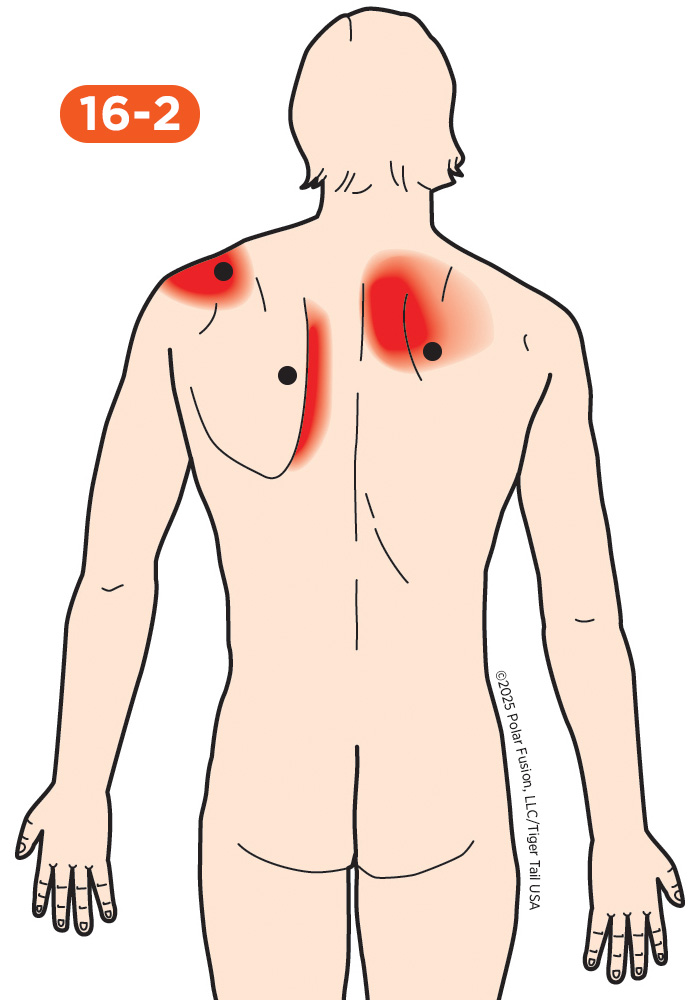
16-2 Trapezius
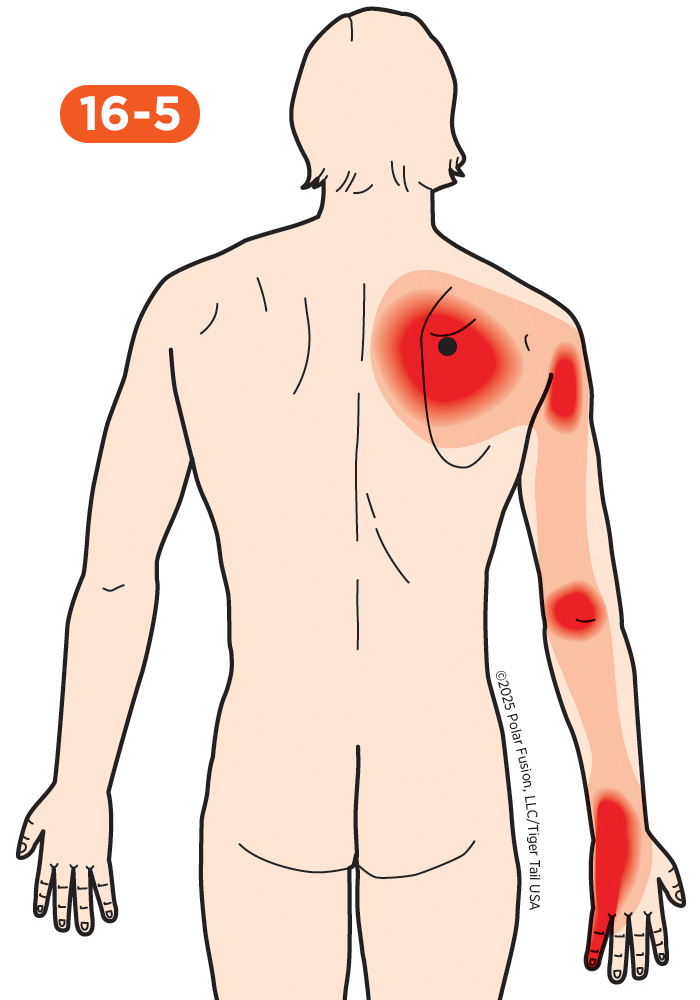
16-5 Serratus Posterior Superior
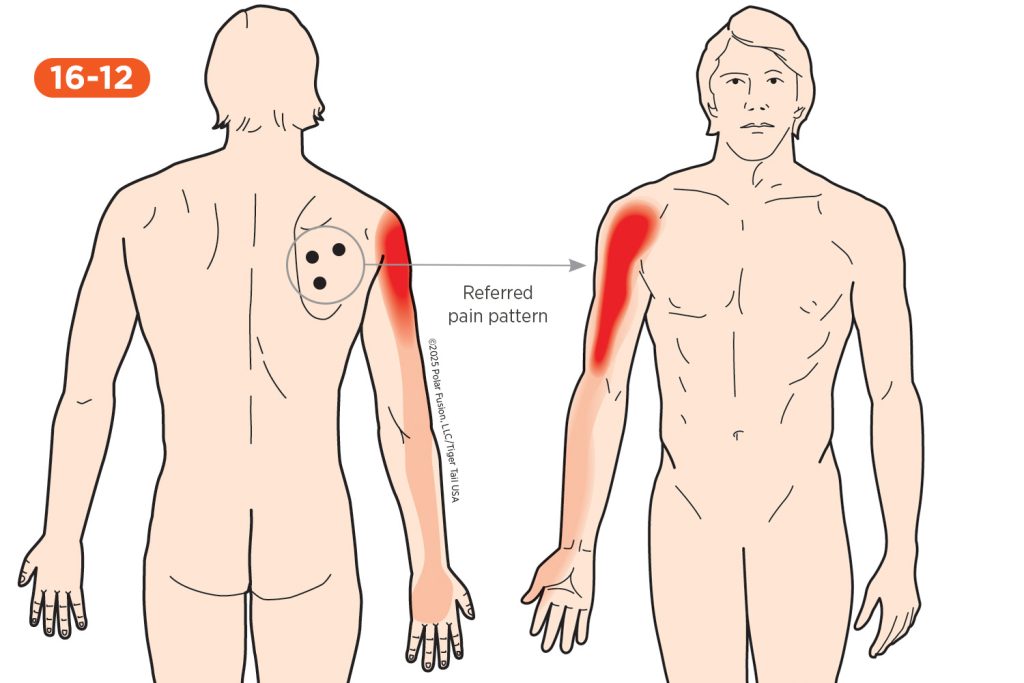
16-12 Infraspinatus
Why Shoulder Blade Pain Keeps Coming Back
Shoulder blade pain that returns within days of a massage or stretch session is a sign that the root cause — poor posture, repetitive motion, or inadequate recovery — has not been addressed. Three factors create a feedback loop:
Ischemia: A contracted knot squeezes its own blood supply, starving the tissue of oxygen and letting metabolic waste build up, which triggers more pain and more contraction.
Referred pain patterns: Trigger points in the rhomboid muscle and middle trapezius commonly refer pain to the inner border of the shoulder blade, the back of the shoulder, and even down the arm — making the true source hard to locate.
Compensatory tension: When one muscle is guarded, adjacent muscles overwork to compensate, seeding new knots nearby.
Breaking this loop requires both mechanical pressure on the trigger point and improved circulation to flush waste products out of the tissue. That is where targeted tools make a real difference.
Myofascial Release: The Mechanism That Actually Works
Myofascial release works by applying sustained, moderate pressure to a trigger point until the nervous system signals the muscle fiber to let go — a process researchers call the neurological release response. Unlike aggressive digging, which can cause micro-trauma and rebound tightness, sustained pressure held for 30–90 seconds allows the fascia (the connective tissue wrapping each muscle) to soften and the muscle spindle to reset its resting length.
Consistent myofascial release sessions — even short ones of 5–10 minutes — have been shown to reduce trigger point sensitivity and improve range of motion in the shoulder girdle. The key is reaching the tissue at the right depth and angle, which is difficult with flat foam rollers when the target is tucked behind the shoulder blade.
How to Release a Knot in Shoulder Blade with the Tiger Cane™
$39.99Select options
This product has multiple variants. The options may be chosen on the product page
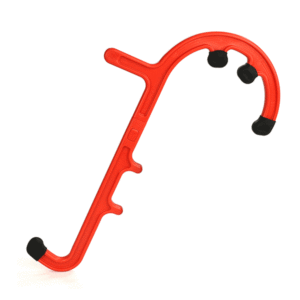
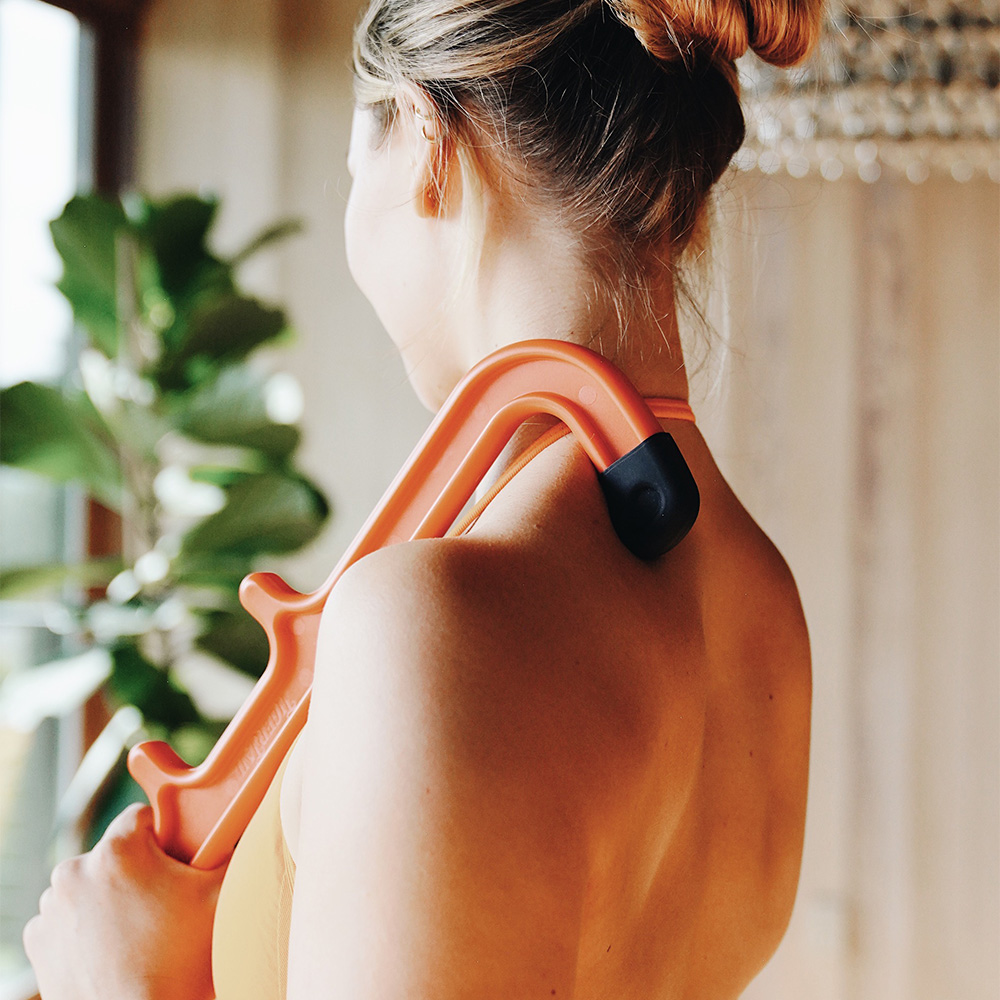
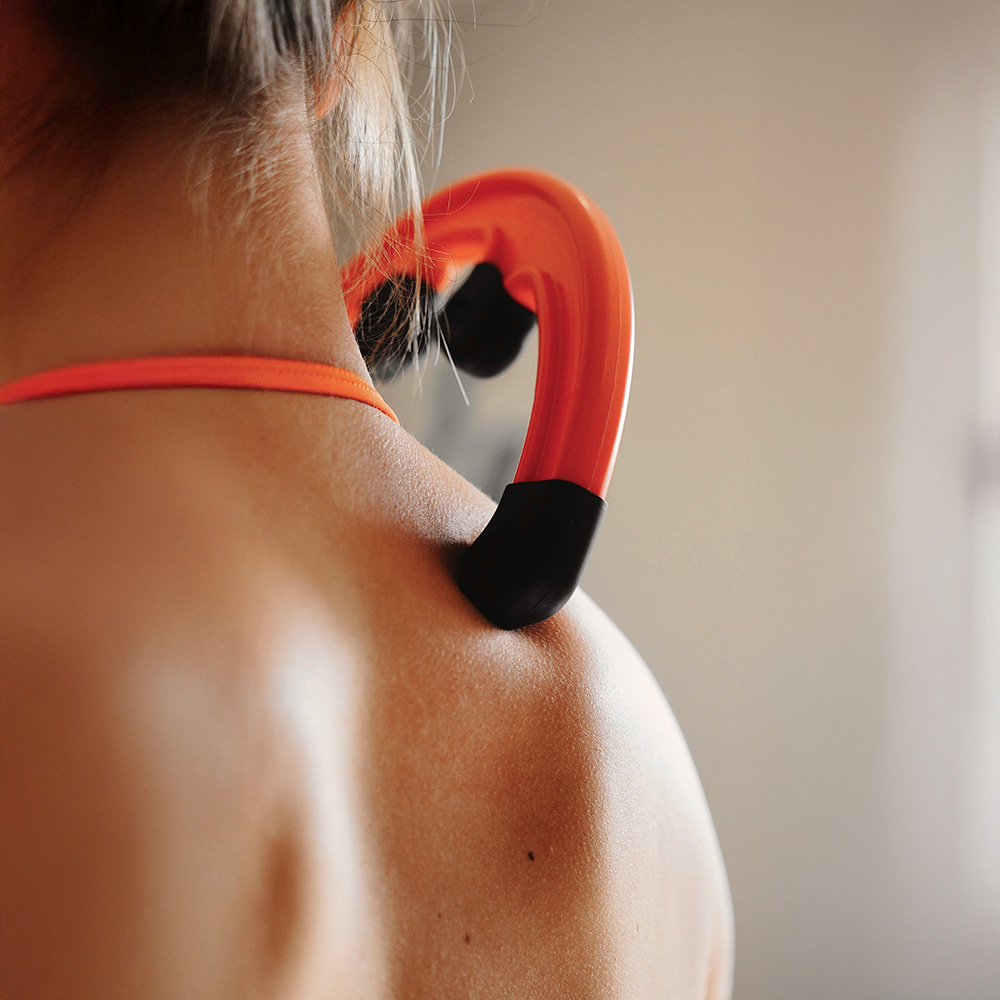
The Tiger Cane™ Acupressure Massage Hook ($39.99) is purpose-built for exactly this problem. Its curved hook lets you reach the inner border of the shoulder blade and apply controlled, hands-free pressure without straining your opposite arm.
Find the knot: Stand or sit upright. Reach the Tiger Cane™ over your opposite shoulder and hook the tip just inside the inner edge of the shoulder blade where you feel tenderness.
Apply gentle pressure: Pull the handle forward slowly until you feel a dull, achy pressure — a 5–6 out of 10 on a discomfort scale. Do not chase sharp pain.
Hold and breathe: Maintain that pressure for 30–60 seconds while breathing slowly and deeply. You should feel the intensity gradually decrease as the tissue releases.
Sweep the area: After the release, use short 1–2 inch strokes along the inner border of the shoulder blade to flush the area with fresh circulation.
Repeat on any secondary spots: Move systematically up and down the border, spending 30 seconds on each tender point. Limit total time to 5–7 minutes per session.
Deep Tissue Massage Tools That Complement the Work
A single tool rarely solves the whole picture. Deep tissue massage across the broader upper back — the trapezius, the rhomboid muscle attachments, and the surrounding fascia — prepares the tissue before targeted trigger-point work and speeds recovery after it.
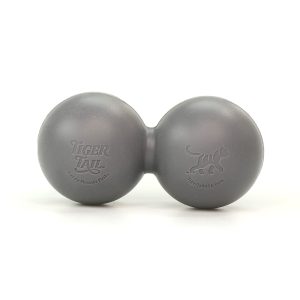
The Tiger Ball® Peanut 2.4 Foam Roller ($29.99) is ideal here. Its double-ball shape straddles the spine so you can lie on it and let gravity apply deep tissue pressure along the paraspinal muscles on either side without compressing the vertebrae directly. Place it between your shoulder blades and gently rock side to side for 60–90 seconds.
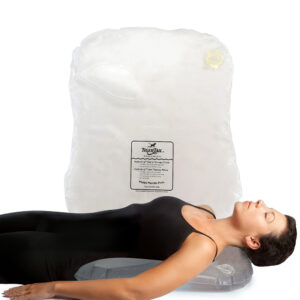
For heat support before a session, the Hydro Hug® Hot Water Therapy Pillow Medium ($22.99) conforms to the upper back and delivers moist heat that softens the fascia, making subsequent deep tissue work more effective and less uncomfortable.
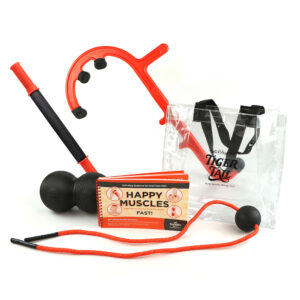
If you want a comprehensive kit, the Rehab In A Bag Kit ($149.99) bundles professional-grade recovery tools into one portable package — useful if shoulder blade pain is part of a larger pattern of tightness you are working through systematically. According to the Physiopedia overview of myofascial trigger points, a multi-modal approach combining pressure, heat, and movement consistently outperforms any single intervention.
Releasing a knot in shoulder blade tissue is only half the job. Preventing recurrence requires addressing the mechanical causes:
Set a timer to stand and retract your shoulder blades (squeeze them together gently) every 45–60 minutes when sitting.
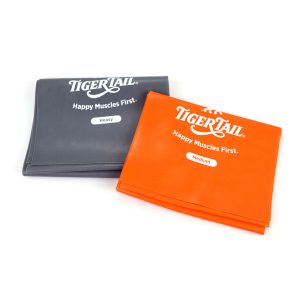
Strengthen the rhomboid muscle with resistance-band rows using the Resistance Bands 2-Pack ($14.99) — stronger rhomboids resist fatigue and are less prone to trigger points.
Keep a water bottle visible at your desk; dehydrated muscle tissue is stiffer and more susceptible to knots.
Spend 5 minutes on myofascial release before bed on high-tension days rather than waiting until pain is severe.
Frequently Asked Questions
Why does my shoulder blade knot keep coming back?
Recurring knots usually mean the root cause — rounded posture, weak rhomboid muscles, or insufficient recovery — has not been fixed. Releasing the trigger point provides temporary relief, but strengthening the area and correcting posture habits is what breaks the cycle long-term.
How long does it take to release a knot in the shoulder blade?
A single trigger point typically responds to 30–90 seconds of sustained pressure. Full resolution of a chronic knot, however, often takes 1–2 weeks of daily 5-minute sessions combined with posture correction and adequate hydration.
Can a knot in the shoulder blade cause arm or neck pain?
Yes. Trigger points in the rhomboid and middle trapezius muscles are well-documented to refer pain to the neck, the back of the shoulder, and down the arm. Treating the shoulder blade trigger point directly often resolves these seemingly unrelated pains.
Is heat or cold better for a shoulder blade knot?
Heat is generally more effective for muscle knots because it increases blood flow and softens the fascia, making the tissue more receptive to pressure work. Cold is better reserved for acute injury with swelling rather than chronic trigger points.
What muscles are involved in a shoulder blade knot?
The most common muscles are the rhomboid major, rhomboid minor, and middle trapezius — all of which attach along the inner border of the shoulder blade. The infraspinatus, on the back surface of the blade itself, is also frequently involved, especially in overhead athletes.
Medical disclaimer: This article is for general informational and educational purposes only and is not a substitute for professional medical, veterinary, or fitness advice, diagnosis, or treatment. Always consult a qualified professional before starting a new exercise, recovery, or treatment program, or if you have any concerns about a health condition.
Safety disclaimer: Always read and follow the manufacturer’s instructions, warnings, and usage guidelines for any product or equipment mentioned here. Use tools and techniques as directed and within your own ability; start gently, stop if you feel pain or discomfort, and seek professional guidance if you are unsure. Improper or excessive use can result in injury.