

Massage Hook: How to Reach Every Knot You Can’t Touch Yourself
Quick answer: A massage hook uses leverage and sustained compression to reach trigger points in the back, neck, shoulders, and glutes that hands and flat rollers cannot access. Used correctly — light-to-moderate pressure held for 30–90 seconds — it can reduce myofascial tension without straining your hands or requiring a massage therapist.
A massage hook is one of the most practical tools you can add to a home recovery routine—it gives you leverage to press into trigger points in your back, neck, shoulders, and glutes without straining your hands or needing a partner. If you’ve already read about foam rollers and massage sticks on this site, think of a massage hook as a precision instrument that reaches spots those tools simply can’t.
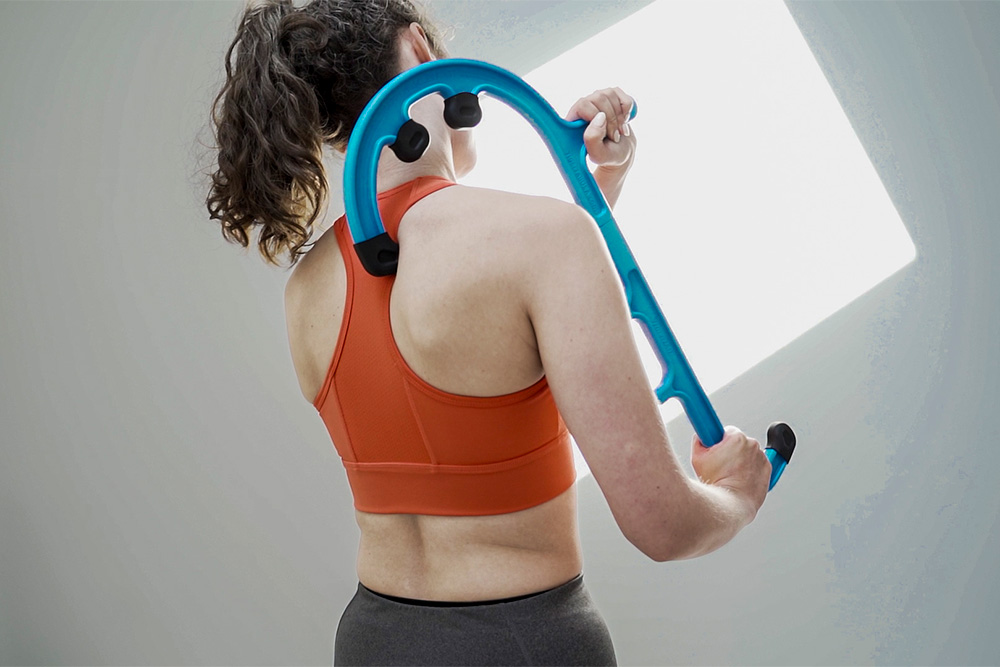
What a Massage Hook Actually Does
The curved, cane-like shape lets you loop it over your shoulder or around your back and position the tip directly on a tight spot. You then apply controlled downward or inward pressure using your body weight rather than hand strength. This matters because most trigger points require sustained, focused compression — typically 20 to 90 seconds — to encourage the muscle fiber to release. A flat palm or even a thumb can rarely hold that angle long enough without fatiguing.
The tool works on the same principle as manual trigger point therapy: localized ischemic compression temporarily reduces blood flow to the knotted area, and when you release, fresh oxygenated blood floods back in, helping the muscle relax. Research published in the Journal of Bodywork and Movement Therapies supports sustained compression as an effective way to reduce myofascial trigger point sensitivity.
Who Benefits Most from an Acupressure Massage Tool Like This
An acupressure massage tool shaped like a hook is especially useful for people who:
- Sit at a desk for long hours and develop chronic upper-back or neck tension
- Run or cycle and accumulate hip flexor or glute tightness that a roller can’t pin down
- Have limited shoulder mobility that makes it hard to reach between the shoulder blades
- Travel frequently and need a lightweight, compact self-care option
- Want to avoid the expense of frequent massage therapy appointments
Because the hook amplifies leverage, even people with arthritis or weak grip strength can apply meaningful deep tissue pressure without discomfort in their hands.
Trigger Point Self-Massage: A Step-by-Step Walkthrough
-
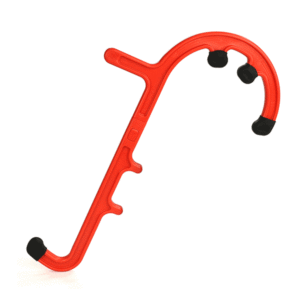
Tiger Cane™ Acupressure Massage Hook
$39.99 Select options This product has multiple variants. The options may be chosen on the product page
How to Release a Tight Upper Trapezius with the Tiger Cane™
The Tiger Cane™ Acupressure It ($39.99) is Tiger Tail’s dedicated it — durable, lightweight, and ergonomically shaped for trigger point self-massage across the full body. Here’s how to use it on one of the most common problem areas: the upper trapezius (the muscle that runs from your neck to your shoulder).
- Stand or sit upright with your feet hip-width apart and your spine neutral.
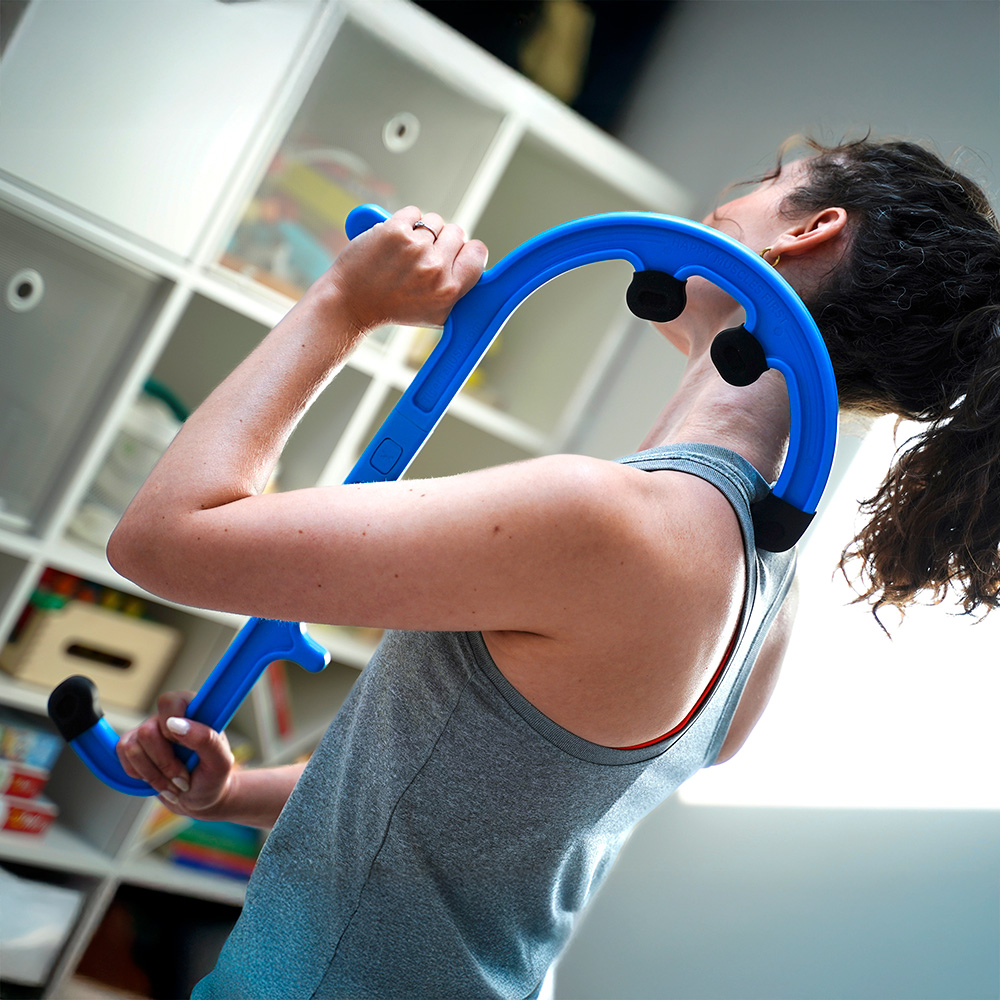
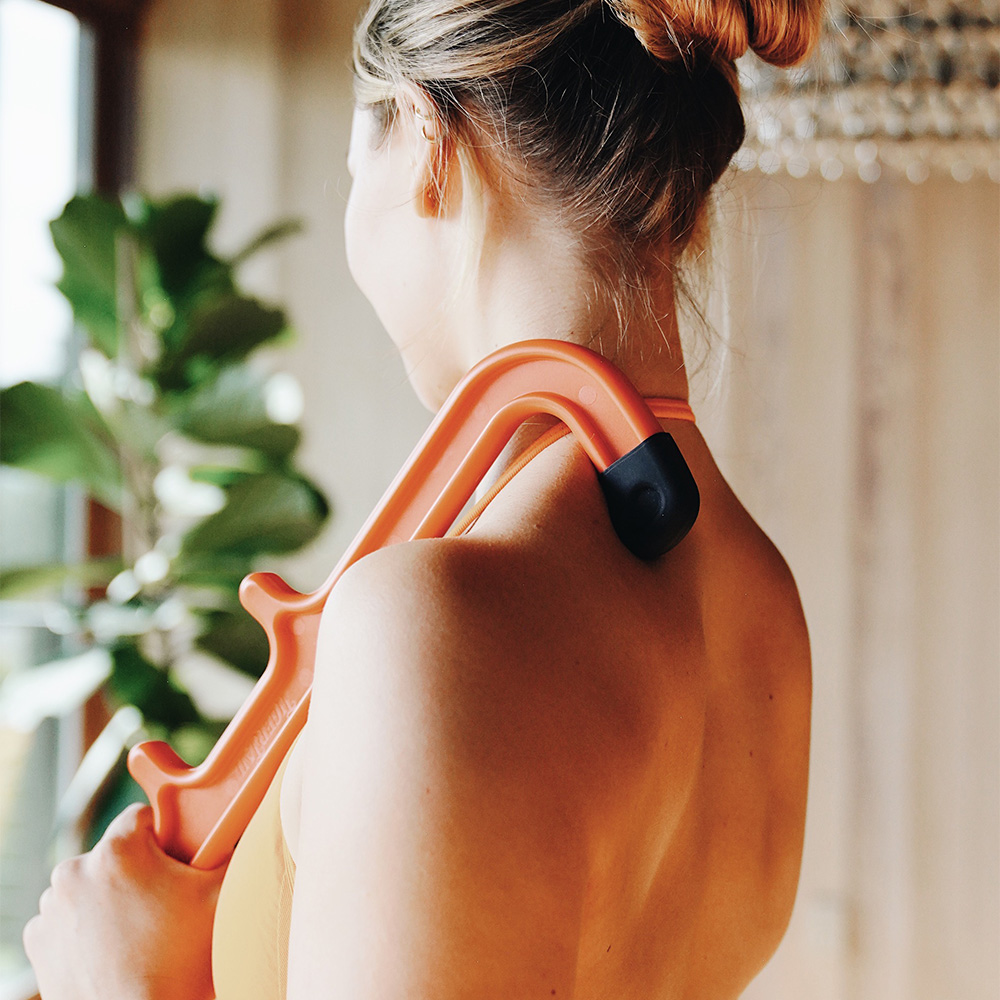
- Loop the Tiger Cane™ over your right shoulder so the curved tip rests on the upper trap muscle, roughly halfway between your neck and shoulder joint.
- Apply gentle downward pressure with both hands on the handle until you feel a dull, referral-type ache — a 4–6 out of 10 on a discomfort scale. This is the trigger point.
- Hold the compression for 30–60 seconds without moving. Breathe slowly and let the muscle soften under the tip.
- Slowly release, move the tip one inch in any direction, and repeat if you find another tender spot.
- Finish with gentle neck rolls — three slow circles each direction — to encourage circulation back into the area.
- Switch sides and repeat the sequence on the left trapezius.
Aim for two to three sessions per week on any given muscle group. Daily use is fine for mild tension; give acutely sore areas 48 hours between sessions.
Deep Tissue Pressure: Getting the Intensity Right
One of the biggest mistakes people make with any deep tissue pressure tool is pressing too hard too fast. If you overload it, the muscle’s protective reflex tightens rather than releases. Start with lighter pressure and increase gradually over 10–15 seconds until you reach that productive 4–6/10 ache. Physiopedia’s overview of trigger point therapy recommends this gradual approach to avoid bruising or post-session soreness.
Key pressure guidelines for it session:
- Neck and sub-occipital muscles: very light pressure — these tissues are close to sensitive structures
- Upper back and rhomboids: moderate pressure, 30–60 seconds per point
- Glutes and piriformis: firm pressure, up to 90 seconds per point
- Avoid pressing directly on the spine, joints, or any area with acute inflammation
Self-Care Muscle Relief: Pairing the Hook with Other Tools
It excels at pinpoint self-care muscle relief, but it works even better as part of a layered routine. Consider this sequence:
- Warm up the tissue with a Hydro Hug® Hot Water Therapy Pillow Large ($24.99) for 5–10 minutes. Heat increases tissue pliability and makes trigger points more responsive to compression.
- Use the Tiger Cane™ to work specific knots with sustained acupressure.
- Follow up with broad-stroke rolling using the Tiger Ball® Peanut 2.4 Foam Roller ($29.99) along the muscle belly to flush out metabolic waste and restore length.
- Finish with compression using Tiger Wraps Self-Sticking Compression Wraps ($12.99) on limb muscles to support recovery.
This heat–compress–roll–wrap sequence takes about 20 minutes and addresses muscle tension at multiple levels — from the isolated knot to the surrounding fascial tissue.
When it Isn't Enough
It is a self-care tool, not a substitute for clinical evaluation. If you experience sharp, shooting, or radiating pain; numbness or tingling; pain that worsens after multiple sessions; or any symptoms following an injury, consult a licensed physical therapist or physician before continuing self-treatment. Trigger points that don’t respond after two to three weeks of consistent work may have an underlying cause that needs professional assessment.
Frequently Asked Questions
What is it used for?
It is used to apply targeted, sustained pressure to trigger points — tight, knotted spots in muscle tissue — especially in hard-to-reach areas like the upper back, neck base, and glutes. The curved shape gives you leverage so you can press firmly without straining your hands.
How long should I hold pressure with it?
Hold each trigger point for 30 to 90 seconds at a pressure level that feels like a dull, productive ache (around 4–6 out of 10 in discomfort). Release slowly and move to the next spot. Avoid pressing so hard that the muscle tightens defensively.
Can I use it on my neck?
Yes, but use very light pressure on the neck, especially near the base of the skull. The tissues there are close to sensitive structures. Limit sessions to 20–30 seconds per point and stop immediately if you feel sharp pain, dizziness, or tingling.
How often should I use it?
Two to three times per week per muscle group is a good starting point. Daily use is acceptable for mild, chronic tension, but give acutely sore or inflamed areas at least 48 hours of rest between sessions to allow tissues to recover.
Is it the same as an acupressure tool?
They work on similar principles — both use focused point pressure to interrupt the pain-tension cycle in muscle tissue. It specifically uses its curved shape and leverage to let you self-apply that acupressure to areas you couldn’t otherwise reach comfortably.
Medical disclaimer: This article is for general informational and educational purposes only and is not a substitute for professional medical, veterinary, or fitness advice, diagnosis, or treatment. Always consult a qualified professional before starting a new exercise, recovery, or treatment program, or if you have any concerns about a health condition.
Safety disclaimer: Always read and follow the manufacturer’s instructions, warnings, and usage guidelines for any product or equipment mentioned here. Use tools and techniques as directed and within your own ability; start gently, stop if you feel pain or discomfort, and seek professional guidance if you are unsure. Improper or excessive use can result in injury.