

Spiky Roller: What It Does and When to Use One
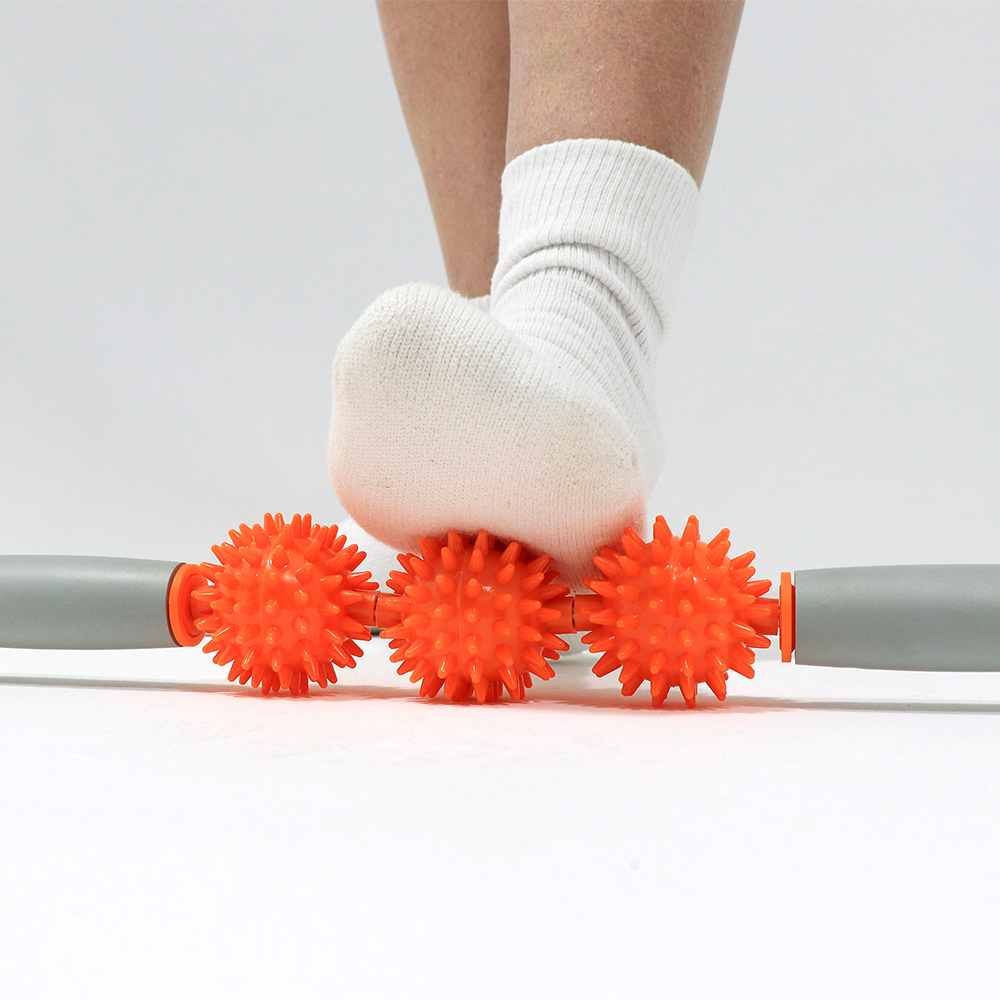
A spiky roller — sometimes called a spiky massage ball or nodule roller — is a textured self-massage tool covered in raised points. Its textured surface provides deeper sensory stimulation, applies focused pressure to soft tissue, and stimulates circulation. It works across large and small muscle groups, including the calves, hamstrings, quadriceps, forearms, upper back, and feet.
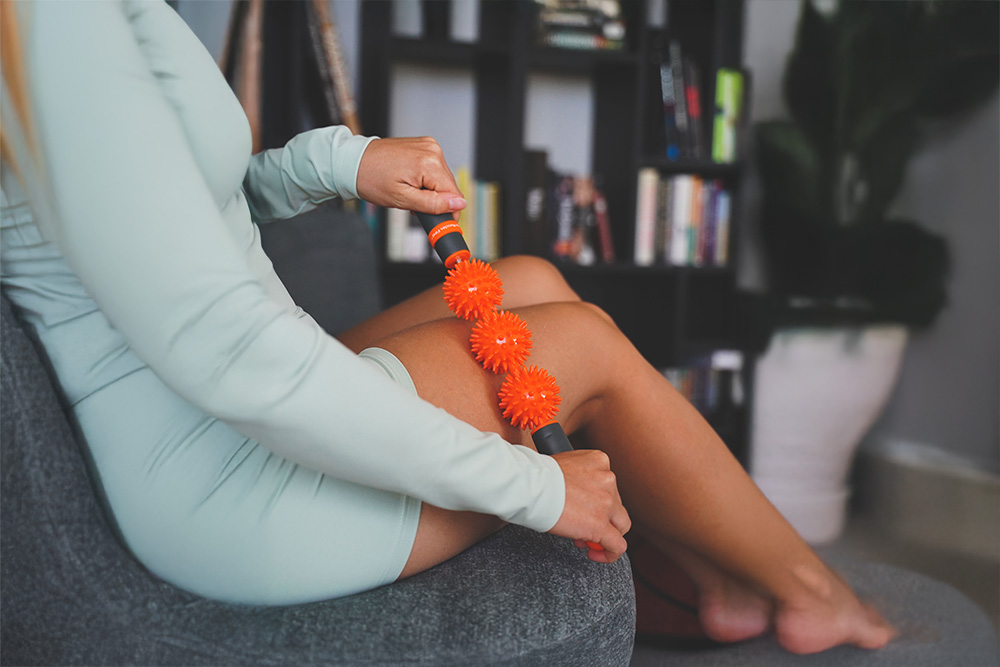
How This Nodule Tool Actually Works on Muscle and Fascia
The raised nodules create localized pressure on the skin, subcutaneous tissue, and underlying fascia. This concentrated contact activates mechanoreceptors — sensory nerve endings that respond to mechanical deformation — which can temporarily reduce pain signals through a process called gate control theory. At the same time, the rolling motion boosts local blood flow, warms the tissue, and makes it more pliable.
Research published by the Physiopedia myofascial release review notes that sustained pressure on fascia can reduce stiffness and improve range of motion when applied consistently over time. The textured surface amplifies this effect by distributing pressure unevenly, which prevents the nervous system from habituating as quickly as it does with flat-surface contact.
Myofascial Release: Where the Spiky Roller Shines
Myofascial release is the practice of applying sustained pressure to myofascial connective tissue to relieve pain and restore movement. A spiky roller delivers myofascial release in two distinct ways: passive pinning (you hold still on a node until the tissue releases) and active rolling (you move slowly across the surface to flush the area).
Passive pinning is especially effective on the plantar fascia, the IT band’s attachment points, and the suboccipital muscles at the base of the skull. Active rolling suits larger areas like the thoracic spine, quads, and calves. Alternating between the two techniques in a single session tends to produce the most noticeable reduction in tissue tension.
Plantar Fascia Relief: A Classic Use Case
Plantar fascia relief is probably the best-known use for a spiky roller. Rolling the arch of the foot over a nodulated surface stretches the plantar fascia longitudinally while the nodes stimulate circulation in a notoriously under-vascularized tissue. Many podiatrists recommend starting the day with two to three minutes of foot rolling before taking the first steps, when the fascia is at its tightest.
- Sit in a chair with bare feet flat on the floor.
- Place the tool under the arch of one foot.
- Apply moderate downward pressure and roll slowly from the heel pad to the ball of the foot.
- Pause for 5–10 seconds on any tender spot.
- Complete 2–3 minutes per foot, once in the morning and once post-workout.
Consistent daily use over 4–6 weeks is typically when people report meaningful improvement in morning heel pain.
Deep Tissue Massage Without a Therapist
No single muscle recovery tool does everything. A smart recovery kit pairs different shapes and textures for different jobs. Here are Tiger Tail USA options that work alongside a nodule roller:
Muscle Recovery Tools That Complement a Spiky Roller
No single muscle recovery tool does everything. A smart recovery kit pairs different shapes and textures for different jobs. Here are Tiger Tail USA options that work alongside a nodule roller:
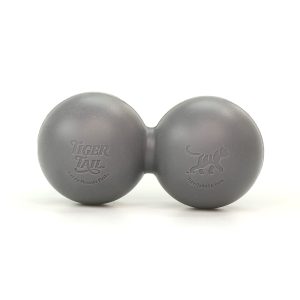
Tiger Ball® Peanut 2.4 Foam Roller — for spinal and bilateral release
The Tiger Ball® Peanut 2.4 Foam Roller ($29.99) uses a double-ball shape to straddle the spine or Achilles tendon, delivering targeted deep tissue pressure without a single rigid nodule. It’s the go-to when you want concentrated contact on two parallel muscle columns simultaneously — something a round nodule roller can’t replicate.
How to use the Tiger Ball® Peanut 2.4 for thoracic spine release
- Place the Tiger Ball® Peanut 2.4 on a yoga mat or firm surface.
- Sit in front of it, then lean back so the double ball sits across your mid-back at T6–T8 (below the shoulder blades).
- Support your head with both hands and let your body weight sink into the balls for 20–30 seconds.
- Exhale slowly to encourage the tissue to release.
- Inch upward one vertebral level at a time, pausing 20 seconds at each stop.
- Work from mid-back to the base of the neck over about 3–4 minutes.
-
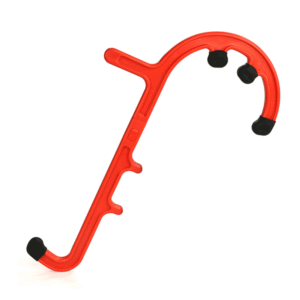
Tiger Cane™ Acupressure Massage Hook
$39.99 Select options This product has multiple variants. The options may be chosen on the product page
Tiger Cane™ Acupressure Massage Hook — for hard-to-reach trigger points
The Tiger Cane™ Acupressure Massage Hook ($39.99) lets you apply pin-point acupressure to the upper back, glutes, and neck without contorting your body. The cane gives you full hand-controlled leverage — ideal for sensitive or hard-to-load areas.
How to use the Tiger Cane for thoracic spine release
-
Position the Hook so a massage knob rests on the muscle between your spine and shoulder blade. (Keep the knob on the muscle—never directly on the spine bones.)
-
Place one hand on the lower stem and your other hand on the upper curve.
-
Apply Pressure by pulling down gently with your lower hand to press the knob forward into the muscle knot. Let the tool leverage do the work instead of pulling hard.
-
Hold steady pressure on the tight spot for 20 to 30 seconds while taking deep, slow breaths to help the muscle relax.
-
To deepen the release, gently roll your shoulder or sweep your arm across your chest while keeping pressure on the knot.
-
Shift the hook up or down along the side of your spine to target other tight spots, spending no more than 2–3 minutes total per side.
Essential One™ 24 Relaxed Pressure Foam Roller — for full-length muscle flushing
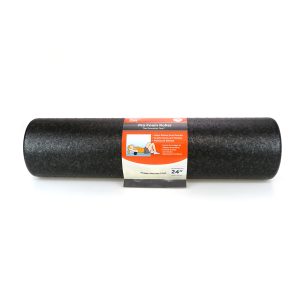
The Essential One™ 24 Relaxed Pressure Foam Roller ($39.99) covers the entire thoracic spine or both legs in a single pass. Its smooth, firm surface is better suited for broad myofascial release across large muscle groups than a textured surface, making it the ideal complement after a spiky roller warm-up.
How to use the Essential One 24 for thoracic spine release
-
Sit on the floor and place the roller horizontally behind you, resting it against your mid-back (below your neck and above your lower back).
-
Lie back onto the roller, bend your knees with your feet flat on the floor, and cross your arms over your chest or lace your fingers loosely behind your head to support your neck.
-
Lift your hips slightly off the floor and slowly roll back and forth between your upper back and mid-back for 30 to 60 seconds.
-
When you find a tight spot, drop your hips down and gently lean backward over the roller to extend your upper back and open your chest.
-
Stay on the tender spot for 20 to 30 seconds, breathing deeply to let your upper back muscles relax over the foam.
-
Cross your arms tightly across your chest to pull your shoulder blades apart, exposing the deeper muscles along your spine for a deeper release.
When NOT to Use a Textured Roller
Avoid using any nodulated/spiky tool directly over bony prominences (spine, shin, kneecap), open wounds, bruised tissue, or areas with acute inflammation. The nodes increase local pressure, which can irritate inflamed tissue rather than soothe it. In those situations, switch to a smooth tool, compression wraps, or heat therapy until the acute phase passes.
Rule of thumb: if pressing on the area with a fingertip produces sharp or shooting pain, the tissue is not ready for a spiky roller. Use gentle heat first, then reintroduce rolling once the sharpness has resolved.
Building a Daily Rolling Routine That Sticks
Consistency matters more than intensity. A five-minute daily routine — two minutes on the feet, two minutes on the calves, one minute on the forearms — produces better long-term results than a 30-minute session once a week.
Frequently Asked Questions
What is a spiky roller used for?
A spiky roller is used for myofascial release, plantar fascia relief, increased circulation, and deep sensory stimulation. The raised nodules/spikes concentrate pressure to break up fascial adhesions and trigger acupressure-style responses in soft tissue.
Is a nodule/spiky roller better than a smooth foam roller?
It depends on the area. Nodule rollers excel on the feet, forearms, and other small zones where pinpoint pressure is needed. Smooth foam rollers can be better for large muscle groups like the quads and hamstrings, where broad surface contact is more effective.
How long should you use it each session?
Two to three minutes per area is typically enough. Daily five-minute sessions — focusing on the feet and calves — produce better long-term results than infrequent longer sessions.
Can a spiky roller help with plantar fasciitis?
Yes. Rolling the arch over a textured surface stretches the plantar fascia and improves local circulation. Most people see meaningful improvement in morning heel pain after 4–6 weeks of consistent daily use.
When should you avoid using a nodulated roller?
Avoid it over bony prominences, open wounds, bruised tissue, or acutely inflamed areas. If direct finger pressure produces sharp or shooting pain, wait until the acute phase passes before reintroducing rolling.
Medical disclaimer: This article is for general informational and educational purposes only and is not a substitute for professional medical, veterinary, or fitness advice, diagnosis, or treatment. Always consult a qualified professional before starting a new exercise, recovery, or treatment program, or if you have any concerns about a health condition.
Safety disclaimer: Always read and follow the manufacturer’s instructions, warnings, and usage guidelines for any product or equipment mentioned here. Use tools and techniques as directed and within your own ability; start gently, stop if you feel pain or discomfort, and seek professional guidance if you are unsure. Improper or excessive use can result in injury.