Chest Pain
The primary muscle that causes chest pain is the large muscle located on each side of the sternum called the Pectoralis Major. Knots in this muscle cause local pain in the chest as well as refer pain down the arm. Knots in this muscle cause local pain in the chest as well as refer pain down the arm. Muscle knots in this muscle can mimic a heart attack. Other small muscles with muscle knots cause pain on the side of the chest and along the sternum bone.

Causes
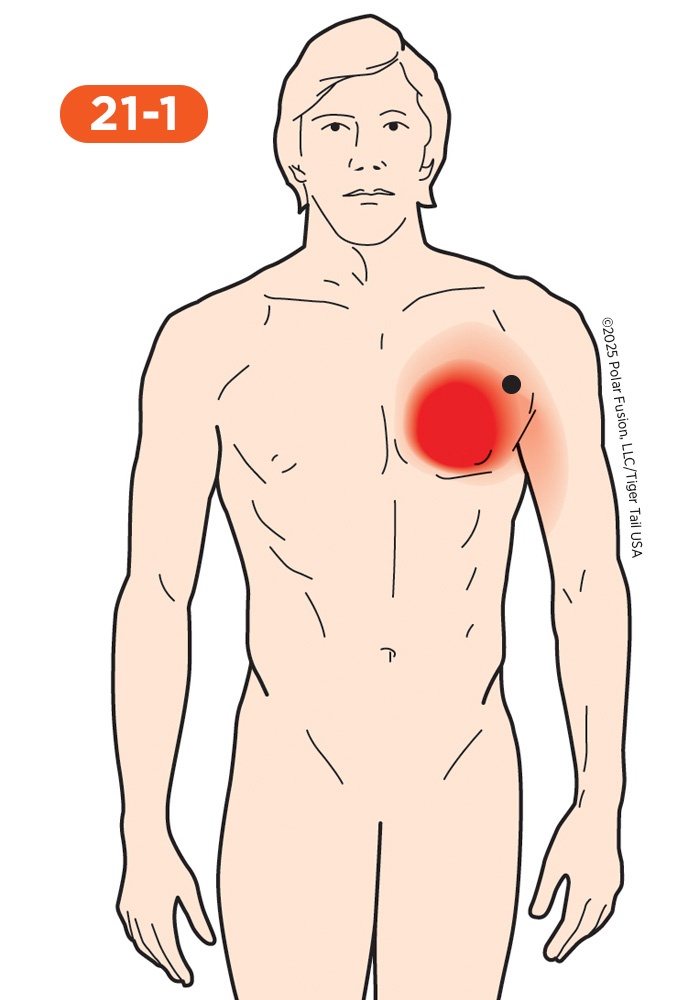
Chest Pain
When chest pain appears along the outer edge of your chest muscle—the pectoralis major—it can feel like someone is pressing a fist into your chest wall, similar to when a seatbelt pinches too tightly across your chest. The discomfort usually focuses near the front of the shoulder and radiates inward, often described as a dull ache or a sharp pinch. It can mimic more serious conditions like angina or costochondritis, which makes it difficult to identify. The pain worsens significantly when you’re doing activities such as pushing open a heavy door, reaching across your body to grab a seatbelt, or lifting something overhead with both arms. This tension causes your chest to feel guarded and tight, limiting your ability to stretch or open your arms comfortably. The area becomes especially tender to touch, with soreness often felt just beneath the outer collarbone or near the front of the armpit. Pressing on that spot can almost instantly reproduce the pain
Heart Burn
That burning sensation in your chest that feels like heartburn might originate from muscle knots in the outer part of your chest muscle—the pectoralis major. It’s like the feeling of heat rising in your chest after eating spicy food, but in this case, your muscle is sending mixed signals. The burning or pressure often settles behind the breastbone or slightly to the side, and it can resemble acid reflux or even esophageal spasms. It worsens significantly when you’re slouching at your desk, carrying a backpack with chest straps, or sleeping curled up on your side. This tension makes your chest feel tight and uncomfortable, especially when trying to take a deep breath or stretch your arms wide. The muscle is often tender to the touch, especially along the outer chest wall near the armpit or just under the collarbone. That spot may feel like a small, hot knot when pressed.
Breast Tenderness
If you’re feeling breast tenderness, it might be caused by tight spots in the outer edge of your chest muscle—the pectoralis major. It’s similar to when a bruise forms under the skin and feels sore even if you don’t remember bumping it. The tenderness usually concentrates around the outer breast area and can feel like a deep ache or surface-level sensitivity. It can resemble symptoms of fibrocystic breast changes or even early signs of mastitis, which can be unsettling. The pain worsens when you’re doing activities like lifting a child, pushing a shopping cart with one arm, or sleeping with your arm tucked under your chest. This tension makes the area sore and guarded, and you might avoid touching or pressing on that side. The most sensitive spot is often just outside the breast tissue, near the front of the armpit or beneath the collarbone, and may feel like a tender knot when pressed.
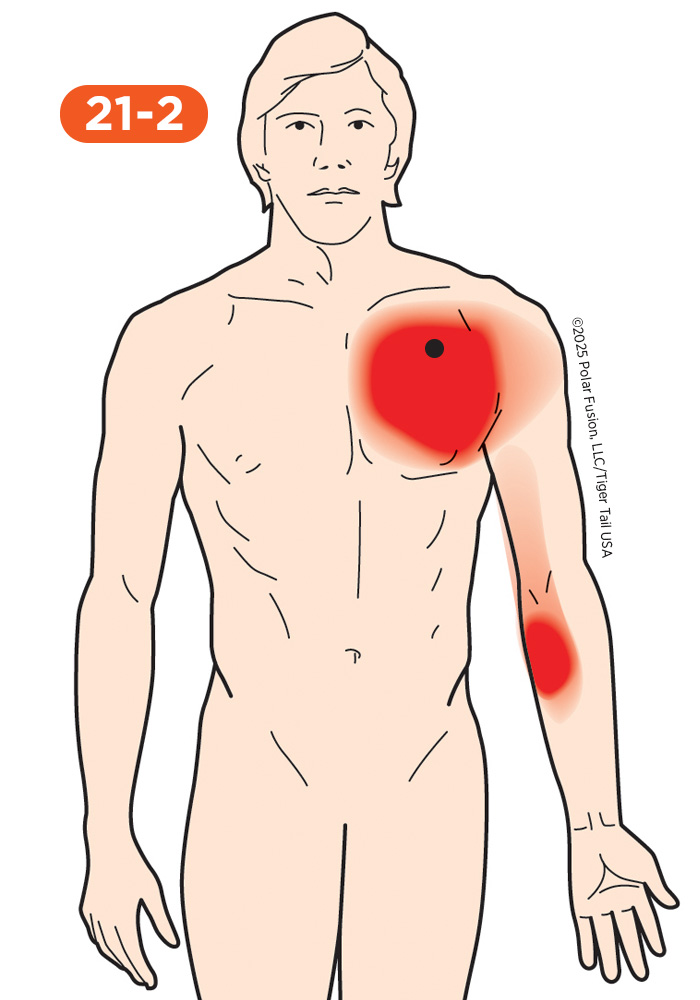
Chest Pain
When the large Pectoralis Major muscle, specifically its outer (Lateral margin) and lower (sternal section) portions, is causing trouble, the main complaint is often a widespread pain across the chest wall. You’ll typically feel a deep, burning ache that runs across your chest and can settle right along the front of your shoulder and down the inner side of your arm. This muscle’s job is to pull your arm across your body and down, so you’ll notice the pain gets significantly worse during activities that involve forceful pushing, like bench pressing, or swinging a golf club. It can be super tender to press on the muscle along the sternum (breastbone). Issues here can sometimes be mistaken for heart-related discomfort due to the location of the pain, leaving the whole chest feeling constricted and tightl
Heart Burn
That burning sensation in the center of your chest that feels like heartburn might actually stem from muscle knots in the muscle along the sternum, the sternal part of the pectoralis major. It’s similar to the feeling of heat rising in your chest after eating something spicy—but in this case, it’s your muscle sending the wrong signals. The discomfort often feels like a deep, warm pressure behind the breastbone and can resemble acid reflux or even esophageal spasms. It worsens significantly when you’re slouching at your desk, lifting something from the floor while bent forward, or sleeping curled up on your side. This tension causes your chest to feel tight and uncomfortable, especially when trying to take a deep breath or stretch your arms. The muscle is often sore to the touch, particularly along the sternum or just below the collarbone. That area may feel like a small, burning knot when pressed.
Breast Tenderness
If you’re experiencing breast tenderness that seems abnormal, it could be caused by tight muscle knots near the breastbone, especially in the sternal part of the pectoralis major. This is similar to when a bruise develops under the skin and feels sore even if you haven’t bumped anything. The tenderness usually focuses on the inner part of the breast and can feel like a deep ache or surface sensitivity. It may resemble symptoms of fibrocystic breast changes or costochondritis (inflammation of the ribs). The pain worsens significantly with activities like lifting a child, pushing a shopping cart with both arms, or sleeping with your arm tucked across your chest. This tension can make the area sore and sensitive, and you might avoid touching or pressing on that side. The most sensitive spot is often just beside the sternum or under the upper chest, feeling like a tender knot when pressed.
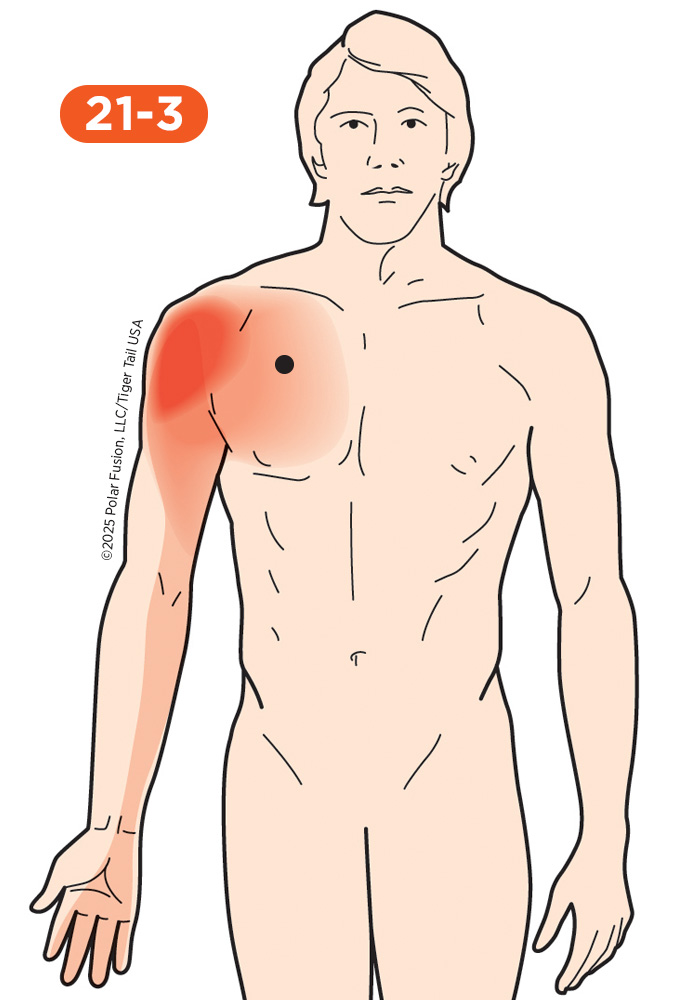
Chest Pain
When the small Pectoralis Minor muscle, which is tucked deep beneath your main chest muscle, is irritated, its effect on your chest wall can be quite concerning. You’ll typically feel a persistent, deep ache right in the front of your shoulder and upper chest, sometimes settling as a tight, worrisome pain that runs along your breastbone. This muscle’s function is to pull your shoulder blade forward and down. Hunching your shoulders forward—common when sitting at a desk—shortens this muscle, making it tight and prone to spasm. You’ll notice the discomfort gets worse when you try to stand up straight or pull your shoulders back. Because of its location, tension here can easily be mistaken for heart-related pain, making the entire chest feel constricted and limited.
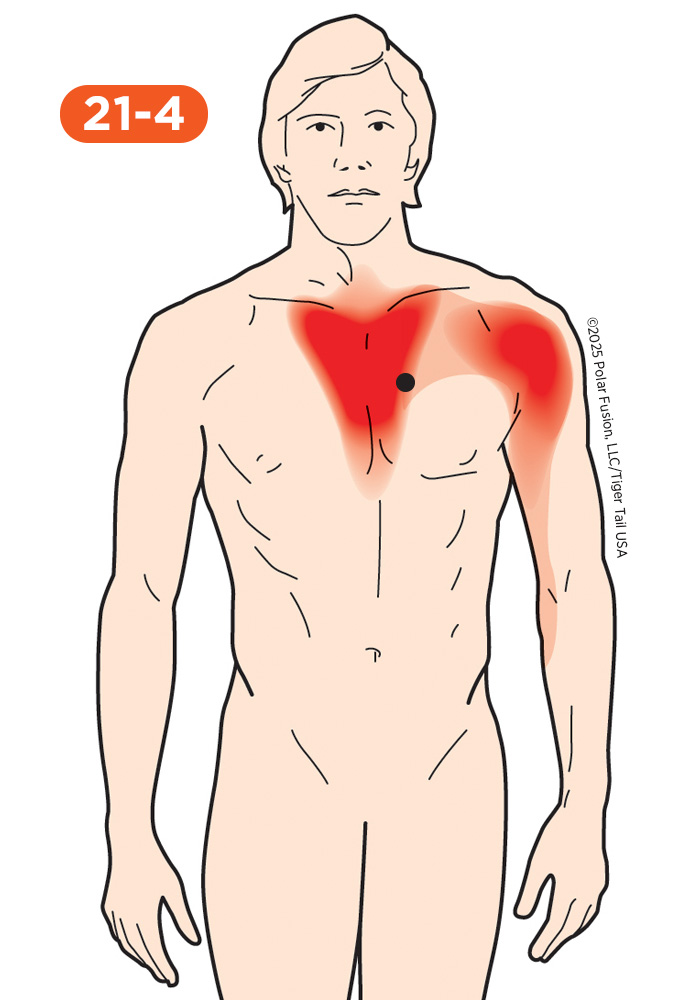
Pain or Discomfort Underneath the Collar Bone
Chest Pain
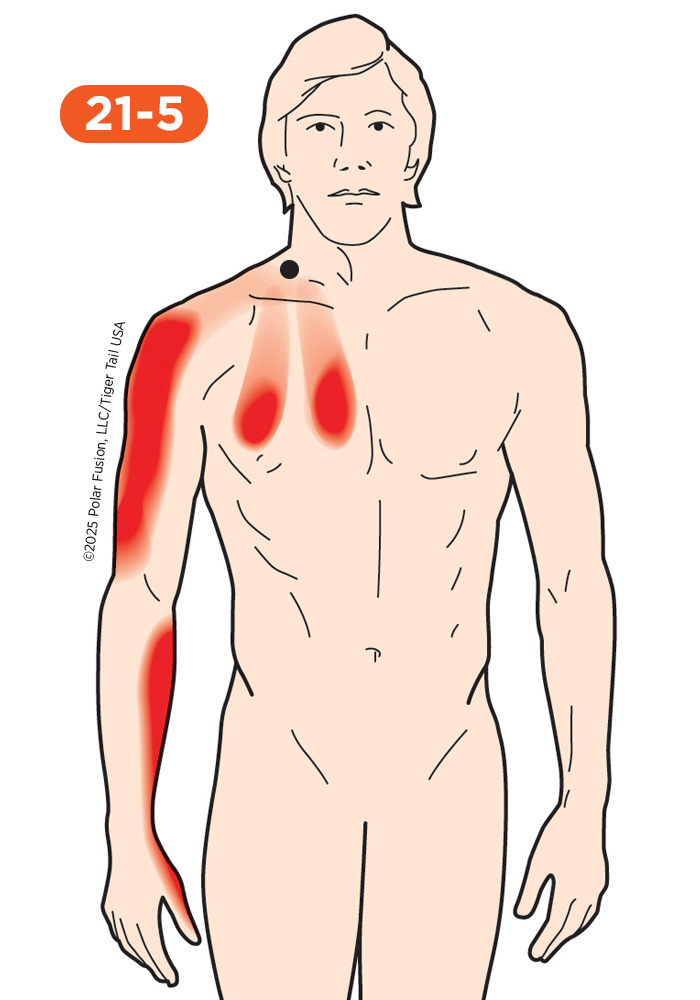
When chest pain originates from the small, rope-like muscles along the sides of your neck—the scalenes—it can feel like your chest is being squeezed from the inside, similar to wearing a shirt that’s just a bit too tight across the chest. The discomfort usually settles around the upper chest and collarbone area and can feel sharp, tight, or like deep pressure. It can mimic conditions such as angina or pleurisy, making it easy to misinterpret. The pain worsens when you’re doing activities like turning your head sharply, lifting heavy objects with poor posture, or breathing deeply while slouched. This tension can cause your chest and neck to feel guarded and stiff, limiting your ability to turn your head or take a full, comfortable breath. The area is especially sensitive to pressure, with tenderness often located just above the collarbone or along the side of the neck near the base. Pressing on these spots can nearly recreate the chest pain instantly.
Pain or Discomfort Underneath the Collar Bone
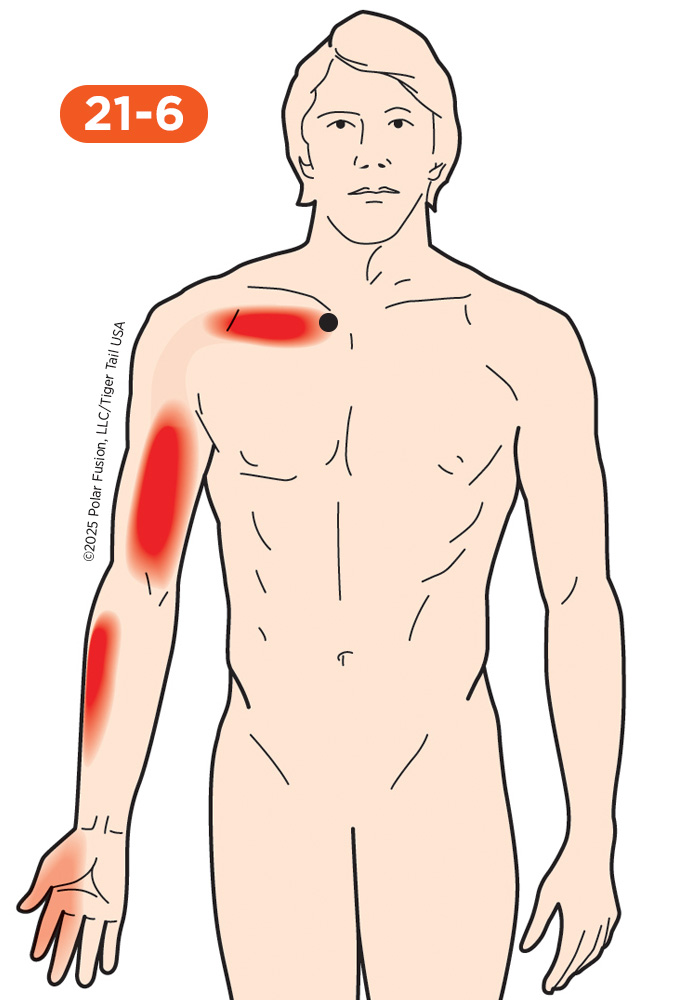
Pain or discomfort beneath your collarbone can stem from a small yet powerful muscle called the subclavius—it’s like having a pebble stuck under a tight strap across your chest. The sensation often feels like a dull ache or a sharp, stabbing pressure right under the collarbone, and it can resemble issues like a clavicle sprain or nerve compression. You’ll notice the pain worsens significantly when you do activities like reaching overhead, pulling your shoulders forward while typing, or sleeping with your arm tucked under your chest. This tension causes the front of your shoulder to feel restricted and guarded, making it difficult to lift or rotate your arm comfortably. The area is very sensitive to touch, especially just below the middle of the collarbone where the muscle sits tightly between bone and tissue. Pressing on that spot often reveals a tender knot that feels like a bruise.
Side of Chest Pain
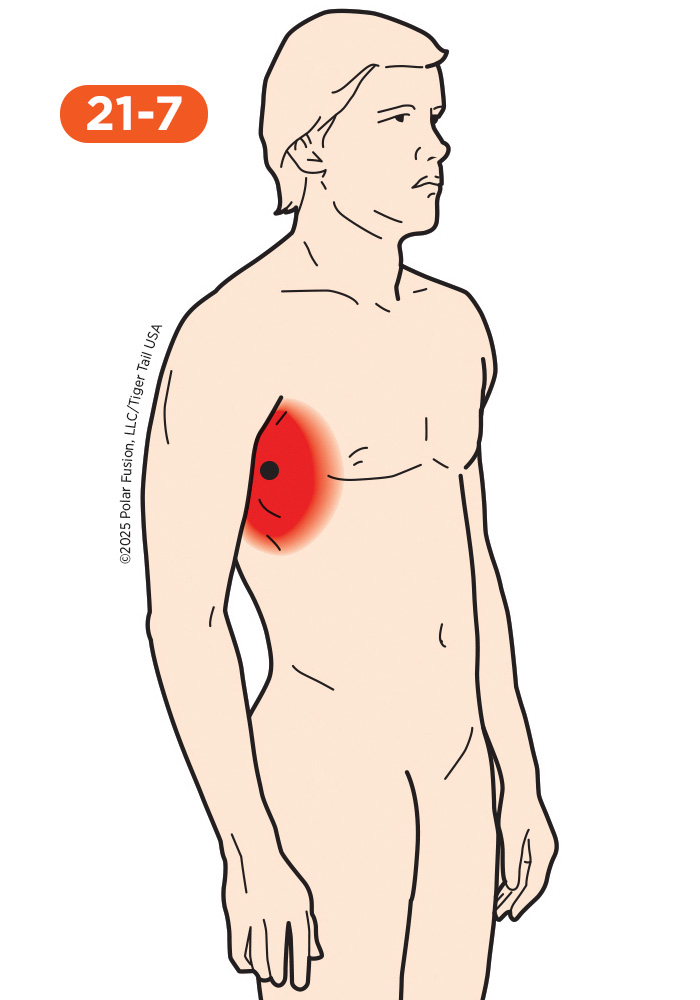
If you’re feeling a deep ache or strange discomfort along the side of your chest, the true cause might be a muscle deep beneath your arm and ribs called the serratus anterior. This muscle wraps around your ribcage and helps move and stabilize your shoulder blade. When it develops muscle knots, it can cause pain along the ribs, sometimes feeling like a sharp, shooting ache that travels along the side of your chest, back, shoulder, and sometimes down your arm. You may notice that the pain worsens significantly during activities such as taking a deep, forced breath, pushing a heavy object, or performing repetitive arm swings (like during running). Since this muscle supports both shoulder movement and breathing, tension in it can easily mimic deeper problems like a rib joint issue or a side stitch. The tissue under the armpit is often vulnerable to pressure, which can leave your chest feeling restricted and limit the depth of your breath.