
Muscle Knots in Shoulder

Shoulder pain is caused by a number of different muscles, primarily those that attach directly to the shoulder blade. Muscle knots in the shoulder blade can refer pain locally to the top, around, and the front of the shoulder blade, while other muscle knots can refer pain to the shoulder as well as other parts of the body.

Common shoulder muscle knots, which consist of tight and contracted muscles, are indicated below by a black dot. The red area in the illustrations indicates “referred pain” – meaning, the pain you feel is often not in the location of your trigger point until you press on it. As an example, you may feel pain in the shoulder, but the trigger point may actually be in the neck.

The Scaleni is a group of three, complex muscles located on the side of the neck. It is often the trigger point or the source of the muscle knot responsible for generating referred pain elsewhere.

MuscleEducation_Scaleni_17-20

Muscle knots in the Scalene muscles of the neck can cause pain in the upper arm.

Common Conditions Relating to Pain in the Shoulder Muscle:

  • Frozen shoulder
  • Discomfort with overhead movement
  • Pseudothoracic Outlet Syndrome
  • Pain reaching forward and up
  • Deep shoulder joint pain
  • Rotator cuff pain

RECOMMENDED PRODUCTS:

  • Tiger Tail Tiger Cane Orange Detachable Massage Hook Orange

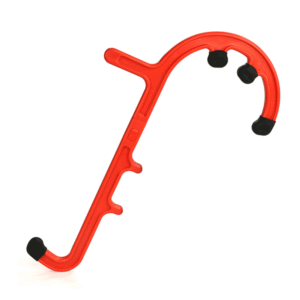
    Tiger Cane™ Acupressure Massage Hook

    $39.99
    Select options This product has multiple variants. The options may be chosen on the product page
  • T800_01_Web

    T-800™ Vibration Massager Percussion Massage Wand

    $149.99
    Add to cart

A common source of shoulder pain is the rotator cuff, whose purpose is to stabilize the shoulder joint. There are four muscles in the rotator cuff muscle group. The muscles lift the arm out to the side of the body (Supraspinatus), move the arm away from the body (Infraspinatus and Teres Minor), and move the arm forward to the body (subscapularis). Knots in these shoulder muscles can refer pain to the front of the shoulder, down the arm, into the hand, and back of the shoulder, and produce pain around the wrist.

MuscleEducation_Infraspinatus_16-12

The Infraspinatus, one of four muscles controlling the rotator cuff, can create referred pain affecting the entire arm.

TIPS FOR HAPPIER MUSCLES:

  • Locate the muscle knot by applying pressure to the area causing pain. A muscle knot can be actively painful, or you might not even know it exists until you put pressure on it.
  • Rub the muscle knot to allow blood and oxygen to circulate freely to that muscle area.
  • Find the right pressure. When you press on a muscle knot with just the “right amount of pressure”, it can make you laugh and cry at the same time because it can “hurt so good”. Pressing too hard, however, it can make you cry for mercy!
  • If you gently rub the muscle knot you may feel tenderness in both the muscle and the muscle knot. Sometimes, the referred pain symptoms are able to be reproduced when pressure is applied to the muscle knot.

MORE RECOMMENDED PRODUCTS:

  • T-1000_T2_01_Web

    T-1000™ Vibration Massager Percussion Massage Device

    $299.99
    Add to cart
  • 3KT_Web

    Knotty Tiger® Pro Hand-Held Knot Buster®

    $22.99
    Add to cart
  • TigerBall-Web

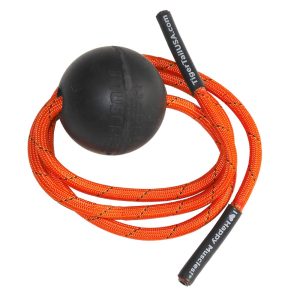
    Tiger Ball® 2.6 Massage-on-a-Rope™

    $29.99
    Add to cart
  • The Original 18" Handheld Foam Roller Massage Stick

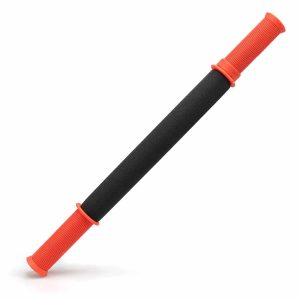
    The Original™ 18 Foam Roller Massage Stick

    $39.99
    Add to cart
JulieZuleger

About the Author: Dr. Julie Zuleger

Dr. Julie Zuleger has over 20 years of experience as a Licensed Massage Therapist, Certified Strength, and Conditioning Specialist (CSCS), Corrective Exercise Specialist, RYT-500 Yoga Instructor, and Human Movement Specialist. Julie promotes self-care using massage tools and stretching-based programs and teaches continuing education courses for yoga teachers, massage therapists, athletic trainers, strength and conditioning, fitness, and wellness professionals. Julie holds a PhD in Education and is the Director of Kinesiology and Education at Tiger Tail USA.

Frequently asked questions

How do you get rid of a muscle knot in the shoulder?
Roll the shoulder with a smooth handheld foam roller for 2 to 3 minutes at a time, using moderate pressure (about a 7 out of 10 on the good-hurt scale). Keep the roller moving over the tender spot, breathe, and repeat once or twice a day. Rolling helps the tight band of muscle relax and brings fresh blood to the area. The Tiger Ball® 2.6 Massage-on-a-Rope™ works well for this.
Why do shoulder knots keep coming back?
Knots return when the muscle stays under strain from overuse, posture, or stress, so the tightness rebuilds. Short, regular sessions beat one long one: a few minutes of rolling most days, plenty of water, and movement breaks keep the muscle loose and make the knots far less likely to settle back in.
What is the best tool for a knot in the shoulder?
For the shoulder, a smooth handheld roller like the Tiger Ball® 2.6 Massage-on-a-Rope™ gives you controlled pressure without pinching the skin, and a massage ball works well for pinpointing a single stubborn spot. You can find the right tool for any sore area with the muscle pain area guide.

Tools for this