

The Hidden Cost of Musculoskeletal Injuries in the Workplace
Quick answer: Musculoskeletal injuries cost U.S. businesses ~$58.78B/year, with overexertion alone accounting for $13.7B — the top cause for 25 straight years. Back, shoulder, knee, and multi-body-part injuries drive $32.6B (56% of cases). Carpal tunnel and plantar fasciitis are less frequent but costly per claim, especially when litigated. Prevention pays off.
Musculoskeletal injuries remain one of the most expensive and persistent problems in workplace safety. They don’t make headlines the way a machinery accident or a fall from height does, but year after year, they quietly account for a disproportionate share of workers’ compensation spending. Here’s what the data shows about five of the most common culprits — overexertion, plantar fasciitis, shoulder strain, back strain, and carpal tunnel — and what they’ve cost employers.
The Big Picture: Overexertion Leads Every Category
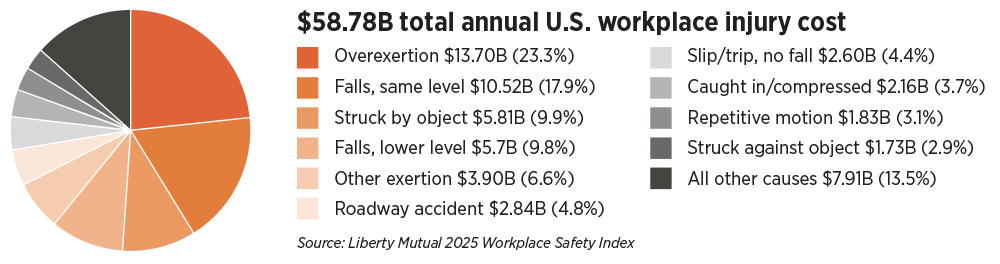
According to Liberty Mutual’s 2025 Workplace Safety Index, which has tracked the top causes of serious workplace injury for 25 years, U.S. businesses spend more than $1 billion a week on workplace injuries, adding up to $58.78 billion a year. The top 10 causes alone account for $50.87 billion, or 86.55% of that total.
Overexertion sits at the very top, and has for a quarter century. Overexertion involving outside sources — lifting, pushing, pulling, holding, carrying, or throwing objects — cost $13.70 billion in the most recent report, 23.31% of the total. This has held true for all 25 years the Index has existed, driven largely by manual materials handling.
Musculoskeletal injuries broadly — not just overexertion — dominate the cost picture even further. More than half, 56%, of workplace injuries involving the back, shoulder, knee, or multiple body parts drive nearly $32.6 billion in costs.
Typical Cost Range by Injury Type
Beyond national aggregate figures, it helps to know what a single claim typically costs a company. The ranges below vary because they’re drawn from different states, years, and methodologies — but they give a directionally accurate picture of where each injury type tends to land.
| Injury Type | Typical Range | Source |
|---|---|---|
| Overexertion | $20,000 – $26,000 | CDC MMWR study of Ohio BWC construction claims, 2007–2017 |
| Shoulder Strain | $14,000 – $28,000 (median ~$28,000) |
Washington State L&I, WMSD Claims Snapshot: Shoulder (2019); 1996–2004 Washington State Fund data |
| Back Strain | $10,700 – $25,000 (degenerative cases ~$120,000) |
Washington State L&I 1996–2004 State Fund data; WCRI 2025, Patterns and Trends of High-Cost Claims Involving Back and Shoulder Injuries |
| Plantar Fasciitis | $4,600 – $32,800 | Missouri Labor and Industrial Relations Commission case decisions (individual accepted claims) |
| Carpal Tunnel | $15,900 (non-litigated) – $77,800+ (litigated); ~$34,800 average | National Council on Compensation Insurance (NCCI), 2021–2022 data |
Most routine claims across these five categories land in a fairly narrow band — roughly $10,000 to $35,000 — but two factors reliably push individual claims well outside that range: litigation, which can more than double the cost and triple the time to resolve (as seen clearly in carpal tunnel data), and claim severity, since a straightforward strain and a degenerative or surgical case for the same body part can differ by a factor of five or more.
Overexertion: The Costliest Injury Category, Year After Year
Overexertion isn’t just the top line item — it’s a category that barely budges. Other sources corroborate Liberty Mutual’s findings almost exactly: overexertion generates roughly USD 13.7 billion in direct business costs annually, making it the costliest injury type nationally.
The pattern holds at the state level too. A CDC study of Ohio construction workers found that overexertion-related musculoskeletal disorder costs were highest for workers aged 45-54 (averaging $25,932 per claim) and 55-64 (averaging $25,572 per claim). That same study found workers aged 35-44 filed overexertion claims at the highest rate — 63 per 10,000 full-time employees — though older workers’ claims cost more and kept them out of work longer.
Nationally, and looking beyond direct workers’ comp payouts, the numbers get even larger. Musculoskeletal disorders account for more than a million U.S. workplace injuries every year, with the Bureau of Labor Statistics attributing roughly $20 billion in annual workers’ compensation costs to them — and NIOSH estimating total costs, once indirect expenses are folded in, range from $13 billion to more than $50 billion annually. Overexertion injuries alone represent roughly a quarter of total national workers’ comp costs, with low back disorders the single largest contributor.
Tiger Tail Tools That Can Help Prevent
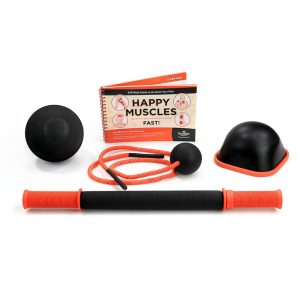
The Tiger Tail Founder’s Favorite Muscle Care Kit offers a targeted, preventive solution for the areas most susceptible to workplace injury. Featuring tools like The Original 18 handheld foam roller, Tiger Ball 2.6 Massage-on-a-Rope, Tiger Ball 5.0, Curve Ball, and the Happy Muscles Book, the kit empowers workers to perform self-myofascial release without requiring complex equipment or floor space. By letting employees relieve muscle tightness in high-risk zones—such as the shoulders, back, and feet—early on, these muscle care tools offer an effective, low-cost intervention to reduce claim severity and mitigate the rising costs of workplace overexertion.


Back Strain: The Biggest Single Contributor
Back injuries remain the anchor of musculoskeletal costs. In Ohio’s overexertion dataset, spinal disc disorders alone generated total incurred costs that climbed from roughly $48,400 for workers under 25 to over $161,000 for workers aged 45-54 across the study period, dwarfing every other diagnosis category in the data. Back sprains specifically added tens of thousands more per age bracket on top of that.
A separate Kansas study covering 2014–2022 workers’ comp claims found that musculoskeletal disorder claims carried a median total cost of $20,097, with medical expenses making up 48.4% of costs, indemnity payments 46.4%, and legal costs 5.2%. The shoulder was identified as both the most frequently injured and the costliest body part in that dataset, and lifting was the single most common cause, generating 32% of all claims.
Not all back claims are equal, though. A 2025 Workers Compensation Research Institute (WCRI) study of about 194,000 claims from 32 states found that only about 1% of simple sprain/strain/nonspecific back pain claims become “high-cost” (exceeding roughly $65,000). Degenerative back conditions are a different story entirely — 42% of those claims fell into the high-cost category, averaging around $120,000 in combined medical and indemnity payments.
Tiger Tail Tools That Can Help Prevent
-
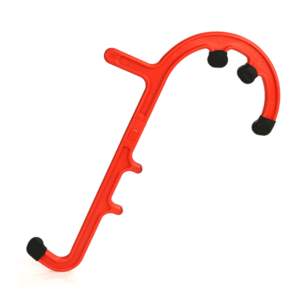
Tiger Cane™ Acupressure Massage Hook
$39.99 Select options This product has multiple variants. The options may be chosen on the product page
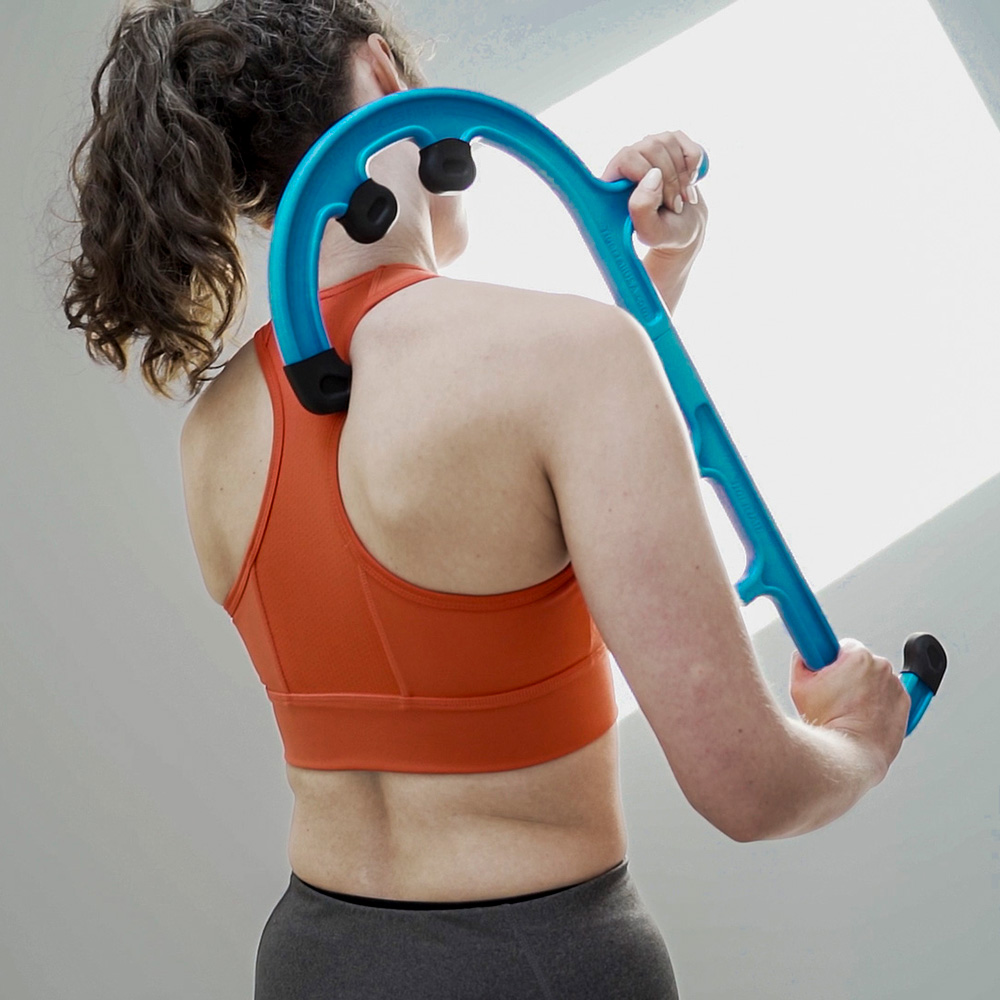
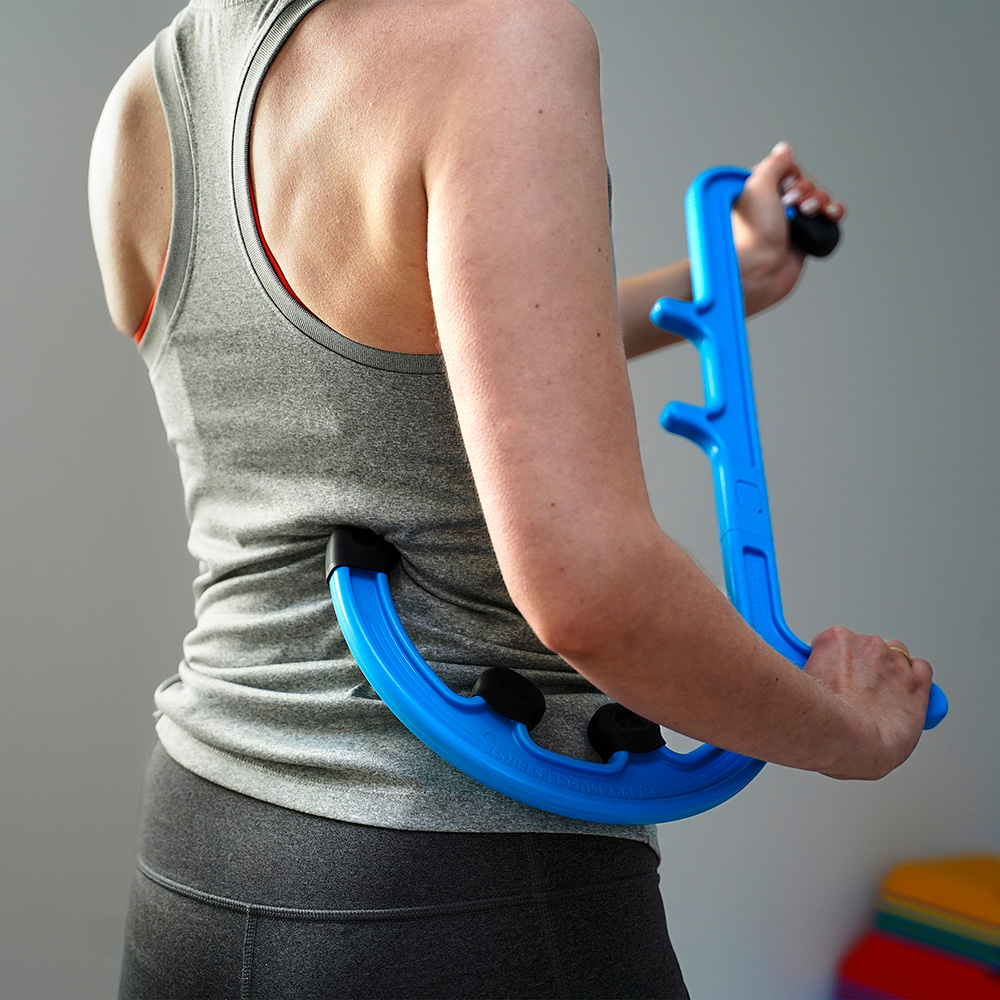
The Tiger Cane Acupressure Massage Hook targets these high-risk areas by letting workers independently reach hard-to-access muscle knots in the back, neck, and shoulders without extra help. With seven ergonomically placed pressure tips and Gription™ massage nubs for precise trigger point release, this portable, hook-shaped tool lets employees apply controlled, deep-tissue pressure during breaks or after shifts. Implementing accessible self-massage devices like the Tiger Cane is a simple, proactive strategy for companies seeking to reduce muscle fatigue, lower claim severity, and curb the rising costs associated with occupational overexertion.
Shoulder Strain: Frequent and Expensive
Shoulder injuries deserve special attention because, as the Kansas data shows, they’re not just common — they’re the most expensive body part per claim in at least one large state dataset. Washington State’s Department of Labor & Industries found that shoulder-related musculoskeletal disorder claims carried a median cost of over $28,000, with median lost work time exceeding four months — notably higher than other WMSD claim types.
Combined with back and knee injuries, shoulder-related claims are central to why 56% of workplace injuries and nearly $32.6 billion in costs trace back to just four body-part categories: back, shoulder, knee, or multiple body parts. As with back injuries, rotator cuff disorders and other structural shoulder conditions were among the categories most likely to become high-cost claims in the WCRI study.
Tiger Tail Tools That Can Help Prevent
-
Tiger Cane™ Acupressure Massage Hook
$39.99 Select options This product has multiple variants. The options may be chosen on the product page
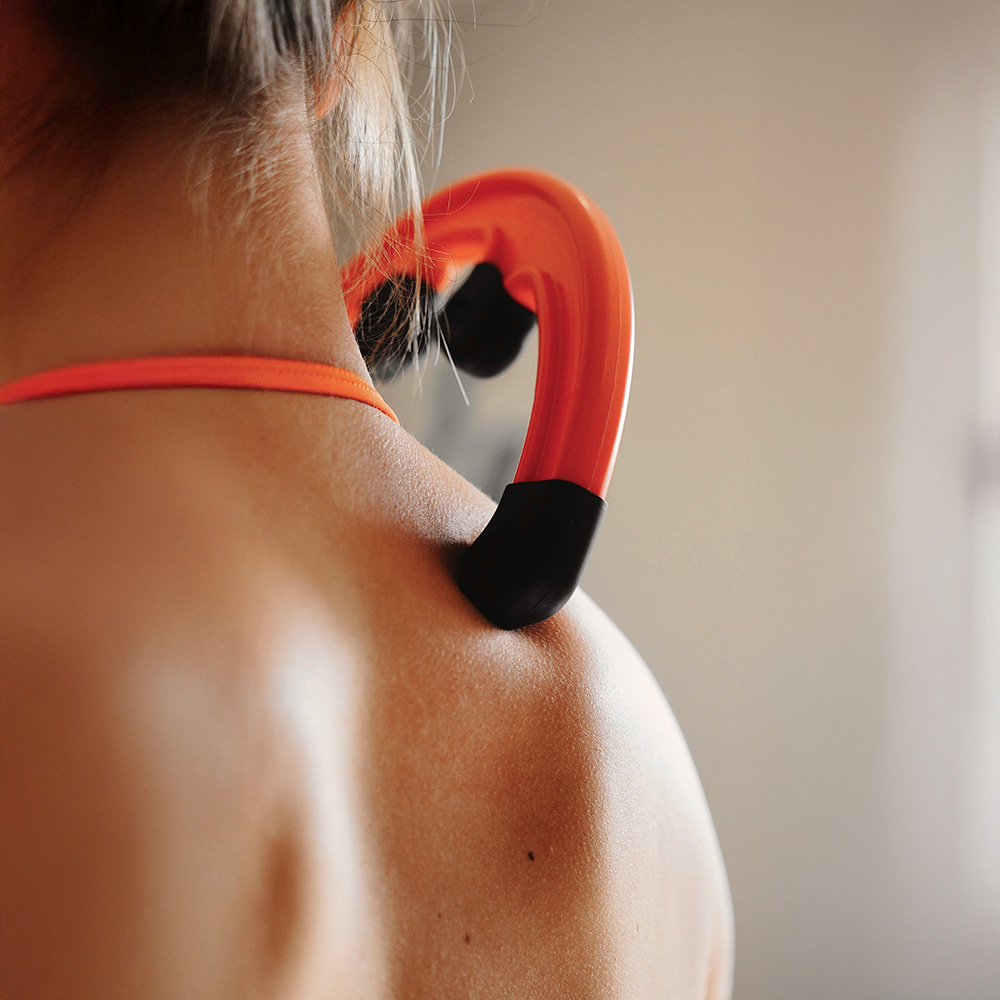
The Tiger Cane Acupressure Massage Hook provides a targeted, accessible solution for early intervention by allowing workers to independently relieve upper back, trap, and shoulder tension before minor soreness turns into a severe injury. Utilizing its curved design and specialized pressure nubs, employees can apply direct trigger-point therapy to tight rotator cuff and scapular muscles without straining their limbs further. Integrating self-care tools like the Tiger Cane into workplace wellness routines offers a practical, low-cost strategy to reduce shoulder-related claims and protect workers from debilitating strain.

Carpal Tunnel: Low Volume, High Cost Per Claim
Carpal tunnel syndrome (CTS) tells a different story than overexertion or back strain — it’s far less frequent, but each claim tends to be disproportionately expensive and slow to resolve. According to the National Council on Compensation Insurance, the average cost of a carpal tunnel claim in 2021–2022 was $34,774.
Litigation dramatically changes the math. Claims involving an attorney average 901 days to resolve and pay out roughly $77,807 on average, compared to 305 days and about $15,936 for claims without attorney involvement.
California data backs up the pattern nationally. Carpal tunnel syndrome accounts for just 1.1% of all work injuries in California, but 2.9% of all workers’ compensation benefit payments, because of the high average cost per claim. Nearly two out of three carpal tunnel injuries result in lost time — almost double the rate for all injuries combined — and about one in three result in permanent disability, compared to one in eight for all claims generally. Separately, CWCI research found average claim duration for California carpal tunnel cases runs about 31 months, nearly triple the 10.8-month average for other injury types.
Tiger Tail Tools That Can Help Prevent
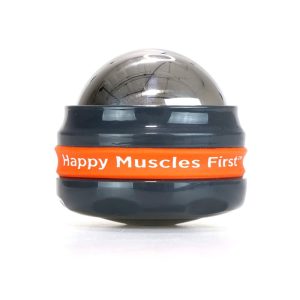
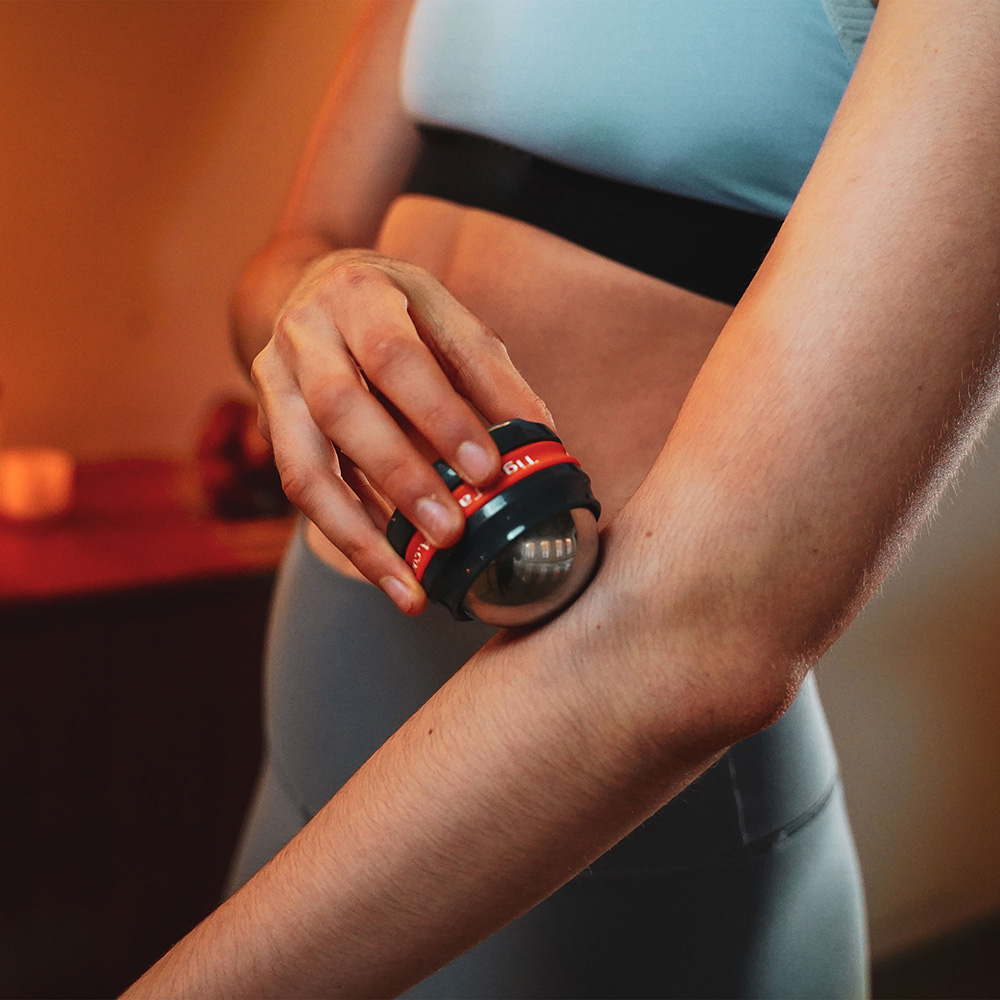
The Knotty Tiger ICE Cold Massage Roller Ball directly supports early intervention by combining deep myofascial release with cryotherapy to soothe tight forearm flexors and wrists. Designed as a compact, handheld roller, its naturally cold metal ball—which can be frozen for extra relief—helps numb localized soreness, reduce swelling, and break up muscle knots without straining the user’s fingers or hands. Incorporating targeted cold-massage tools like the Knotty Tiger ICE into ergonomic daily routines offers employers a highly effective, low-cost strategy to manage repetitive strain symptoms, shorten recovery windows, and control high-cost carpal tunnel claims.

Plantar Fasciitis: An Underrated Occupational Hazard
Plantar fasciitis doesn’t get its own line in national indices the way overexertion or falls do — it’s usually absorbed into broader “lower extremity” or repetitive-strain categories. But it’s a well-documented occupational injury, especially in roles involving prolonged standing or walking on hard surfaces (warehouse floors, concrete production lines, retail). Individual claim outcomes vary enormously by severity and state, but real cases illustrate the range: awards for accepted plantar fasciitis claims have run from under $5,000 for straightforward medical-and-disability cases to over $30,000 when permanent partial disability and extended lost time are involved. Because it’s frequently classified as an occupational disease rather than a discrete accident, these claims can also take longer to establish compensability, adding to their cost.
Tiger Tail Tools That Can Help Prevent
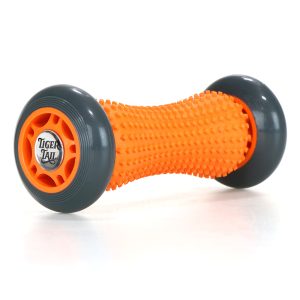
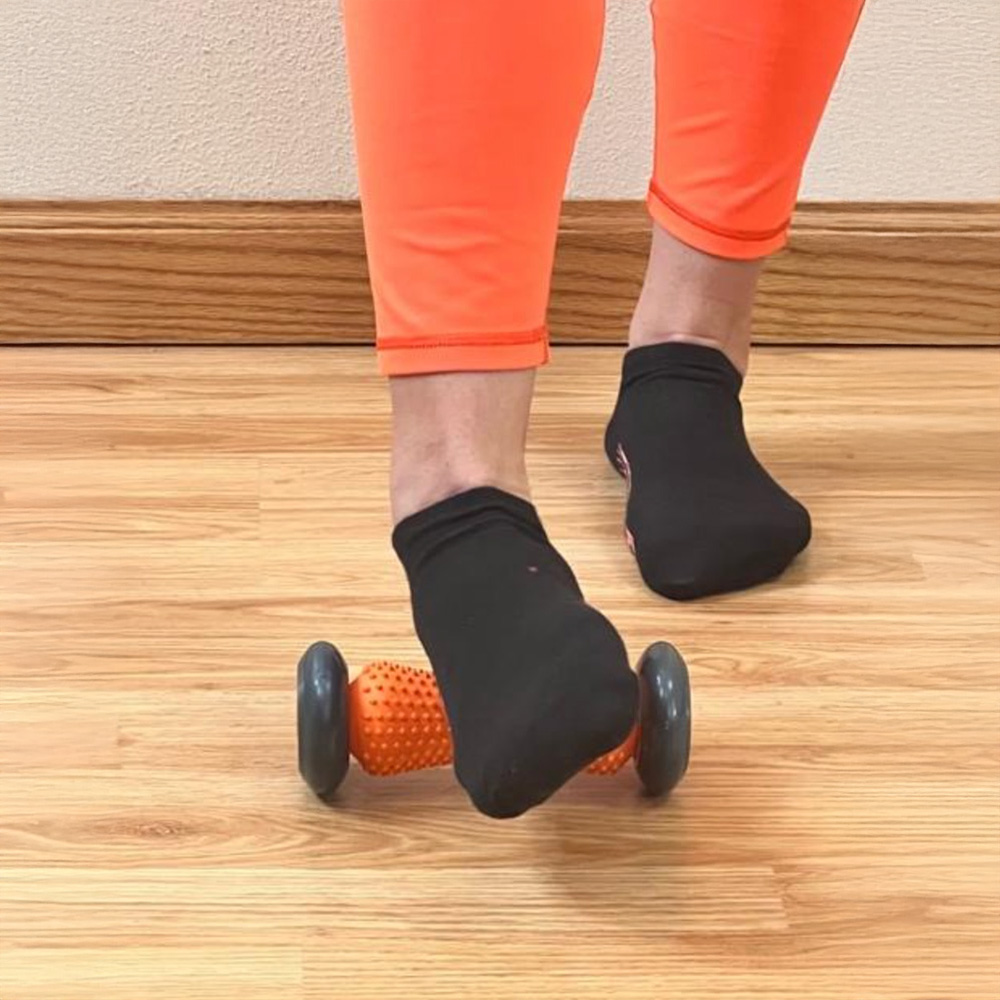
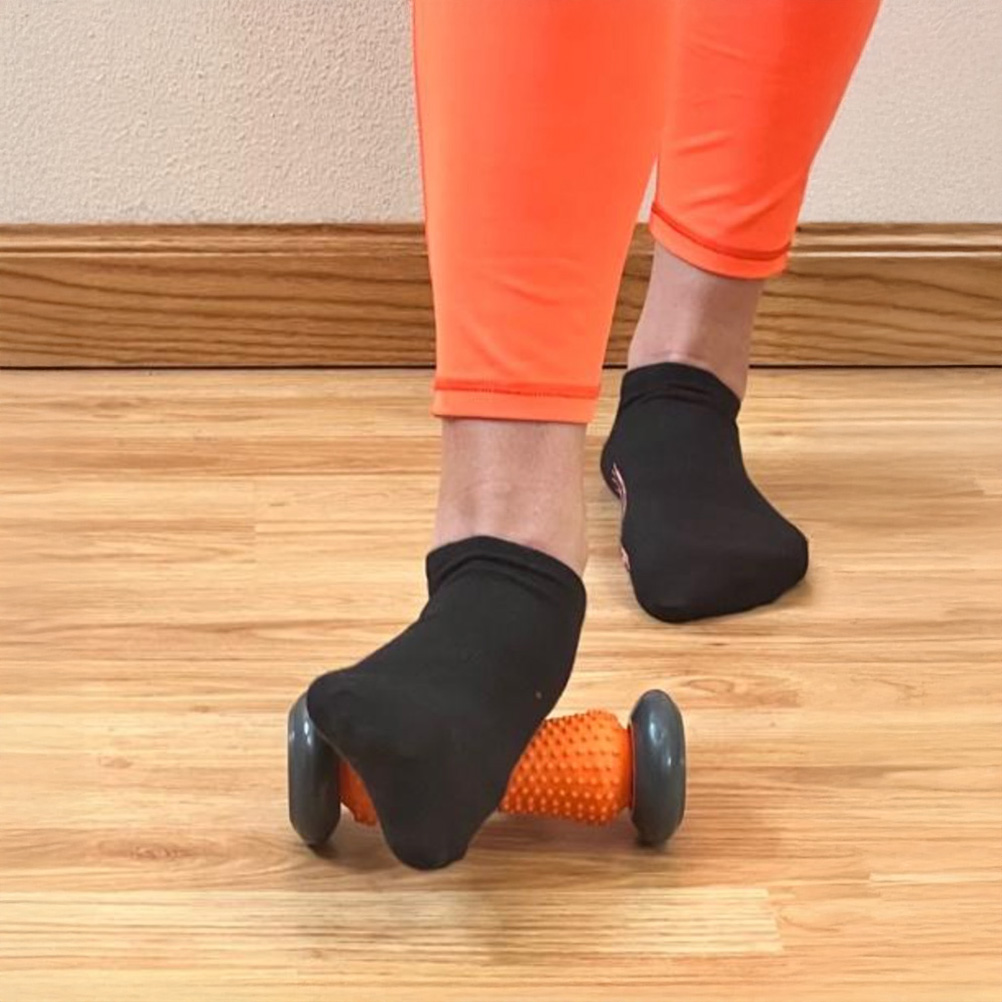
The Tiger Footsie Foot Massage Roller provides a targeted, accessible preventive solution designed specifically to relieve plantar fasciitis symptoms and soothe tight, overworked feet. Featuring a non-bending, firm roller with a 4.5-inch textured massage surface and Tiger Tail’s signature Gription™ surface, it allows workers to easily roll out their arches and plantar fascia while controlling the exact amount of pressure applied. By providing employees with a simple, portable foot roller they can use at their desks or during break intervals, companies can encourage daily self-care to improve circulation, reduce foot stiffness, and curb the escalating costs of occupational plantar fasciitis.
Five-Year Cost Trend: Rising, Even as Injury Rates Fall
One of the more striking findings from the latest Workplace Safety Index is the divergence between injury frequency and injury cost. Even as the rate of serious workplace accidents fell by about 40% over the 25 years Liberty Mutual has tracked this data, the total cost of workers’ compensation benefits increased by 30%.
That trend shows up in more recent, narrower windows too. A Travelers analysis covering 2021–2025 found that injured employees now miss an average of 80 workdays despite a decline in the overall number of workplace injuries. The same analysis flagged a workforce-turnover angle worth noting: employees in their first year on the job accounted for approximately 36% of injuries and 34% of overall claim costs over the last five years.
Within that same five-year window, certain claim types stood out as unusually expensive. Slips, trips, and falls, overexertion, being struck by an object, motor vehicle accidents, and being caught in or between objects were the injury types most likely to cost $250,000 or more per claim.
| Category / Metric | Percent / Value | Timeframe / Source |
| Injury Frequency Rate | -40% |
2000 – 2025 / Liberty Mutual Workplace Safety Index |
| Total Workers’ Comp Cost | +30% |
2000 – 2025 / Liberty Mutual Workplace Safety Index |
| Average Missed Workdays | 80 days |
2021 – 2025 / Travelers Analysis |
| First-Year Employee Injuries | 36% |
2021 – 2025 / Travelers Analysis |
| First-Year Employee Claim Costs | 34% |
2021 – 2025 / Travelers Analysis |
Why the Costs Keep Climbing
A few underlying dynamics explain why musculoskeletal claim costs continue rising even as raw injury counts fall:
- Medical inflation and treatment intensity. Costlier diagnostics, physical therapy, and surgical interventions for soft-tissue injuries push per-claim costs upward even when injury counts are flat.
- Litigation. As the carpal tunnel data shows, claims that end up with attorney involvement can cost roughly five times more than those that don’t, and take three times as long to close.
- Aging workforce. Older workers tend to file costlier claims and take longer to recover, a pattern that shows up consistently in both the Ohio and Kansas datasets.
- New-employee risk. A large share of injuries and costs are concentrated in a company’s least-experienced workers, suggesting onboarding and early-tenure ergonomics training have an outsized return on investment.
The Bottom Line
Across the board — overexertion, back strain, shoulder strain, carpal tunnel, and plantar fasciitis — the data tells a consistent story: these aren’t dramatic, headline-grabbing accidents, but they are collectively the single biggest financial drain in workers’ compensation systems. Overexertion alone costs U.S. businesses close to $14 billion a year, back and shoulder injuries anchor over $30 billion more, and even lower-volume conditions like carpal tunnel carry outsized per-claim costs once litigation and lost time are factored in. For employers, the clearest lever remains prevention — ergonomics, manual-handling training, and early intervention — since these are largely injuries that develop or worsen over time rather than occurring in a single traumatic instant.
Frequently Asked Questions
What's the most expensive workplace injury category overall?
Overexertion (lifting, pushing, pulling, carrying) has been the #1 cost driver for 25 straight years, totaling $13.70B annually — about 23% of all workplace injury costs, according to Liberty Mutual’s 2025 Workplace Safety Index.
Why is carpal tunnel syndrome so expensive if it's relatively rare?
Carpal tunnel claims are low-volume but slow to resolve and prone to litigation. Non-litigated claims average around $15,900, while litigated ones can exceed $77,800 — nearly triple the cost and about three times longer to close.
Is back strain always a high-cost claim?
No. Simple sprains and strains typically run $10,700–$25,000, and only about 1% become “high-cost.” Degenerative back conditions are the outlier — those average around $120,000 once surgery or long-term disability is involved.
Why doesn't plantar fasciitis show up in national injury statistics?
It’s usually folded into broader “lower extremity” or occupational-disease categories rather than tracked as its own line item, which is why costs vary so widely ($4,600–$32,800) depending on how quickly a claim is accepted and whether it results in permanent disability.
Why are total musculoskeletal injury costs rising even as injury rates fall?
Medical inflation, longer recovery times, an aging workforce, and increased litigation are pushing per-claim costs higher — even though the overall rate of serious workplace injuries has dropped about 40% over the past 25 years.
Sources: Liberty Mutual 2025 Workplace Safety Index; U.S. Bureau of Labor Statistics; NIOSH; CDC Morbidity and Mortality Weekly Report (Ohio BWC construction data, 2007–2017); Journal of Occupational and Environmental Medicine (Kansas workers’ compensation study, 2014–2022); Washington State Department of Labor & Industries (WMSD Claims Snapshot and State Fund data); Workers Compensation Research Institute (2025 high-cost claims study); National Council on Compensation Insurance; California Workers’ Compensation Institute; Travelers workplace injury analysis (2021–2025); Missouri Labor and Industrial Relations Commission case decisions; Oregon Department of Consumer and Business Services.